If you’ve ever stood on an industrial worksite, watching a team scramble to fix a leaky pipe or replace a damaged flange during a planned shutdown, you know how much rides on the right equipment. Last quarter, I had a call from a maintenance manager at a petrochemical plant who was panicking—he’d ordered a flange facer he thought could handle his project’s largest flange, only to arrive and find the maximum cutting width was 12 inches, while his flanges needed a 16-inch cut. That mistake cost him an extra two days of downtime and tens of thousands in lost production. It’s a story I hear again and again, and it’s why today I’m breaking down the most common question I get as a flange facer supplier: What is the maximum cutting width of a flange facer? Flange Facer
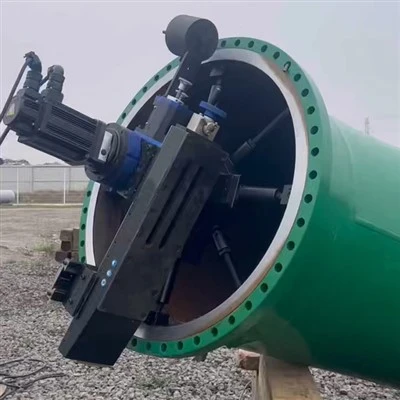
First, let’s get clear on what “cutting width” actually means here, because it’s not the same as something like a saw blade’s width. For those new to the term, a flange facer is a portable machine that attaches directly to a flange (the circular, bolted discs that connect pipes, pumps, or valves) to machine its sealing surface. That surface needs to be perfectly flat, parallel, and free of scratches or pitting to create a tight, leak-proof seal when bolted together. The cutting width refers to the radial distance the machine’s cutting tool can reach from the center of the flange—so if a flange’s outer diameter is 20 inches, a machine with a 10-inch maximum cutting width can reach every part of that sealing surface.
I’ll cut to the chase: there’s no one-size-fits-all maximum cutting width for flange facers. The range is surprisingly broad, from as little as 4 inches for small, low-pressure flanges used in HVAC to over 120 inches for the massive, high-pressure flanges found in power plants and cross-country pipeline junctions. But that’s not a random number—maximum cutting width is determined by three core factors: the machine’s design, its power source, and the type of application it’s built for.
Let’s start with design, because that’s the biggest driver of maximum cutting width. Flange facers have two main moving parts: the spindle that holds the cutting tool, and the guide arm that extends from the machine’s central mounting hub to hold the spindle. The length of that guide arm directly sets the upper limit of how far the tool can reach from the center. For small, portable manual flange facers (the kind used for quick fixes on residential plumbing or small process pipes), guide arms are short—usually 2 to 6 feet, translating to maximum cutting widths of 4 to 12 inches. These machines are lightweight, easy to carry, and perfect for on-the-go work where space is tight. For example, a 6-inch maximum cutting width flange facer is ideal for the small 2 to 4 inch NPT (National Pipe Thread) flanges common in commercial HVAC systems; it’s compact enough to fit in a tool bag and can set up in 10 minutes flat.
But for larger industrial applications, design gets more robust. Hydraulic and electric-powered heavy-duty flange facers have guide arms that can extend 10 feet or more, pushing maximum cutting widths to 80, 100, even 120 inches. Last year, we sold a 110-inch maximum cutting width flange facer to a wind turbine manufacturer in the Midwest—they needed to machine the massive flanges that connect turbine blades to the hub, which measure nearly 200 inches in outer diameter, so half that (the cutting width) is just over 100 inches. The guide arm on that machine isn’t a simple metal bar—it’s a reinforced, segmented arm that locks into place at multiple points to eliminate wobble, even when cutting at full extension. That wobble is the enemy here; if the arm flexes during cutting, the seal surface will be uneven, leading to leaks down the line.
Next up is power source, and it’s more closely linked to maximum cutting width than many people realize. A cutting tool moving at the end of a long guide arm requires torque to remove material evenly, especially when working with tough materials like carbon steel, stainless steel, or alloy steel. A small electric motor that works fine for a 6-inch cutting width won’t have enough torque to drive a cutting tool at 50 inches out—you’ll get stalled cuts, tool breakage, or inconsistent material removal. For that reason, machines with maximum cutting widths over 20 inches almost always use hydraulic power, not just electric. Hydraulics deliver consistent, high torque without the weight of a large electric motor, and they can adjust power on the fly as the tool moves along the sealing surface. We also have a line of gas-powered flange facers for remote worksites where electricity isn’t available—their maximum cutting widths top out at around 36 inches, which is perfect for mid-sized flanges on remote pipeline booster stations.
The third factor is application, and this is where so many buyers get tripped up. The maximum cutting width listed on a spec sheet is only valid for the type of flange and material the machine is designed for. For example, a machine rated for a 48-inch maximum cutting width on carbon steel might only be able to handle 36 inches on duplex stainless steel, which is much harder and requires more force to cut. It’s not just material hardness, either—flange type matters. Ring-type joint (RTJ) flanges, common in high-pressure oil and gas operations, have a smaller sealing surface area than flat-faced flanges, so a given maximum cutting width is more than enough for RTJ work, but not for full-face flanges used in low-pressure water systems. That petrochemical plant manager I mentioned earlier? He ordered a machine with a 12-inch maximum cutting width for full-face flanges, but his project required machining full-face flanges with a 32-inch outer diameter, so he needed a 16-inch cutting width to cover the entire sealing surface. That’s a mistake I see all the time—buyers only look at the maximum cutting width number, not what flanges that number actually applies to.
Now, let’s talk about why maximum cutting width is so critical to get right. A flange that’s not fully machined—meaning the cutting tool didn’t reach the entire sealing surface—will have gaps, scratches, or unevenness that prevent a proper seal. For low-pressure HVAC flanges, that might mean a small leak that drips a little water, easy to fix with a pipe sealant. But for high-pressure pipeline flanges, a tiny leak can turn into a catastrophic failure, leading to oil spills, fires, or even explosions. For power plant flanges, a leak in a steam line can cause unplanned shutdowns that cost millions per hour, and can also be a serious safety hazard for plant workers. I remember a time early in my career when we sold a machine to a food processing plant for a critical sanitary flange repair. They’d tried to use a smaller, cheaper flange facer that only reached 8 inches, and ended up with a sealing surface that had a 2-inch gap around the edge. When they bolted the flanges together, steam pressure blew the seal, spraying hot liquid all over the floor and knocking out their entire processing line for 8 hours. That’s the kind of risk that makes maximum cutting width not just a spec, but a safety and business-critical number.
So how do you figure out the right maximum cutting width for your project? It’s not as hard as it sounds, but it does require a little more than just measuring the flange’s outer diameter. First, measure the outer diameter of the flange’s sealing surface, not just the overall outer diameter. Many flanges have raised edges or bolt holes that extend past the sealing area, so you only care about the circle that will be pressed to make the seal. Then, add a small buffer—usually 1 to 2 inches—to that measurement. Why? Because when you machine a flange, the cutting tool will always take a small amount of material past the edge of the sealing surface to ensure there are no high spots or burrs left. That buffer ensures your machine’s guide arm is long enough to cover that extra area.
Let’s test that with an example. If you have a 24-inch outer diameter flange, and your sealing surface is 20 inches in diameter, you’ll need a machine that can reach at least 11 inches (half of 20 inches, plus a 1-inch buffer) for a safe, complete cut. That would put you in the 20-inch maximum cutting width range, which is perfect for mid-sized industrial flanges. If you have a 60-inch sealing surface diameter, half that is 30 inches, plus a 1-inch buffer means you need a maximum cutting width of at least 31 inches—so you’d look at heavy-duty hydraulic models designed for mid-sized power plant flanges.
I should also mention that there are a lot of second-hand or knock-off flange facers on the market that mislabel their maximum cutting width. Last year, a construction company brought in a machine they’d bought online for $2,000, claiming it had a 24-inch maximum cutting width. When we tested it, we found that at full extension, the guide arm wobbled so much that the tool would skip, and it could only cut a maximum of 18 inches before it lost torque. They’d saved $3,000 buying the cheap machine, but ended up having to rent a proper flange facer for their project, costing them twice that, and delaying their deadline by a day. That’s why working with a reputable supplier matters—we test every machine’s maximum cutting width under actual working conditions, not just on paper, so you know what you’re getting.
Now, you might be wondering: is there a downside to getting a flange facer with a maximum cutting width that’s larger than you need? For small projects, maybe. A 120-inch heavy-duty hydraulic machine is bulky, heavy, and more expensive than a small 6-inch manual model. It would be overkill for a 4-inch HVAC flange, hard to transport, and take longer to set up for small jobs. The sweet spot is matching your machine’s maximum cutting width to your most common project needs, and having a flexible option if you occasionally need to handle larger flanges. For example, many of our customers buy a mid-range machine with a 30-inch maximum cutting width for 80% of their projects, and rent a larger machine for the rare time they have to work on giant pipeline flanges or wind turbine flanges. That way, they get the speed and convenience of a compact machine for regular work, without the cost of a massive machine they only use a few times a year.
Let’s wrap this up. The maximum cutting width of a flange facer is not a random number—it’s determined by design, power source, and application, and it’s one of the most critical specs to get right for safe, successful flange repairs. Too small, and you risk incomplete seals, downtime, and safety hazards; too large, and you end up paying for features you don’t need. As a supplier, my job isn’t just to sell you a machine—it’s to make sure you get the right one for your specific work, whether you’re a small maintenance team doing quick residential fixes or a large industrial plant handling massive high-pressure flanges.

If you’re working on a project right now and aren’t sure what maximum cutting width you need, or you’ve dealt with a botched flange repair because of the wrong machine, I’d love to hear from you. We can walk you through your measurements, explain the different machine options, and even help you test if a machine is the right fit before you buy. Flange repairs don’t have to be stressful—having the right equipment makes all the difference, and that’s what we’re here to help with.
Flange Facer References:
- American Society of Mechanical Engineers. (2019). B16.5: Pipe Flanges and Flanged Fittings. ASME International.
- Hydraulic Institute. (2021). Portable Machining Equipment for Industrial Maintenance. Hydraulic Press Association.
- Petrochemical and Gas Industry Association. (2022). Best Practices for Flange Sealing and Machining. Petroleum Equipment Suppliers Association.
- National Fire Protection Association. (2020). NFPA 70: National Electrical Code, Article 500 (Hazardous Locations). NFPA.
Shangqiu JDA Machinery Technology Co., Ltd.
With abundant experience, we are one of the most professional flange facer manufacturers and suppliers in China. We warmly welcome you to buy cheap flange facer for sale here from our factory. Quality products and reasonable price are available.
Address: No. 55 Pingyuan Middle Road, Liangyuan District, Shangqiu, Henan, China
E-mail: sales@jdamachines.com
WebSite: https://www.jdamachines.com/
