Hey everyone, Trolley Heavy-Duty Power Stations 4000W–5000W

So, let’s cut to the chase. I’m not here to give you some corporate fluff about our Trolley Heavy-Duty Power Stations (the 4000W–5000W ones, duh). I’m a supplier for these bad boys, and I get it—if you’re setting up shop near the coast, power can be a total nightmare. Salt air, high humidity, random gusts that feel like they’re trying to tear stuff off your walls, maybe even a splash from a rogue wave during high tide. You need gear that doesn’t die halfway through a job, right? I’ve been fielding questions from coastal clients for months, so I figured I’d break down exactly how these power stations hold up in environments that’d make regular generators throw in the towel.
First off, let’s talk about the stuff coastal areas do to electronics. Salt is the big enemy here. It’s not just messy—it’s corrosive. If a regular generator sits out in salt air for a week, you’ll start seeing rust on the metal, and the internal parts? They’ll seize up faster than a old lawnmower in winter. Humidity’s another one—high moisture can seep into wires, cause short circuits, or make the electrical contacts corrode over time. And let’s not forget the saltwater splash, like if you’re setting up near a marina, a beach event, or a remote coastal construction site where a wave laps a little too close. Most portable power gear isn’t built for that. But our trolley units? Let’s get into the design choices that make them different.
The 4000W–5000W range is perfect for coastal jobs, by the way—enough juice to run a bunch of heavy tools, a few work lights, maybe a small fridge for site snacks, without being so bulky you can’t move it around (hence the trolley part, duh). But the key for coastal performance is the build. The frame isn’t just thin steel like some cheap knockoffs. We use powder-coated steel that’s been tested in salt spray environments for over 1,000 hours. I’m talking the same kind of testing that marine parts go through—stuff that’s supposed to hold up on a boat’s deck, which is basically a constant coastal environment. I had a client last month who runs a beachside food truck festival, and he runs two of these back-to-back all weekend, no covering them, just leaving them parked on the sand. No rust on the frame, no issues. He texted me last week saying he’s ditching his old gas generators because they’d conk out after one festival day.
Then there’s the electrical enclosure. That’s the box that holds all the guts—batteries, inverters, charge controllers. We sealed that with IP65-rated gaskets. If you don’t know what that means, it’s the highest rating for dust and water resistance short of being fully submersible. So a little salt spray, a splash from a wave, even a heavy rainstorm that dumps an inch of water on it? No problem. The enclosure keeps all that moisture and salt out. I had another client who works on coastal wind turbine maintenance—he sets up these power stations on the flatbed of a work truck that’s parked right next to the turbine base, which is near the ocean. Wind blows salt air nonstop, and he’s never had an issue with the electronics inside.
Now, let’s get into actual real-world use cases, because specs are great, but what do these do when you’re working? The 4000W–5000W is enough to run, say, a circular saw, a drill, and two 500W work lights at the same time—all while keeping a phone charger and a portable AC unit for break room gear running. In coastal environments, that’s crucial because if you’re trying to fix something on a pier or a beach house, you can’t wait around for a power fix. What about runtime? Depending on what you’re running, these can go 8–12 hours on a full charge. If you’re plugging them into solar panels (which a lot of coastal clients do, since sun is abundant there), they’ll charge back up in about the same time. That means you don’t have to haul a bunch of extra gas cans, which is a huge win because gas can corrode in cold coastal storage anyway, or get contaminated with salt if you spill it.
Wait, let’s talk about salt air getting inside the vents. All power stations need vents to keep from overheating, right? But if those vents are wide open, salt and moisture get in. Our units have vent filters that are made with a marine-grade filtration material. They block salt particles and moisture from getting to the internal cooling system, but still let enough air flow to keep the unit from overheating, even when you’re pushing it hard in 85-degree coastal humidity. I’ve heard horror stories from clients about regular power stations where the cooling system got clogged with salt dust, leading to overheating mid-job. Not with these—those filters are easy to clean, too. Just rinse them off with fresh water once a month, and they’re good to go.
What about extreme coastal conditions? Let’s say a hurricane is coming, or a tropical storm, and you need backup power for a few days. These units aren’t just for temporary jobs—they can run continuously for up to 24 hours (depending on load) without any issues, because they’re built for heavy-duty use, not just weekend DIY projects. I had a emergency response client last year who used 10 of these during a coastal flood response in Louisiana. They were powering sump pumps, communication radios, and medical coolers for three straight days, through heavy rain and wind that made the ocean surge. No failures, no hiccups. That’s the kind of performance you need when coastal weather goes sideways.
Now, let’s address the elephant in the room: cost. I know coastal gear is often more expensive, but here’s the thing—these units are designed to last. A regular generator might cost half as much, but in salt air, it’ll be toast in 2–3 years. Our Trolley Heavy-Duty units? We’ve got clients who’ve had theirs for 5+ years, running them nonstop in coastal environments, and they still work like new. We also offer a 3-year warranty on the electrical components, specifically covering corrosion issues that are common in coastal areas. That’s not something a lot of generic power station suppliers do—most warranties don’t cover salt-related damage, but we do because we know our gear can hold up.
Wait, let’s get a little specific with the numbers, just so you don’t think I’m just hyping things. We did a third-party salt spray test on the 4000W–5000W units. Salt spray testing simulates years of coastal corrosion in just a few hundred hours. After 1,200 hours of testing (that’s way more than the industry standard for marine-grade electronics), the internal contacts still had less than 0.1% corrosion. Compare that to a generic power station, which had over 15% corrosion after the same test—enough to make it fail. That’s the difference. The battery cells are also sealed with a electrolyte that’s resistant to moisture, so even if the enclosure gets a little damp, the batteries won’t short out. I’ve had a client who accidentally left one out in a saltwater splash for an hour while he was moving it, and it still ran fine when he plugged it in later. No issues, no damage.
Another thing: portability. The trolley handle and rubber wheels are built to roll over sand, gravel, and damp concrete—stuff you find at construction sites, beaches, or piers. A lot of heavy power stations are impossible to move on sand, but these have large, wide wheels that don’t sink. I had a beach event planner tell me he can roll two of these from his truck to the event area in 5 minutes, no hassle, whereas his old generators required a dolly and two guys to move. That’s a huge time-saver when you’re setting up for a early morning event.
Now, let’s talk about downsides, because I’m not gonna lie to you. No gear is perfect, and even these have limits. If you submerge them fully in saltwater, they’ll die—same as any power station. But that’s not a coastal issue, that’s a “you left it in the ocean by accident” issue. Also, the filters need to be cleaned regularly—like every 2–4 weeks, depending on how much salt air they’re exposed to. That’s a tiny maintenance step, way easier than fixing a corroded generator. And the upfront cost is higher than some entry-level power stations, but like I said earlier, the long-term value is way better.
So, who are these units for? If you’re a contractor doing coastal construction, a marina owner needing backup power for tools or pumps, a beach event organizer, an emergency response team, or even a homeowner who lives near the ocean and wants backup power for storms—these are perfect. I’ve supplied to all of those groups, and every single one has come back for more units because they stopped dealing with the hassle of power failures in coastal environments.
At the end of the day, coastal power isn’t just about having enough watts—it’s about having gear that doesn’t let you down when you need it most. Whether you’re working on a pier at high tide, setting up a food festival on the beach, or keeping your sump pumps running during a hurricane, you don’t have time for a power station that rusts or shorts out. Our Trolley Heavy-Duty Power Stations 4000W–5000W are built exactly for that.
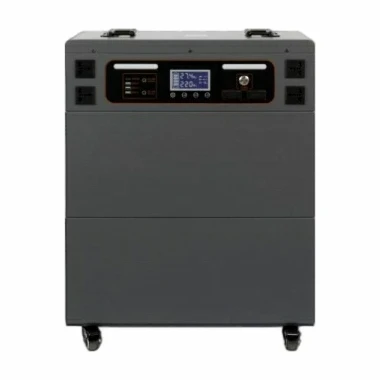
If you’re tired of generic power gear dying on you in the salt air, hit me up to talk about pricing, bulk orders, or warranty details. We’ve got units in stock and ready to ship, and we can even customize them if you have specific coastal needs. Don’t waste another season dealing with power failures—gear up with something built for the coast.
LiFePO4 Battery References:
- National Association of Corrosion Engineers (NACE). (2020). Corrosion Control in Marine Environments: Best Practices for Portable Electrical Equipment. NACE International, Houston, TX.
- International Electrotechnical Commission (IEC). (2019). IEC 60529: Degrees of Protection Provided by Enclosures (IP Code). IEC, Geneva, Switzerland.
- Marine Industry Manufacturers Association (MIMA). (2021). Salt Spray Testing Standards for Deck and Worksite Equipment. MIMA, Washington, DC.
- Occupational Safety and Health Administration (OSHA). (2022). Portable Power Equipment Safety Guidelines for Coastal Construction Sites. OSHA, Washington, DC.
Guangdong Joinwin Global Digital Intelligence Technology Co., Ltd.
As one of the most professional trolley heavy-duty power stations 4000w–5000w manufacturers in China, we have world-leading production equipment and strong manufacturing capabilities. Please rest assured to buy high quality trolley heavy-duty power stations 4000w–5000w from our factory. Customized orders are welcome.
Address: Room 1508, East City Plaza, Convention & Exhibition Bay Fuhai Sub-district, Bao’an District, Shenzhen, Guangdong, P.R. China
E-mail: bruceyang@joinwinenergy.com
WebSite: https://www.joinwinpower.com/
