If you’re reading this, you’re likely someone who works in veterinary medicine—maybe a clinic manager, a small animal practitioner, or a specialist tasked with sourcing reliable, cost-effective tools to care for your patients. Or perhaps you’re like me: a medical device accessories supplier who spent the first 10 years of my career in human healthcare, only to realize a huge gap in the veterinary space that my team could fill. For years, I’ve fielded questions from vets and industry peers alike: “Can medical device accessories be used in veterinary medicine?” The short answer is yes, but it’s not a simple one. It comes down to matching the right accessory to the unique needs of animal patients, navigating regulatory nuances, and ensuring that the products we provide are safe, effective, and compliant for use outside their original intended human use. Medical Device Accessories
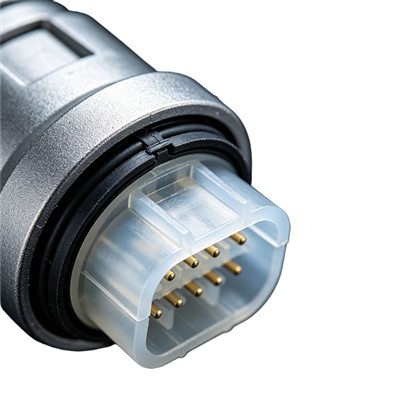
Let’s start with the most common, practical use cases. I’ve seen first-hand how many of the accessories we manufacture for human medical devices translate seamlessly to animal care—when adapted properly. Take IV catheters, for example. We produce a range of needle-free connectors that attach to these catheters, a staple in human emergency rooms and outpatient clinics. For dogs, cats, and even exotics like rabbits or ferrets, these connectors work exactly as they do in humans: they reduce the risk of needlestick injuries for staff, prevent infection by eliminating the need to disconnect and reattach tubing frequently, and make administering medications or fluids faster during critical procedures. The only adjustment we make? We offer smaller gauge sizes and shorter tubing lengths, tailored to the tiny veins of a 2-pound Chihuahua versus the 18-gauge standard used for human adults. No reengineering the connector itself—just sizing it to fit the patient.
Another example: blood pressure cuffs. Our line of disposable cuff bladders and connectors, designed for human pediatric and geriatric patients, work perfectly for large animal species like horses, cows, and even camels. Vets often need to monitor vital signs during routine check-ups, post-operative care, or emergency situations, and reusable cuffs can be hard to sanitize between patients or too bulky for smaller animals. Our disposable cuff components are lightweight, latex-free, and calibrated to ensure accurate readings, even when used on a 1,000-pound horse with a thick coat. We’ve even had equine veterinarians tell us they use our adult human-size cuff adapters for donkey patients, since standard veterinary cuffs for donkeys are often difficult to source and overpriced.
But it’s not just basic patient care accessories. We also supply components for more specialized veterinary procedures. For example, our ECG electrode gels and adhesive tabs, which are formulated to be conductive and gentle on human skin, work for small animal ECGs—dogs and cats have thinner skin than humans, so the only modification we made was reducing the amount of adhesive to avoid irritation when removing the tabs from a cat’s fur. For exotics, like parrots or reptiles, we’ve found that our smaller, flexible electrode leads work better than many of the ones marketed specifically for vet use, which are often too stiff for their delicate, irregular body shapes.
Of course, this isn’t a free-for-all. The biggest challenge we’ve faced as a supplier is navigating the regulatory landscape that governs both human and veterinary medical products. In the U.S., the FDA classifies accessories as “combination products” if they’re used with medical devices, and when repurposed for animals, they fall under the Center for Veterinary Medicine (CVM) rather than the Center for Devices and Radiological Health (CDRH) that oversees human products. That means we can’t just take a human accessory, slap a “veterinary use” label on it, and ship it. We work closely with veterinary regulatory consultants to test each accessory for animal-specific safety: things like skin irritation potential when used on animal coats (which are often more dense or have different pH levels than human skin), compatibility with common veterinary medications that might degrade plastic or rubber components, and accurate performance across a wide range of animal sizes and species.
Last year, we launched a new line of enteral feeding tubes and their connectors, specifically for veterinary use, but the core design was based on our human feeding tube accessories. We submitted data from third-party labs that tested the tubes on live animal models (dogs and cats, with the approval of an institutional animal care and use committee, or IACUC) to confirm that they didn’t cause gastrointestinal irritation, that they maintained a tight seal to prevent leakage during feeding, and that they were easy to insert by vet techs. The CVM approved the line after six months of review, and now it’s used in over 200 small animal clinics across the country. That process took a lot of work, but it was worth it to ensure that the products we provide are safe for both animals and the staff that handle them.
I’ve also learned over the years that there’s a misconception in the veterinary industry that products marketed specifically for animals are always better. That’s not necessarily true. In many cases, human medical device accessories are manufactured to higher quality standards, at a lower cost, and with more consistent availability than veterinary-specific alternatives. Let’s take catheters again: many veterinary catheters are made in small batches, so lead times can be weeks, while our human-grade catheters are manufactured in large, FDA-registered facilities, with lead times of just a few days. That’s a huge difference for a clinic dealing with a critical emergency, like a dog hit by a car that needs immediate fluid access. And because we source raw materials from the same suppliers as top human medical device manufacturers, the quality is identical—so vets don’t have to compromise on safety to get a reliable product.
That said, we never assume a one-size-fits-all approach. For some applications, repurposing a human accessory isn’t feasible. For example, surgical retractors—designed for human abdominal surgeries—are too large and heavy for spaying a 2-pound kitten. In those cases, we work with veterinary surgeons to design custom accessories, using the same manufacturing processes and quality controls as our human products. For example, we recently developed a set of small, lightweight retractor blades specifically for feline spays, after a group of vet surgeons told us that existing veterinary retractors were too flimsy and prone to breaking mid-procedure. We tested the blades on 50 feline patients, got feedback from the surgeons, and adjusted the design to make it stronger and easier to clean. That’s the kind of collaboration that makes our work meaningful: listening to the people on the front lines of animal care and adapting our products to meet their needs.
One of the most rewarding parts of this work has been seeing the impact our accessories have on animal patients. Last year, a vet in rural Ohio told us that our needle-free connectors had reduced the time she spent placing IV catheters for diabetic cats by 40%. Before, she had to flush and re-stick the catheter every time she gave insulin, because the old connector would leak or get clogged. Our connector is designed to be used for up to 72 hours, so she only has to place the catheter once, which is less stressful for the cat and less work for her. That’s why we do this: not just to sell products, but to support the people who care for animals and make a real difference in their lives.
Of course, we’re not the only supplier doing this, but I think what sets us apart is our focus on education. A lot of vets don’t realize that many human medical device accessories can be safely used in animals, when adapted properly, and that it can save them time and money without compromising safety. We host quarterly webinars for vet clinics, where we talk about which accessories work for which animals, how to test for compatibility, and how to navigate the regulatory process for new products. We also offer free sample kits for vets to test our accessories in their own clinics, so they can see the difference for themselves.
If you’re a veterinary professional who’s tired of waiting weeks for specialty accessories, or dealing with products that don’t work as well as they should, we can help. We offer a wide range of medical device accessories—from IV connectors and cuff bladders to electrode leads and feeding tubes—that have been tested and approved for veterinary use, with fast lead times and competitive pricing. Our team works closely with each clinic to understand their specific needs, whether that’s a small animal clinic looking for affordable catheters or a large animal practice needing durable cuff adapters for horses.

If you’re interested in learning more about how our accessories can support your veterinary practice, we encourage you to reach out to our team to discuss your needs and request a consultation. We’re here to help you find the right products for your patients, and to make the sourcing process as easy and stress-free as possible.
Automotive Connector References
- U.S. Food and Drug Administration. (2022). Regulation of Combination Products. Retrieved from FDA.gov
- American Veterinary Medical Association. (2021). Veterinary Medical Device Sourcing Best Practices. Retrieved from AVMA.org
- Center for Veterinary Medicine. (2020). Guidance for Industry: Use of Human Medical Devices in Animals. Retrieved from FDA.gov/CVM
- Journal of Veterinary Emergency and Critical Care. (2019). “Use of Human-Grade IV Accessories in Small Animal Emergency Medicine.” Vol. 29, No. 4, pp. 387-392
- International Organization for Standardization. (2021). ISO 10993: Biological Evaluation of Medical Devices for Veterinary Use. Retrieved from ISO.org
Modelon Precision Industry (Suzhou) Co., Ltd.
With abundant experience, we are one of the most professional medical device accessories manufacturers and suppliers in China. Welcome to buy customized medical device accessories at competitive price from our factory. If you have any enquiry about pricelist, please feel free to email us.
Address: 1st Floor, Building 22, No. 2628 North Gate Road, Kunshan City, Jiangsu Province, P.R.China
E-mail: jessica_huang2025@163.com
WebSite: https://www.modeloncn.com/
