If you’ve ever held a transformer, a motor, or a small electronic coil, you’ve interacted with enameled round wire—even if you didn’t know it. For 15 years, I’ve run a supplier specializing in this material, and one question I get almost daily from engineers, small electronics manufacturers, and even hobbyists is: What actually makes enameled round wire work the way it does? It’s easy to see it as just a thin, insulated copper (or aluminum) wire, but its electrical properties are what make it the unsung workhorse of low- and medium-voltage electrical systems. Today, I’m breaking down those properties, why they matter, and how as a supplier, we design our wire to meet the exact needs of your projects. Enameled Round Wire
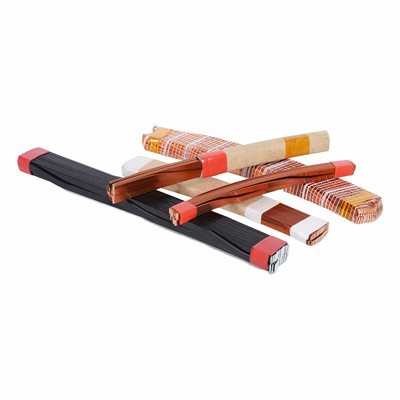
First, let’s start with the basics you probably learned in high school physics, but that bear repeating: at its core, enameled round wire is a conductive metal core (usually copper, for its high conductivity, or aluminum, for cost and weight savings) wrapped in a thin, solid insulating coating—we call that coating “enamel,” even though it’s not the glassy, baked enamel you might use on a metal sign. That insulation is a critical part of its electrical identity, so let’s split its key properties into two categories: conductive properties (related to the metal core) and insulating properties (related to the enamel coating). Together, these are what set enameled round wire apart from bare wire, and why it’s not just wire with a plastic wrap.
Let’s start with conductive properties, because that’s the whole point of wire: moving electricity from one place to another without losing too much along the way. The most important conductive property here is electrical conductivity, measured in IACS (International Annealed Copper Standard). Pure annealed copper, the standard for most enameled wire, has 100% IACS at 20°C (68°F). That means 1 meter of 1mm-diameter copper wire has a resistance of exactly 0.01724 ohms. Our wire is made from electrolytic-tough-pitch (ETP) copper, which meets or exceeds that standard—we test every batch at our in-house lab to make sure there’s no oxygen or impurities that would bump conductivity down. For aluminum wire, it’s around 61% IACS, so a thicker diameter is needed to match copper’s performance, but for applications where weight is a priority (like aerospace or portable appliances), that tradeoff makes sense.
Next up: ampacity, or the maximum current a wire can carry without overheating. Ampacity isn’t just about conductivity—those of us in the industry spend a lot of time calculating it, because it depends on more than just the wire’s core. Enameled round wire is used for tightly wound coils, like in a motor armature, so heat dissipation is a big factor. If two wires are wound side-by-side, each one traps heat from the others, so their ampacity is lower than if they were spaced apart. For example, a 20AWG (0.812mm diameter) enameled copper wire can carry about 4.8 amps when free in open air, but when wound into a dense coil, that drops to around 3.5 amps. That’s a detail engineers care about, and as a supplier, we mark every spool with both values, plus the thermal class rating of our enamel, so you don’t have to guess. We also offer specialty high-temperature grades for applications like aerospace ignition systems, where ampacity stays consistent even at 200°C, which standard wire can’t do without failing.
Another conductive property that’s often overlooked: skin effect. When alternating current (AC) flows through a wire, it doesn’t distribute evenly across the core—most of it travels near the outer surface, or “skin,” of the wire. At 50/60Hz, the frequency of most household and industrial power, the skin depth is about 8.5mm for copper. That means for wire thicker than 17mm diameter, the center of the wire is basically unused, wasting conductive material. That’s why for AC applications, especially high-frequency ones (like in switching power supplies or RF coils), we use Litz wire: multiple small-diameter enameled strands twisted together, each carrying a fraction of the current, so there’s no wasted core space. We stock Litz wire in strands as small as 0.02mm, so you can build high-efficiency coils without overheating.
Now, the insulating properties—without these, enameled wire is just bare copper, which would short out immediately when wound into a coil. The enamel coating is a thin, polymer layer (usually polyurethane, polyester, or polyimide, depending on the grade) that has its own electrical specifications. The first big one is dielectric strength, which is how much voltage it can withstand before breaking down (i.e., letting electricity pass through the coating). Typical standard-grade enamel for small motors has a dielectric strength of around 200 volts per mil (a mil is 0.001 inch), so a 1mil thick coating can handle 200V before it shorts. That’s more than enough for most low-voltage applications, but for high-voltage transformers or ignition coils, we offer a double-coated “dual build” enamel, which is two thinner layers for a total dielectric strength of up to 400V per mil, so 2mil thick coating can handle 800V. We also test every spool for pinholes—tiny defects in the enamel that would cause a short. Our manufacturing process includes a high-voltage spark test: as the wire is spooled, it passes between two electrodes, and if there’s a pinhole, the spark triggers an immediate reject, so you never get bad wire on your spool.
Another critical insulating property is thermal stability, or how well the enamel holds up to heat without breaking down, melting, or losing its dielectric strength. Enameled wire is graded by thermal class, which is the maximum continuous temperature it can withstand for 20,000 hours before its insulation life drops by half. The most common is Class 130 (130°C / 266°F), which works for most consumer appliances and small motors. But we also carry Class 180 (180°C / 356°F) for industrial equipment, Class 200 for heavy-duty transformers, and even Class 220 polyimide enamel for aerospace and military applications, where temperatures can spike during operation. One mistake we see new engineers make is buying a cheaper, lower-grade wire to save money, only to have the insulation melt inside a motor, causing a short mid-operation. As a supplier, we always flag that tradeoff—saving 10% on wire upfront can cost you thousands in downtime later.
Also, chemical resistance matters for enameled wire that’s used in harsh environments. If it’s going to be exposed to oil (like in a automotive motor), solvents (like in industrial equipment cleaning), or humidity (like outdoor power tools), the enamel can’t break down or lose its adhesion to the copper core. Our polyurethane-enameled wire has excellent oil resistance, so it won’t crack or dissolve after years of exposure to motor oil. For outdoor applications, we offer a weather-resistant grade that resists UV radiation and moisture, so it doesn’t degrade in direct sunlight. We even have a specialized grade for medical devices, where the enamel is compatible with sterilization methods like autoclaving, so it can be reused without insulating failure.
Wait, let’s talk about adhesion, too—it’s not strictly conductive or insulating, but it’s tied directly to both properties. The enamel has to stick tightly to the copper core, otherwise when you wind the wire into a coil, the coating can chip or flake off, exposing bare copper and causing shorts. Our manufacturing process uses a chemical pretreatment on the copper before applying enamel, which etches a tiny, uniform texture into the metal, so the enamel bonds tightly. We test adhesion by scraping the wire with a sharp tool—if the enamel comes off in large chunks, it’s rejected. That’s a quality control step that separates us from lower-quality suppliers, who cut corners on pretreatment to save time.
Now, how do these properties translate to real-world use? Let’s say you’re building a 12V 10A power transformer for a robot. You’d need enameled round wire with high conductivity to keep the transformer efficient, ampacity that can handle 10A without overheating, dielectric strength of at least 15V per turn (since each coil turn has 12V / number of turns), and thermal Class 130, since the transformer will run at around 80°C in normal use. If you buy the wrong wire—say, bare copper—each turn would short out, and your robot would stop working. If you buy aluminum wire, you’d need a thicker diameter to handle 10A, making the transformer bulkier than necessary.
As a supplier, that’s what I bring to the table: not just spools of wire, but expertise to help you pick the right grade for your project. I’ve worked with small startups building hobbyist motors, mid-sized manufacturers making commercial HVAC components, and aerospace firms building satellite coils—each has different needs, and the same “generic” enameled wire won’t work for all of them. For example, a satellite coil needs polyimide enamel that can withstand vacuum and extreme temperature swings, while a coffee maker’s heating element only needs standard Class 130 polyester wire. You don’t have to navigate the technical specs alone—we can test your application’s needs, recommend the right wire, and provide full batch testing records so you can meet your industry’s safety standards.
I also want to clear up a common misconception: enameled round wire isn’t one-size-fits-all. A lot of people think “the thinnest wire is best for small coils,” but too thin a wire has higher resistance, meaning you’ll lose more energy as heat. We offer wire from 0.01mm (super fine for tiny hearing aid coils) up to 5.0mm (for large industrial transformers), with custom enamel coatings for special uses. If you need a specific diameter, thermal class, or chemical resistance, we can produce it in small runs, no minimum order charge—perfect for prototype projects.
What about cost? I know price is always a factor, but as a supplier, we prioritize quality over cutting corners. Our wire may cost a bit more than the no-name options, but the rejection rate is less than 0.1%—meaning you won’t waste time testing bad spools, and you won’t have field failures that damage your reputation. We also offer bulk discounts for regular orders, so if you’re a manufacturer doing 10,000 motors a year, we can price it to fit your budget.
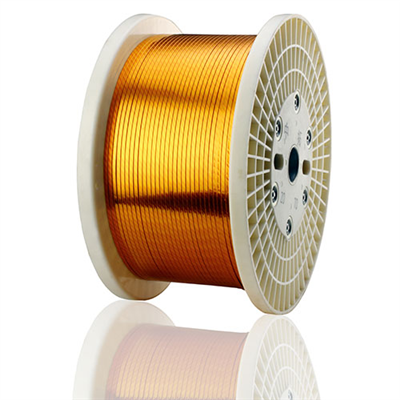
At the end of the day, enameled round wire’s electrical properties are what make it indispensable. It’s conductive enough to move electricity efficiently, insulated enough to prevent shorts, stable enough to last years in any environment, and flexible enough to wind into tight coils. If you’re working on a project that needs reliable, high-quality enameled round wire, I’m here to help. We can walk through your technical requirements, answer any questions about electrical specs, and get you the exact wire you need, whether it’s a prototype sample or a full production order. Don’t settle for generic wire that doesn’t meet your needs—reach out to us today to discuss your procurement requirements.
Wrapped Wire References
- International Electrotechnical Commission. (2020). IEC 60317: Specifications for particular types of winding wires.
- Copper Development Association. (2018). Electrical Properties of Enameled Round Wire.
- NEMA Standard MW 1000-2019. (2019). Standard for Magnet Wire: Enameled Round Magnet Wire.
- Aerospace Industries Association. (2021). High-Temperature Enameled Wire Specifications for Flight Systems.
Tianjin Jingwei Power Technology Co., Ltd.
As one of the most professional enameled round wire manufacturers and suppliers in China, we’re featured by quality products and good service. Please rest assured to buy durable enameled round wire made in China here from our factory. Contact us for more details.
Address: No.1 Chuangxin Rd. Xiaozhan Industrial Park, Jinnan District, Tianjin, China
E-mail: info@jwdc.cn
WebSite: https://www.jw-dcs.com/
