When you’re standing in a workshop or engineering lab, surrounded by components that keep machinery moving, the hydraulic gear pump is one of the unsung heroes. I’ve spent the last 12 years on the floor of my hydraulic gear pump supply business, walking through projects with small farm operators, construction fleet managers, and aerospace parts fabricators, and one question comes up more than any other: “How do I pick the right displacement for my gear pump?” It’s not a question with a one-size-fits-all answer. Get this wrong, and you’re looking at energy waste, overheating, or pumps that burn out in months instead of years. Nail it, and your machine runs smoother, lasts longer, and keeps your production on track. Today, I’m breaking down what you need to know, from the basics I learned on my first pump sales call to the data I rely on for every custom consultation we do. Hydraulic Gear Pump
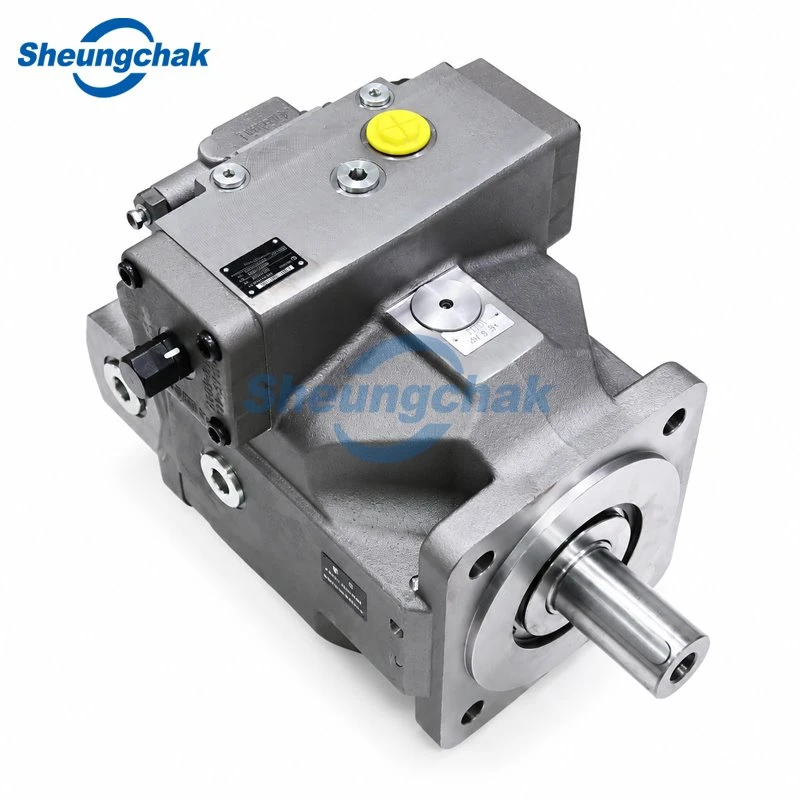
First, let’s get clear on what displacement actually is, because it’s easy to mix this up with flow rate or pressure. Displacement is the volume of hydraulic fluid a gear pump moves with every full rotation of its drive shaft. It’s measured in cubic inches per revolution (in³/rev) or milliliters per revolution (ml/rev)—think of it as the pump’s “dose” of fluid per spin. Flow rate, by contrast, is how much fluid it moves per minute, and that number is tied directly to both displacement and the pump’s rotational speed. If you double the displacement and keep the speed the same, you double the flow rate. If you keep displacement the same and double speed, you also double flow. That relationship is non-negotiable, and it’s where most people start making mistakes.
Let’s say you have a small hay baler that needs 10 gallons per minute (GPM) of flow to operate its knotter and plunger. I’ve seen a farmer grab the first pump with a 10 GPM flow rating without checking displacement, only to end up with a pump that spins twice as fast as it should. High rotational speeds on gear pumps cause heat buildup, noise, and excessive wear on the gears and bearings—those small, consistent issues add up fast when you’re running 12-hour days during harvest season. Displacement is the fixed number you need to calculate first, then adjust speed to hit your required flow rate, not the other way around.
The first step to choosing displacement is mapping your actual load demand, not the maximum your machine could ever need. I learned this early from a construction contractor who bought a 50 GPM pump for a skid-steer loader because he thought “more power equals better.” What actually happened? The loader’s hydraulic cylinders only needed 25 GPM to lift and lower a pallet fork, so the extra flow had to go somewhere—most of it spilled over the pressure relief valve and turned into heat. In the summer, the hydraulic fluid hit 180 degrees Fahrenheit, thin out, and started leaking past the pump’s internal parts, leading to a $3,000 repair bill three months later. To avoid that, start with your machine’s peak operational flow requirement, not its hypothetical maximum.
Let’s make that concrete. Grab your machine’s service manual first—most modern manuals list required hydraulic flow rates for each function: lift, steering, digging, whatever your pump powers. If you don’t have the manual, run a simple test. Hook a flow meter to the pump’s outlet, run the machine through its full cycle at normal operating speed, and note the flow that’s actually needed. Don’t test at full throttle—most machinery doesn’t operate at 100% speed all the time, and testing at idle or medium speed gives you a more realistic number. Once you have that GPM number, use the formula that connects flow, displacement, and speed: Flow (GPM) = (Displacement (in³/rev) × Pump Speed (RPM)) / 231. The 231 is the conversion factor to turn cubic inches into gallons. Rearranged to solve for displacement, that gives you Displacement = (Flow Needed × 231) / Pump Speed.
Here’s where the nuance comes in: pump speed isn’t arbitrary. Every gear pump has a minimum and maximum recommended RPM range—most common industrial gear pumps run between 500 RPM and 3,000 RPM, but specialty pumps can go lower or higher. If your required flow is low, say 8 GPM, and the maximum speed your pump can handle is 3,000 RPM, plug those numbers in: Displacement = (8 × 231) / 3,000 = 0.616 in³/rev. That’s a small displacement pump, and you’d run it at full speed to get your flow. If you grabbed a pump with double that displacement, 1.2 in³/rev, you’d only need to run it at 1,500 RPM, which is a much more comfortable, low-wear speed. Wait—now that sounds like a better option? Not so fast. Higher displacement pumps are often heavier, more expensive, and not as efficient at low speeds. I had a customer with a small wood splitter test this last year, and the smaller, higher-speed pump ran cooler and used 15% less energy than the bigger, slower one. The key here is matching displacement to your speed range, not forcing a size that doesn’t fit.
Next, you have to account for pressure, and how pressure interacts with displacement. I know a lot of new operators think pressure is the only measure of power, but pressure and displacement work hand in hand. Pressure is the force the pump can exert, and it’s measured in pounds per square inch (PSI). A larger displacement pump, running at the same pressure as a smaller one, will do more work per rotation. But here’s the catch: larger displacement pumps also generate more torque, which means your engine or motor has to work harder to turn them. If your engine is underpowered for the displacement you choose, you’ll get slow operation, stalling, and even damage to the engine’s crankshaft over time.
That’s a mistake I see in small-scale agricultural equipment all the time. A farmer will upgrade his tractor with a new hay fork, which needs higher pressure and more flow, and buy a big displacement pump to handle it. But his tractor’s PTO (power take-off) is only rated for 50 HP, and the new pump requires 60 HP to run at full capacity. He ends up running the pump at half speed, which means he’s not getting the flow he needs, and the pump is under a strain it wasn’t designed for. The fix here is to calculate the required horsepower for your pump, and make sure it aligns with your prime mover’s (engine or electric motor) output. The formula for pump horsepower is: HP = (Pressure (PSI) × Flow (GPM)) / 1,714. So if your pressure is 2,000 PSI and flow is 10 GPM, that’s (2,000 × 10) / 1,714 ≈ 11.7 HP needed. If you had picked a larger displacement pump that would require 15 GPM at the same pressure, you’d need 17.5 HP, which your tractor can’t provide. That extra horsepower cost adds up at the fuel pump too—over a year, that inefficiency can cost hundreds of dollars in wasted fuel.
Another often-overlooked factor is duty cycle. Duty cycle is how long your pump runs versus how much rest it gets. If you’re running a pump on a backhoe that operates 8 hours a day, 5 days a week, during peak construction season, you need to pick a displacement that keeps the pump in its optimal operating temperature range. Gear pumps run most efficiently when they’re operating at 70-90% of their maximum pressure rating, and at a steady speed. If your duty cycle is low—say, a pump for a woodworking machine that only runs 1 hour a day—you can get away with a slightly smaller or larger displacement, as long as the flow and pressure fit. But for high-duty-cycle applications, I always recommend sizing the displacement so that your pump operates at part load most of the time, not at maximum capacity. Running a pump at maximum pressure 24/7 will cut its lifespan from 5,000 hours to 1,000 hours, easy.
We also have to talk about system compatibility, especially if you’re replacing an old pump or integrating a new pump into an existing hydraulic system. I get calls all the time from people who need to replace a worn-out gear pump, and they just order the same model they had before, without checking the displacement. What if their old pump was oversized for their system, and they can get a smaller, more efficient displacement that will save them money? Or what if their system has been modified to require more flow, so the old displacement is now too small? For example, I had a municipal landscaping company that replaced their old dump truck hoist, which increased the required flow by 3 GPM. Instead of ordering the same displacement pump that was too small, we calculated that a 10% increase in displacement would let them run the hoist at a safe, efficient speed, without straining the truck’s PTO. The result? They got the hoist working faster, and didn’t have to modify any other parts of their truck.
There’s a common myth that bigger is always better when it comes to gear pump displacement. I busted that myth with a customer last year who runs a fleet of small utility vehicles for golf courses. He had been using a 2.5 in³/rev pump on each vehicle, which was costing him extra fuel and leading to overheating in the summer. We tested his required flow and speed, and found that a 1.8 in³/rev pump would deliver exactly the flow he needed, run at a slightly higher speed, and was 12% more efficient. Over the course of a year, he saved over $2,000 in fuel costs, and his pumps ran 15 degrees cooler, extending their life by an estimated 2 years. That’s the kind of win that comes from choosing displacement based on data, not assumptions.
If you’re still unsure, here are a few quick checks to avoid the most common mistakes. First, never rely only on flow rate specs from a catalog. Catalog specs are usually published at maximum speed and maximum pressure, which is not how most systems operate. Second, leave a 10-15% buffer for flow and pressure. No system is perfect—filters get clogged, hoses have small leaks, and temperature changes affect fluid viscosity. A small buffer will keep your pump from stalling or overheating when conditions aren’t ideal. Third, consider the type of hydraulic fluid you’re using. If you’re running a biodegradable fluid or a high-viscosity fluid (like the ones used in cold climates), you might need a slightly larger displacement pump to compensate for the fluid’s thicker consistency, which can reduce flow.
At the end of the day, choosing the right displacement for your hydraulic gear pump is all about balancing three things: your system’s actual operational needs, your prime mover’s capacity, and long-term efficiency and durability. It’s not a decision you make in 5 minutes—take the time to check your manual, run flow and pressure tests, and consult a supplier who actually knows the ins and outs of gear pumps, not just sales specs.
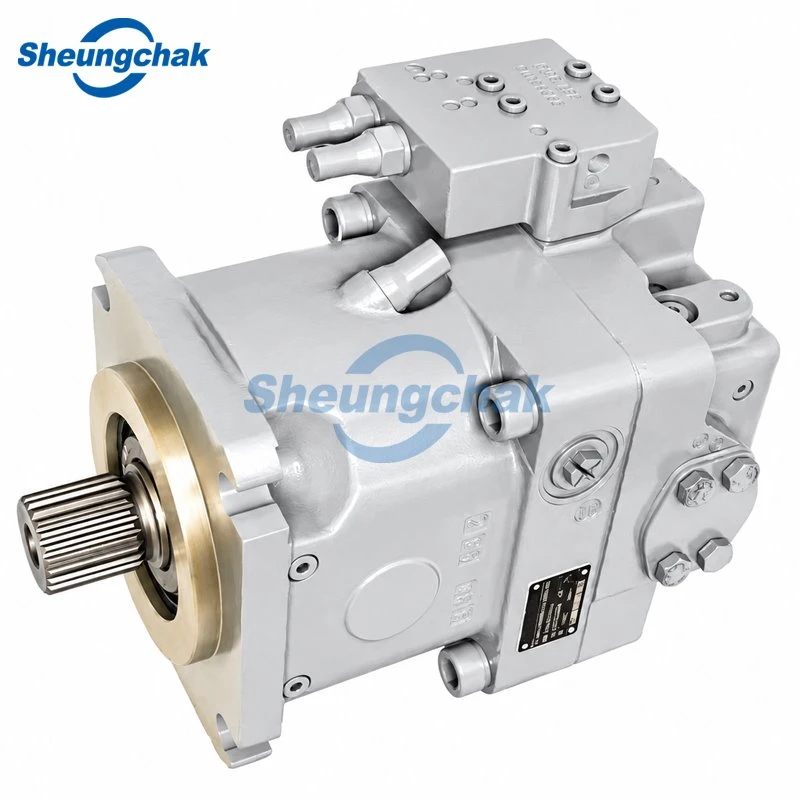
If you’re working on a project and need help sizing a hydraulic gear pump for your specific application, we’re here to help. Whether you’re a small farmer, a construction manager, or an industrial engineer, we can walk through your requirements, run the numbers, and find the right displacement pump that fits your needs and your budget. Reach out to us to discuss your project and get personalized guidance.
Hydraulic Motor References:
Hydraulic Fluid Power: Fundamentals and Applications. 2nd Edition, Fairbanks, R.M. 2010
Gear Pump Design and Application. Industrial Press Inc. 2018
Mobile Hydraulic Systems: Selection, Sizing, and Troubleshooting. Daugherty, G. 2021
Guangdong Sheungchak Hydraulic Technology Co., Ltd.
Guangdong Sheungchak Hydraulic Technology Co., Ltd. is one of the most professional hydraulic gear pump manufacturers and suppliers in China. We are committed to providing high quality customized products with competitive price. Please rest assured to wholesale durable hydraulic gear pump for sale here and get pricelist from our factory.
Address: Building 25, Liantang Industrial City, Shangcun Community, Gongming Subdistrict, Guangming District, Shenzhen, China
E-mail: info@hydraulicsc.com
WebSite: https://www.hydraulicsc.com/
