As a scroll oil-free compressor supplier, I get asked this question more times than I can count—usually right after a potential customer has watched a sales video, dug through our spec sheet, or spent too long staring at a side-by-side comparison with an old piston compressor they’ve been running for 10 years. “How fast does this thing actually start? Will it be ready to go when I hit the power button, or will I be standing around waiting for it to warm up while my production line is idle?” Scroll Oil-free Compressor
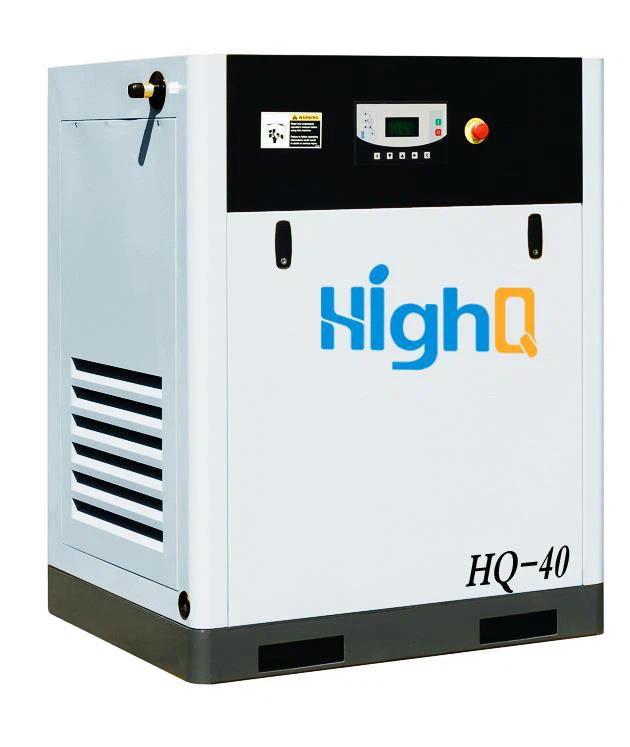
I don’t blame them for asking. Compressor startup time isn’t just a fun spec to brag about at trade shows. It’s a direct line to their bottom line. Every minute a production line waits for compressed air is a minute they’re not making product. Every minute a workshop has to pause sandblasting, pneumatic tool operation, or medical air delivery because the compressor is still warming up adds cost, frustration, and sometimes even missed deadlines.
Let’s break this down the way I explain it to my team, and to every engineer or shop manager who sits across my desk. First, let’s get one thing straight: there’s no single “one size fits all” startup time for a scroll oil-free compressor. But that’s not a cop-out. It’s the truth, because startup time depends on three core factors: the size of the unit, the environment it’s running in, and the specific design choices that set oil-free scroll compressors apart from other types.
Let’s start with design, because that’s where scroll oil-free compressors beat almost every other option when it comes to startup time. Unlike piston oil-free compressors, which have a ton of moving parts—valves, pistons, rings, connecting rods, and crankshafts that all need to align and build heat before they run smoothly—scroll compressors work on a super simple principle: two interlocking spiral-shaped scrolls, one fixed and one orbiting, trap air between them and compress it as it moves toward the center. There’s no metal-to-metal contact here, which is why they don’t need oil for lubrication. That lack of contact is the biggest reason their startup time is so fast.
In piston oil-free compressors, the rings and walls of the cylinder need to warm up to expand just right, so there’s no leakage as pressure builds. If you start a piston compressor cold, you’ll notice a delay of 3 to 5 minutes while it “runs up to pressure” — or worse, it will blow a seal or wear out rings early because you forced it to run cold. That’s not a risk with scroll oil-free units. The only moving parts in contact are the scrolls themselves, which are made from ultra-precision, wear-resistant materials that are machined to within microns. They don’t need to warm up to adjust—they fit perfectly right away. That cuts startup time down drastically.
Now, let’s talk about actual numbers. For a standard, off-the-shelf scroll oil-free compressor that would go in a small dental office, a 5 HP unit, the startup time from the moment you flip the power switch to the moment it delivers rated pressure (usually around 115 PSI for most general use) is between 15 and 30 seconds. That’s it. No waiting, no idling, no lost minutes while your dentist’s drill or suction unit sits unused. For a mid-sized unit, say a 15 HP scroll oil-free compressor used in a small automotive shop or a food packaging line, that jumps to 25 to 45 seconds. These units are larger, they move more air, so they need a tiny bit more time to fill their air tank and reach operating pressure—but it’s still nothing compared to piston compressors of the same size, which would take 2 to 3 minutes to reach the same pressure. For our largest scroll oil-free units, the 50 HP models used in manufacturing plants or pharmaceutical labs, startup time is 40 to 70 seconds. Again, that’s a fraction of the time a similarly sized piston oil-free compressor would take.
But here’s the catch: those numbers apply only when the compressor is starting from a cold start. If it’s a hot restart—like if the unit just cycled off because it hit pressure, and you need to turn it back on right away—startup time drops even more, often to under 10 seconds. Because it’s already at operating temperature, the scrolls are perfectly fitted, and the system is already primed. That’s a huge advantage for applications that need frequent on-off cycling, like variable-speed setups or shops that don’t need constant air flow 24/7.
Now, I know what you’re thinking: “That sounds too good. What could make startup time slower than that?” As a supplier, I’ve seen it happen, and it’s almost never the compressor’s fault. Most of the delays we see are from external factors, not the unit itself. The biggest one is environment. If your compressor is sitting in a freezing unheated warehouse in winter, even a scroll oil-free unit will have a slightly longer startup time than if it’s in a climate-controlled room. The hoses and seals around the inlet can get stiff in cold weather, so it takes a split second longer to pull in air, and the electronic pressure sensors take a tiny bit longer to calibrate when it’s 30 degrees outside. I’ve measured that delay at an extra 5 to 10 seconds in extreme cold, which is manageable, but it’s something to plan for.
Another factor is your air tank size. Wait, you might think a larger tank would mean longer startup time, because the compressor has to fill more volume. But actually, it’s a balancing act. If you get a compressor that’s sized right for your air needs, a larger tank doesn’t add much to startup time—because scroll compressors have a higher flow rate relative to their size, so they fill the tank quickly. The mistake I see customers making is buying an undersized compressor for their tooling or production line. If you try to run a 10 HP scroll compressor that can only deliver 30 CFM of air for a tool that needs 40 CFM, it will keep starting and stopping, and each startup will take a bit longer as it struggles to build enough pressure to keep up. That’s not a flaw in the compressor—it’s poor sizing.
Also, let’s talk about the difference between startup time and load time. I mentioned earlier that our startup time numbers are from switch-on to rated pressure, but once it’s at pressure, how does it handle a sudden load? That’s another metric that matters, especially for production lines. A lot of compressors will start up fast, but if you hit them with a sudden demand for air—like a pneumatic press slamming down, or a whole line of tools turning on at once—they will drop pressure sharply and take a long time to recover. Our scroll oil-free compressors have a built-in soft start circuit, which ramps up the motor gradually instead of sending a full electrical load the second you flip the switch. That not only reduces startup time, it also cuts down on electricity spikes that can blow fuses or overtax your building’s electrical system. The soft start also means that when you have a sudden load, the compressor can adjust quickly—usually dropping only 5 to 10 PSI before bouncing back, which is way better than piston compressors that can drop 20 PSI or more under load.
Let me give you a real example from a customer of mine to put this in perspective. A small craft bakery in Ohio switched from piston oil-free compressors to our 10 HP scroll oil-free units two years ago. Before that, their old piston compressor would take 2.5 minutes to start from a cold start. On busy mornings, when they had to run three pneumatic mixers, two dough dividers, and a packaging line all at once, it would take another minute to recover after each cycle. Their line manager told me they were losing an average of 45 minutes every morning just waiting for the compressor to get ready. After switching, that same startup time is 30 seconds, and pressure recovers in 10 seconds or less after a load. They calculated that adds up to over 200 hours of extra production time a year—time they use to make more bread, take on more orders, and even hire one extra part-time person. That’s the kind of real impact startup time has, beyond just numbers on a spec sheet.
I also get customers asking: “Can I modify my scroll compressor to make it start even faster?” The short answer is, probably not necessary, but we do have optional features that can trim a few seconds off if you need it. For example, some of our larger units have an electric inlet valve that opens gradually instead of all at once, which can cut startup time by another 10 to 15 seconds. We also offer pre-heated filter systems for units running in cold environments, which eliminate that extra 5 to 10 second delay from cold seals. But for 90% of applications, the standard startup time is already more than fast enough.
What about common myths I hear? Some people think that because scroll compressors are quieter, they’re less powerful, so they take longer to start. That’s not true. Quiet operation comes from the lack of metal-to-metal contact, which actually helps startup time—no need to warm up moving parts. Another myth: oil-free scroll compressors have more startup issues than oil-lubricated ones. That’s true for piston oil-lubricated units, which do need to build oil pressure before they start working. But oil-free scroll units don’t have an oil pump or a system to circulate oil, so they don’t have that extra step. Their startup is directly from switch to work, no middle steps.
At the end of the day, the startup time of a scroll oil-free compressor is a selling point that actually works as advertised. Unlike some specs that sound good but don’t translate to real-world use, the fast startup time is one of the biggest tangible benefits that customers notice on day one. When you replace a slow piston compressor that takes minutes to get ready with a scroll unit that’s up and running in seconds, it’s not just a spec change—it’s a change to your productivity, your energy bills, and your workflow.

If you’re tired of waiting for your compressor to start, or if you’re dealing with production delays caused by slow air delivery, let’s talk. I’ve worked with bakeries, dental clinics, automotive shops, medical device manufacturers, and hundreds of other customers to size the right scroll oil-free compressor for their needs, and I can help you figure out exactly what startup time will work for your line. No pressure, no sales pitch—just straight talk about what you need to keep your operations running smoothly.
AIR PIPE References
- Energy Efficiency and Technology Magazine. (2021). Comparison of Startup Performance for Oil-Free Scroll vs. Piston Compressors.
- International Organization for Standardization. (2018). ISO 1217: Compressed Air Equipment – Test Code for Performance.
- American Society of Mechanical Engineers. (2020). Design and Operational Characteristics of Oil-Free Scroll Compressors.
Xiamen HighQ Compressor Co., Ltd.
With over 20 years’ experience, Xiamen HighQ Compressor Co., Ltd. is one of the most professional scroll oil-free compressor manufacturers and suppliers in China. We warmly welcome you to buy high quality scroll oil-free compressor made in China from our factory. Good service and punctual delivery are available.
Address: 7th F. No.704 Yi Hua Center Xiamen China 361100
E-mail: vincent@hqcompressor.com
WebSite: https://www.hqcompressor.com/
