If you’re running a Daf truck, you’ve probably noticed how it handles rough roads, heavy loads, and tight turns without feeling like it’s bouncing around like a toy. A lot of that smooth (or stable, depending on the load) ride comes down to one unsung hero: the Daf leaf spring. As a leaf spring supplier for Daf, I get asked all the time, “Wait, what do these springs even do for the suspension?” So let’s break this down straight, no confusing jargon, no stuffy tech manual vibes. Leaf Spring for Daf

First, let’s set the scene. Daf trucks aren’t your average sedans—they’re built to haul everything from construction materials to refrigerated cargo over miles of potholed highways and rutted backroads. Their suspension has to balance two big jobs: keeping the load safe and steady, and making the ride bearable for the driver (no one wants to be sore after a 10-hour shift behind the wheel). That’s exactly where Daf leaf springs come in. They’re not just a chunk of curved steel; they’re a system of layered, thin steel strips that work together, and they’re custom-engineered to fit Daf’s specific models—whether it’s a light distribution truck or a heavy-duty hauler.
Let’s start with the basics of how they connect to the suspension. The suspension on a truck is what links the wheels to the frame. Without it, every bump, every rock, every uneven patch of road would send a jolt straight up to the frame, the cargo, and the driver. Leaf springs are mounted right between the truck’s axle and the frame—one end is bolted to a hanger on the frame (that’s the “fixed” end), and the other is connected to a pivotable shackle, so the whole assembly can flex when the load shifts or the road moves. That’s key. If it was rigid, the spring would snap under pressure, or the axle would shift around and mess up steering.
Now, how does this make the suspension work? Let’s talk about load support first. Daf trucks are rated for specific payloads, and the leaf spring’s design directly affects how much weight it can handle. The layers (called “leaves”) are each cut with a specific length and curve, so together they distribute the load evenly across the axle. If you’ve ever seen a Daf truck fully loaded, those leaf springs don’t just sit straight—they flatten out a little, right? That’s intentional. The leaves flex incrementally as the weight increases, so every part of the load gets spread out, not just concentrated in the middle. If the suspension didn’t have that, the axle would get warped, tires would wear unevenly, and you’d risk bending the frame. I’ve seen it a hundred times: a truck with a worn or wrong leaf spring starts pulling to one side, tires cupping out in a few thousand miles. That’s because the load isn’t being balanced properly.
Next, damping vibrations. Wait, leaf springs aren’t just for supporting weight—they also help smooth out the rough stuff. When a wheel hits a pothole, the leaf springs bend to absorb that impact. Then, they gradually release that energy instead of bouncing back all at once. That’s the damping part. Compare that to, say, a solid bar: it would take the hit and send it right back, making the whole truck bounce. Daf’s leaf springs are designed with specific steel grades and leaf counts to get the damping just right. For light distribution trucks, we use a few thinner leaves so they’re softer, which makes city driving less bumpy. For heavy haulers, we add thicker, longer leaves to handle the extra weight and keep the ride stable at highway speeds. I always tell my clients: you can’t use a light-duty leaf spring on a heavy Daf, and vice versa. It throws off the whole suspension’s balance.
Then there’s axle alignment and stability. When a truck is loaded, the rear axle can shift slightly, which messes up steering and handling. Leaf springs keep the axle in the correct position relative to the frame. The layered design means that when the spring flexes, it does so in a controlled way—no side-to-side shifting, no forward or backward movement. That’s huge for Daf trucks, which are often driven long distances on highways. If the axle shifts, tires don’t track straight, so you get poor fuel efficiency and more tire wear. I’ve had drivers tell me their Daf used to drift on the highway until they replaced a worn leaf spring—suddenly, it tracked straight, and their gas mileage went up by a half a mile per gallon. Small difference, but over 100,000 miles, that’s thousands of dollars saved.
Now, let’s address a common misconception: people think leaf springs are outdated, especially now that some trucks use air suspensions. But for Daf trucks, and most medium to heavy-duty work trucks, leaf springs still beat air suspensions when it comes to durability and load capacity. Air suspensions are great for long-haul luxury rides, but they’re more expensive to repair, more sensitive to extreme loads, and not as reliable off-road. Daf’s leaf springs are built to take a beating—dirt, mud, overloading a little here and there, rough backroads. As a supplier, we test every spring to make sure it can handle 150% of the rated payload without failing. That’s not something you get with a basic air suspension.
But wait, leaf springs aren’t indestructible. Over time, they wear out. Cracks can form in the leaves, the shackles can get loose, the bushings can dry out. When that happens, the suspension starts to lose its effectiveness. The ride gets bumpier, handling gets sloppy, and you’re at higher risk of a breakdown on the road. For Daf trucks, regular leaf spring checks are part of maintenance, right alongside oil changes and tire rotations. I’ve had customers come to me because their leaf spring cracked mid-delivery, leaving them stuck on a remote highway. That’s why using the right replacement leaf spring (not a cheap, off-brand one) is so important. Cheap springs might fit physically, but they’re made with lower quality steel, so they crack faster, throw off the suspension’s alignment, and can even damage the rest of the truck.
Now, let’s tie this all together: how exactly does a Daf leaf spring shape the suspension’s performance? Let’s break it down into three key ways, plain and simple:
- Load Distribution: It spreads the truck’s payload evenly across the axle and frame, preventing warping, uneven tire wear, and frame damage.
- Vibration Damping: It absorbs road impacts so the suspension doesn’t transfer every bump and jolt to the cab and cargo, making the ride smoother and protecting the load.
- Axle Stability: It keeps the axle aligned correctly, so the truck handles straight, tracks well on highways, and maintains steering precision—even when fully loaded.
But here’s the thing: every Daf model is different. A Daf LF for city delivery has a completely different suspension need than a Daf XF long-haul truck, or a Daf CF for construction work. That’s why as a Daf leaf spring supplier, we don’t just sell generic springs. We custom-make each spring to fit the exact model, payload rating, and usage of the truck. I’ve worked with owner-operators who run their Dafs 12 hours a day, six days a week, so we make their leaf springs with a slightly thicker middle leaf to handle the constant heavy loads. For delivery fleets that do a lot of stop-and-go in the city, we adjust the leaf curvature to make the ride softer for the driver.
A lot of new drivers don’t realize how much their leaf springs affect everyday driving. I once got a message from a Daf driver who said he’d replaced his old leaf springs with a cheap aftermarket set, and his truck felt like it was going to tip over when he had a full load on a curved exit ramp. He switched to our OEM-grade Daf leaf springs, and suddenly the curve felt smooth, no sway, no stress. That’s the difference a good leaf spring makes—it’s not just a part; it’s the backbone of your suspension.
Now, if you’re a Daf owner, fleet manager, or mechanic reading this, you might be wondering: when should I replace my leaf springs? If you notice any of these signs, it’s probably time: your truck sits lopsided (one rear end lower than the other), you hear a clunking or rattling from the rear when going over bumps, your tire tread is wearing unevenly (especially on the inner or outer edges), or the ride has gotten way bumpier than usual. Ignoring those signs can lead to more expensive repairs down the line—broken axles, frame damage, even accidents.
At the end of the day, the suspension on a Daf truck is built to work in sync, and the leaf spring is the centerpiece of that system. It’s not the flashiest part, but without it, your truck can’t do its job. If you’re in need of replacement Daf leaf springs, or you’re sourcing parts for your fleet, don’t cut corners with cheap, untested parts. We make sure every spring we supply meets Daf’s exact specifications, so you can trust it to keep your suspension working right, your cargo safe, and you on the road.
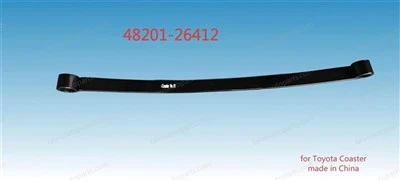
If you have questions about fitting a leaf spring to your specific Daf model, need a quote for bulk orders, or just want to chat about how to keep your truck’s suspension in top shape, get in touch. We’re here to make sure your Daf runs as smoothly and reliably as it should.
Leaf Spring for Shacman References
- Daf Technical Manual: Suspension Systems for Daf LF, CF, and XF Series Trucks, 2021
- Society of Automotive Engineers (SAE) International: Performance Characteristics of Leaf Spring Suspensions for Medium-Duty Commercial Vehicles, 2019
- Commercial Vehicle Outlook: Maintenance Best Practices for Leaf Spring Equipped Trucks, 2022
- International Organization for Standardization (ISO): Standard for Steel Leaf Springs for Heavy-Duty Vehicles, ISO 19455, 2018
Henan Talen Auto Parts Co., Ltd.
As one of the most professional leaf spring for daf manufacturers and suppliers in China, we have world-leading production equipment and strong manufacturing capabilities. Please feel free to buy durable leaf spring for daf made in China here from our factory. For price consultation, contact us.
Address: 7th Floor, Block C, No.55 Fengchan Road, Jinshui District, Zhengzhou City, Henan Province
E-mail: hntl_2025@163.com
WebSite: https://www.talen-autoparts.com/
