If you’ve ever stood near a power plant on a cool day, watching plumes of steam drift from its cooling towers, you might not have thought much about the tiny, complex process that makes that steam possible—and why it’s so critical that it’s pure. As a supplier of ion exchange equipment, I spend a lot of time talking to power plant engineers and operations managers about this exact thing: how the unassuming ion exchange systems they might have overlooked are actually the unsung heroes of a reliable, efficient power grid. Over the past 18 years in this industry, I’ve watched firsthand how power plants struggle with efficiency and downtime, and how ion exchange isn’t just a “nice-to-have” here—it’s a make-or-break solution. Today, I want to break down why ion exchange equipment isn’t just usable in power generation, it’s one of the most essential tools the industry has. Ion Exchange Equipment
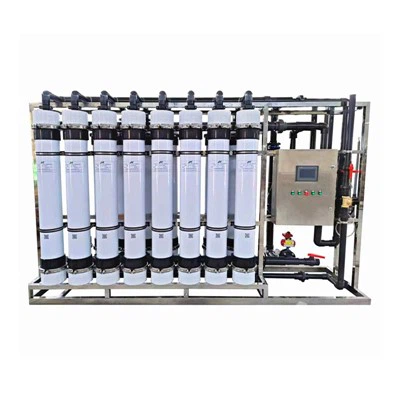
Let’s start with the basics, because I don’t want to skip over the stuff that trips a lot of new engineers up. Power generation relies heavily on steam cycles, right? Whether a plant runs on coal, natural gas, nuclear, or even renewable sources like geothermal or biomass, the core process is almost always the same: heat a working fluid (almost always water) into high-pressure steam, use that steam to spin a turbine connected to a generator, then cool and reuse that water in a closed loop. The problem? That water, when it comes straight from a river, well, or even municipal supplies, isn’t pure. It’s loaded with dissolved minerals—calcium, magnesium, sodium, chloride, silica, heavy metals, even trace contaminants like iron and copper from old pipework. If you heat that impure water into steam, those minerals don’t turn to steam. They stay behind, building up as solid scale on the inside of boilers, turbine blades, and heat exchangers. That scale doesn’t just reduce efficiency—it can cause catastrophic damage. I still remember the time I got a call from a mid-sized coal plant in Ohio back in 2015; they’d skipped upgrading their condensate polishing system, and 12 feet of scale had built up on their boiler tubes over three years. The plant was down for six weeks, costing them $2.7 million in lost revenue, plus another $800,000 in repairs. That’s the kind of story that sticks with you, and it’s why ion exchange is non-negotiable here.
So what is ion exchange, exactly, and how does it fix this problem? At its core, it’s a process that uses specially formulated resin beads—tiny, porous plastic beads charged with a specific ion (usually positive cations like hydrogen or sodium, or negative anions like hydroxide or chloride). When impure water flows through a column filled with these beads, the beads swap their harmless ions for the harmful contaminants in the water. For power plant applications, we almost always use mixed-bed ion exchange systems that combine cation and anion resins, because they can remove nearly all dissolved solids down to parts per billion (ppb) levels. It’s not flashy, but it works.
Now, let’s get specific about where ion exchange fits in the power generation supply chain, because it’s not just for one part of the process. First, make-up water treatment. Power plants use millions of gallons of water every day—water lost to steam that gets released, or lost in blowdown processes (where they get rid of concentrated minerals to prevent scale). That water has to be replaced, and it has to be treated to ultra-pure standards before it goes into the boiler. I once worked with a nuclear plant in the South that was struggling with silica in their make-up water; silica can turn into glassy scale on turbine blades, which erodes the blades over time and throws off their balance. Their reverse osmosis (RO) system was removing 90% of silica, but we added a polishing mixed-bed ion exchange system that knocked that down to less than 0.02 ppb—well below the nuclear industry’s strict 0.1 ppb limit. That plant has cut turbine maintenance costs by 35% in the eight years since we installed it.
Next, condensate polishing. That’s the process of treating water that’s already gone through the turbine and condenser, before it gets sent back to the boiler. This is where a lot of older plants cut corners, but it’s actually the most important part of the cycle for preventing corrosion and scale. Condensate can pick up trace metals from pipework and turbine components, plus any remaining minerals that slipped through make-up water treatment. Ion exchange resins here capture those metals and contaminants, ensuring the water going back to the boiler is as pure as possible. I’ve seen plants that tried to use activated carbon or filtration instead of ion exchange here, and within two years, they had pitting corrosion in their boiler tubes that required full replacement. Ion exchange doesn’t just remove the big contaminants—it grabs the tiny, trace ones that cause slow, permanent damage.
And let’s not forget about flue gas treatment, for plants that burn fossil fuels. Wait, ion exchange is used here too? Absolutely. Many coal and natural gas plants have to remove sulfur dioxide and nitrogen oxides from their flue gas to meet EPA or EU emissions standards. Ion exchange systems are used to regenerate the amine solutions that absorb these pollutants, extending the life of the amines and reducing waste. Some plants even use ion exchange to remove heavy metals like mercury from their ash, preventing leaching into groundwater. A lot of people only think of ion exchange for water, but it’s expanding into air treatment too, which is a big part of the modern power industry’s sustainability goals.
Now, let’s talk about common concerns I hear from plant operators, because I don’t want to pretend this is a perfect solution. The biggest complaint I get is that ion exchange resins need to be regenerated or replaced, which means downtime and labor costs. Fair enough—if you use a basic cation resin, it will get exhausted after a few thousand gallons of water. But modern resin formulations have come a long way. We now have high-capacity resins that last two to three times longer than the ones we used 10 years ago, and we’ve automated our systems to alert operators when a bed is exhausted, so they can schedule regeneration during planned shutdowns, not unplanned emergencies. Another concern is chemical use—old ion exchange systems needed harsh acids and bases to regenerate the resins, which posed safety risks and generated wastewater. But we’ve developed closed-loop regeneration systems that reuse 95% of those chemicals, cutting waste by almost all, and reducing on-site chemical storage needs. I had a plant in Pennsylvania that was using open-loop regeneration a decade ago; they were hauling 50-gallon drums of acid and base every week, and their wastewater treatment bill was $120,000 a year. We upgraded them to a closed-loop system, and that bill dropped to $18,000, plus they eliminated two days of labor a week spent handling chemicals. That’s the kind of ROI that makes operators take notice.
Another common question: can ion exchange work for all types of power plants? Let’s cover that. For thermal plants (coal, natural gas, nuclear, biomass), it’s the standard. Even the most modern combined-cycle natural gas plants rely on ion exchange for make-up and condensate polishing. For nuclear plants, it’s non-negotiable because of the strict purity requirements—any contaminants could interfere with reactor operations. For renewable plants? Wait, it’s even important for them. Geothermal plants use hot, mineral-rich water to spin turbines, and that water has to be treated to prevent scale and corrosion in their piping. Concentrated solar power plants, which use steam cycles similar to thermal plants, also need ultra-pure water for their steam systems. Even hydropower plants with auxiliary steam systems use ion exchange to maintain their equipment. So no, it’s not just for fossil fuel plants—it’s universal across almost all power generation types.
Now, let’s bring this back to real-world results, because numbers speak louder than sales pitches. I recently finished a project with a 600 MW coal plant in West Virginia that had been experiencing 12-15 unplanned shutdowns a year due to scale and corrosion. We installed a full set of ion exchange systems: a two-bed RO-pretreated mixed-bed make-up system, plus a condensate polishing skid. Six months later, they’d had zero unplanned shutdowns. Their heat rate (a measure of how efficiently they turn fuel into power) improved by 2.1%, which for a 600 MW plant means an extra $1.2 million a year in revenue. That’s not a hypothetical—that’s a real plant, with real numbers, and that’s why I know this equipment works.
I’ll also be honest about where it’s not the right fit. If a plant only uses raw water for low-pressure heating, not for steam generation, you might not need full ion exchange—filtration or softening could work. But for any plant that operates a steam turbine generating electricity, ion exchange is not a “cost center” it’s an investment. The cost of a good ion exchange system is typically 2-3% of a plant’s annual operations and maintenance budget, but the savings from avoided downtime, lower fuel use, and longer equipment life are 10-15 times that amount. I’ve never had a client come back to me and say they regretted investing in ion exchange.
As someone who’s been in this game long enough to see industry trends come and go, I think the biggest shift we’ve seen is how ion exchange has evolved from a “last resort” for bad water to a core part of plant design. Ten years ago, many EPC (engineering, procurement, construction) firms would skip high-end ion exchange systems to cut initial costs. Now, they’re including them from the start, because they know that upfront cost is nothing compared to the long-term risks of a poorly treated steam cycle. Regulatory pressures around emissions and water use have also played a big role—plants that don’t use efficient water treatment face fines, and ion exchange is one of the most efficient, low-wate options available.
If you’re reading this and nodding along because you’ve dealt with a scale-related shutdown, or watched your maintenance bills skyrocket, you’re not alone. A lot of power plant operators feel like they’re stuck between meeting demand and keeping equipment running, but ion exchange solves that balance. It’s reliable, it’s scalable (we can build systems for a 50 MW small plant or a 1,000 MW utility-scale plant), and it’s adaptable to changing regulations.
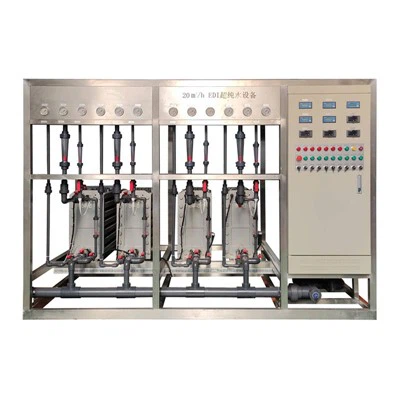
At the end of the day, the power industry is built on consistency. Grids need reliable power, and plants need to run without unplanned stops. Ion exchange isn’t just a piece of equipment—it’s the foundation of that reliability. If you’re looking to upgrade your water treatment systems, whether you’re dealing with scale, downtime, or emissions issues, I’m here to help. We work with plants of all sizes, across all power generation types, to design custom ion exchange solutions that fit your specific needs. There’s no one-size-fits-all, but there’s almost always a solution that will cut your costs and improve your uptime. Don’t wait for a shutdown to force your hand—let’s talk about how ion exchange can work for your power plant.
Membrane Filtration Equipment References
- American Water Works Association. (2021). Water Treatment for Power Generation Facilities. AWWA Press.
- International Atomic Energy Agency. (2019). Water Chemistry for Nuclear Power Plants. IAEA Publications.
- U.S. Environmental Protection Agency. (2020). Steam Electric Power Generating Effluent Guidelines. EPA Office of Water.
- GE Power. (2022). Ion Exchange Technologies for Modern Power Plants. Technical Report.
- Energy Institute. (2021). Water Management in Thermal Power Generation. The Energy Institute.
Shandong Yanuo Environmental Protection Equipment Co., Ltd.
We’re well-known as one of the leading ion exchange equipment manufacturers and suppliers in China, featured by quality products and good price. Please rest assured to buy bulk ion exchange equipment made in China here from our factory. Customized orders are welcome.
Address: North Side of the Road, 1,000 Meters West of the Intersection of Fenghuangshan West Road and Provincial Highway S102, Wangfu Subdistrict, Qingzhou City, Weifang City, Shandong Province.
E-mail: ynhb.499973983@gmail.com
WebSite: https://www.zkyaruo.com/
