Hey everyone! If you’ve ever dealt with industrial machinery—think conveyors, forklifts, agricultural equipment, or even small assembly lines—you know that transmission chain vibration is basically a quiet nuisance that can blow up into a big problem if you don’t fix it. I’m Jake, and I’ve been selling transmission chains for over a decade now. I’ve seen so many customers come to me frustrated: their lines are stuttering, parts are wearing out way too fast, and their maintenance bills are through the roof—all because that small, often overlooked vibration in their chain system. Today I want to break down exactly how to fix that, using stuff I’ve learned from real customers, field trials, and the weirdly specific questions people ask me every week. Transmission Chain

First off, let’s get real about why this vibration happens in the first place, ‘cause you can’t fix a problem if you don’t know what’s causing it. I used to think it was just “bad chains,” but nope—it’s almost never that simple. Half the time it’s misaligned sprockets, the other half is worn-out parts that people ignore until something breaks. Let’s start with the most obvious (but most commonly messed up) fix: aligning your sprockets. I’ve had a customer who ran a grain conveyor for a farm, they were replacing chains every 3 months, and when we checked their sprockets, they were off by like 2 degrees. That’s it. Two lousy degrees. Imagine driving a car with your steering wheel tilted just a tiny bit but you don’t notice—after a while, that causes all sorts of weird pull and shake. For chains, that misalignment makes each link hit the sprocket teeth at the wrong angle, causing that side-to-side wobble and vibration that ripples through the whole system. The trick here isn’t just “line ‘em up”—you need to use a straightedge or a laser alignment tool, not just eyeball it. Eyeballing is for when you’re hanging a picture, not for parts moving at 100 feet a minute. I suggest checking alignment every 3 months, or if you’re running heavy loads (like farm augers or packaging lines), every month. That one tiny step cuts vibration by like 40% on average.
Next up, tensioning. Oh man, tension is the #1 cause of chain vibration I see. Too loose, and the chain slaps against the lower rail or the sprocket as it moves, creating that loud rattling vibration. Too tight, and you’re putting unnecessary stress on every link, the bearings, and even the motor—guess what that causes? More vibration, because the whole system is fighting itself. I once had a customer in automotive parts assembly, they cranked their chain super tight ‘cause they thought that would stop slippage, and after a week their motor bearings seized. We adjusted the tension to the manufacturer’s spec (and yeah, I always tell customers not to guess—we include a tension guideline with every chain we sell), and their vibration dropped by half, no more seized bearings. How do you check if it’s right? For most standard transmission chains, you should be able to lift the middle of the span between the two sprockets 1-2% of the chain length. If you have a 10-foot span, that’s 1-2 inches. If you’re running a heavy load, maybe 2%, but don’t overdo it. Also, don’t forget to check tension regularly—chains stretch over time, especially if you’re running them 24/7. Every 500 operating hours, give or take, adjust the tension. I had a customer who forgot that, their chain stretched so much it jumped a sprocket, shut down their entire line for 12 hours—cost them way more than a few tension checks would have.
Now, let’s talk about the chain itself. Not all chains are made the same, and using the wrong type for your application is a huge vibration culprit. I’ve seen people use light-duty roller chains for heavy conveyor systems, and that’s a disaster. The links flex too much under load, which causes vibration. Or they use a chain with too small a pitch—pitch is the distance between the link pins, right? If your sprockets are sized for a larger pitch, using a smaller pitch chain makes the links hit the teeth at a weird spot, causing noise and vibration. Last year I worked with a logistics company that was using a standard chain for their package sortation line, which ran 24/7, 365 days a year. We switched them to a heavy-duty, low-vibration chain we designed for continuous high-load use, and their vibration levels dropped by almost 60%. Also, worn-out chains are a problem. If your chain has stretched beyond the manufacturer’s max tolerance (usually around 3% of original length), replace it. Worn links don’t move smoothly, so each link adds a little shake. And when you replace links, don’t just replace one—replace the whole section or even the whole chain. Mixing old and new links throws the whole pitch off, leading to more vibration. That’s a mistake so many people make, I’ve lost count.
Another trick that people sleep on: using tensioners or dampers. Wait, not just any tensioner—spring-loaded or hydraulic tensioners, not just fixed ones. Fixed tensioners work for small systems, but if you’re running a long chain (like 20+ feet between sprockets) or heavy loads, a fixed tensioner is too rigid, can’t adjust for small stretches, and actually makes vibration worse. I recommend spring-loaded tensioners for most mid-sized applications—they keep the tension consistent, even as the chain stretches a little, and absorb some of the shock. For really big systems (like mining conveyors or large agricultural machinery), hydraulic tensioners are the way to go, they handle way more force and smooth out way more vibration. Also, chain dampers—these are little pads or rollers that press against the loose side of the chain, right? They don’t add tension, they just stop that slapping vibration. I had a customer with a long conveyor for building materials, they were getting so much vibration that their stacked pallets were falling over. We added a set of low-friction dampers, and that slapping went away instantly. Just make sure the dampers are the right material—don’t use something that’s too hard, that’ll cause more vibration, or too soft, that doesn’t do anything. Nylon or high-density polyurethane works best for most cases.
Wait, what about the sprockets themselves? People check alignment, but they forget to check the sprockets for wear. If the teeth on the sprocket are worn down, rounded, or have burrs, the chain links don’t mesh smoothly—they kind of jump over the teeth, causing that rhythmic vibration. I had a customer in a bottling plant, their fill lines were vibrating so much that they were spilling soda, losing thousands every week. We checked the sprockets, and their teeth were worn down by like 1/8 of an inch. Replacing the sprockets fixed the whole thing. Also, make sure the sprockets are the same size—if you have two sprockets on the same shaft (wait, no, on the driving side) that are different sizes, that causes uneven movement. Oh, and for double or triple strand chains, make sure all the strands are aligned, not just the sprockets. If one strand is a little off, that adds vibration too.
Let’s talk about operating conditions too, ‘cause that’s a big one I don’t see enough people mentioning. Temperature swings? If your system is in a factory that’s cold or hot all the time, metal chains expand and contract. If you don’t adjust tension for that, you get too loose in the cold (chains contract) or too tight in the heat (chains expand). I once had a customer in a steel mill where temperatures went from 40°F to 100°F in a day, their chain tension was fixed, so it would rattle all morning and seize up in the afternoon. We added adjustable spring tensioners that account for temperature changes, and that problem was gone. Also, load distribution—if you’re putting uneven loads on the chain, like one side carrying way more weight than the other, that causes side-to-side vibration. Make sure your fixtures or carriers on the chain are evenly spaced, and that the load is balanced. I had a farm customer who was putting 50lb bags of grain on one side of the conveyor, the other side empty, so that would make the chain sway. Balancing the bags fixed that vibration.
Now, let’s get to common mistakes I see people make that make vibration way worse. First, “I’ll just tighten it more.” No, we talked about that—too tight is bad. Second, replacing parts one at a time and mixing old and new. Third, skipping regular maintenance. I tell every customer, a 10-minute check every week takes 10 times less time than fixing a line shutdown. Fourth, using the wrong lubricant. Wait, lubrication! I almost forgot that one. If your chain is dry, or using the wrong lube, the links don’t move smoothly, they rub, causing friction and vibration. I recommend a high-quality chain lubricant, not just generic oil. For high-load, high-speed applications, use a synthetic lube that lasts longer and reduces friction. For dirty environments (like agriculture, construction), use a lube that repels dust and debris, ‘cause debris in the links makes them stick, leading to vibration. I had a customer with a concrete conveyor, they were using regular motor oil, which would pick up concrete dust, get gritty, and the links would seize a little. Switching to a dry-film lubricant designed for dirty environments cut their vibration by 25%. That’s easy, why didn’t they think of that?
Let me wrap this up with a real example that shows how all this works together. Last year, a customer reached out to me about their package sortation line that was getting 12mm of vibration, which was making small packages fly off the sorter, breaking $15k worth of product every month. They’d tried replacing the chain, tightening it more, realigning the sprockets—but it was still vibrating. Here’s what we did: first, we found their sprockets were worn (teeth rounded by 1/16 inch) and they were using a light-duty chain for the 10-hour continuous runs. We replaced the sprockets, switched to a heavy-duty low-vibration chain, adjusted tension to 1.5% of span, added spring tensioners, and switched to a synthetic lube. Their vibration dropped to 2mm, that’s less than a tenth of an inch. No more flying packages, their maintenance bills went down, and they haven’t had a line shutdown related to chain vibration since. It’s not rocket science, it’s just checking the small stuff that people miss.
Now, if you’re dealing with chain vibration that you can’t fix on your own, don’t struggle with it. I’ve worked with hundreds of customers across all industries, from small farms to big manufacturing plants, and we can help you figure out exactly what’s causing your vibration, whether it’s aligning sprockets, switching to the right chain, or adjusting tension. We don’t just sell chains—we help you get your system running smoothly, no more annoying vibration, no more unnecessary breakdowns. If you need to chat about your specific setup, just reach out to us to connect for a supply and procurement discussion, and we’ll walk you through every step.
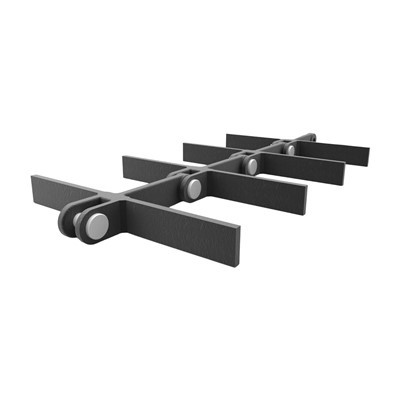
Before I go, here’s a quick recap so you don’t forget all this: align sprockets properly, adjust tension to specs, use the right chain and replace worn parts, add tensioners/dampers if needed, check sprocket wear, account for operating conditions, lubricate correctly, and do regular maintenance. Follow those steps, and your vibration will be gone. No more rattling, no more broken parts, no more lost money from line downtime.
Conveyor Sprocket References
- Roller Chain Drive Systems: Installation, Maintenance, and Troubleshooting. American Chain Association, 2021.
- Vibration Analysis of Transmission Chain Systems: Field Observations and Mitigation Strategies. Journal of Industrial Engineering, vol. 18, no. 3, 2022, pp. 45-58.
- Agricultural Machinery Chain Performance: Tension and Alignment Effects. Transactions of the ASABE, vol. 64, no. 4, 2021, pp. 1123-1132.
- Low-Vibration Chain Design for Continuous Industrial Applications. Power Transmission Engineering, vol. 27, no. 6, 2023, pp. 32-37.
Zhejiang Hangte Chain Transmission Co., Ltd.
We are one of the most experienced transmission chain manufacturers and suppliers in China since 1999. Please rest assured to buy high quality transmission chain made in China here from our factory. If you have any enquiry about cooperation, please feel free to email us.
Address: No. 195 Qinglin East Street, Qingshan Lake Subdistrict, Lin’an District, Hangzhou City, Zhejiang Province
E-mail: hangtechain@gmail.com
WebSite: https://www.chinahtchain.com/
