If you’re running a robot shop, managing a fleet of delivery bots, or even tinkering with industrial automation gear, you already know a robot is only as good as its battery. Over the years, I’ve talked to hundreds of robot operators who swear their bots die 2x faster in winter, or sputter out mid-job when it’s 90°F out. That’s not “just bad luck”—that’s temperature messing with your battery’s performance, plain and simple. As a robot battery supplier, I see this problem play out every single week, and it’s way more fixable than most people think. Let’s break it down, no jargon, just real stuff that affects your bots and your bottom line. Robot Battery
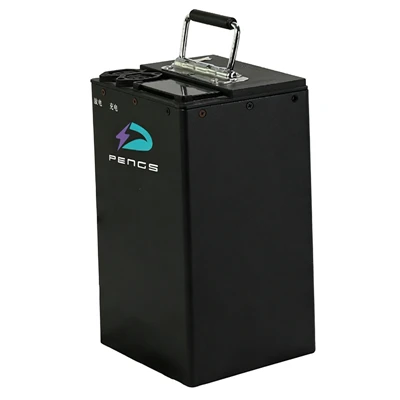
First, let’s start with the basics: what happens inside a robot battery when temps drop below 32°F (0°C) or climb above 104°F (40°C)? Most modern robot batteries are lithium-ion—same stuff in your phone, but built way tougher for heavy-duty use. I’ll spare you the chemistry lecture, but here’s the short version: lithium-ion batteries move charged particles (ions) between two electrodes to store and release power. The speed of that movement is directly tied to temperature. Cold temps slow those ions way down. Warm temps speed them up… too much sometimes.
Take cold first, because that’s the complaint I hear most. If a robot’s working in a warehouse that’s only 20°F in winter, or a delivery bot dropping packages in a snowy neighborhood, you’ll notice two big things right away: the battery’s runtime plummets, and it charges way slower. I had a customer last month who runs 15 autonomous floor scrubbers in a cold storage warehouse—they were only getting 2 hours of run time instead of their usual 6, and charging took 3x longer. Turns out, their old battery wasn’t rated for below-freezing temps.
Here’s why that happens: at low temps, the anode (the negative electrode in lithium-ion batteries) develops something called a solid electrolyte interphase (SEI) layer. When it’s too cold, that layer gets thicker and more rigid, so ions can’t pass through it as easily. That means less power gets released when your robot needs it, and when you plug it in, fewer ions can move into the anode to charge the battery. Some cheaper batteries also have issues with lithium plating at cold temps—lithium metal builds up on the anode, which can permanently damage the battery over time, making it die even faster after a few cycles.
Now for heat, which is the silent killer no one talks about until a battery swells or dies completely. If your robot’s sitting in a sun-steeped truck, or running nonstop in a factory that’s 110°F, that’s a problem. I once got a call from a e-commerce company whose inventory bots were crashing all day during summer—turns out their batteries were running 15°F above their optimal temp. The issue here is that high temps speed up all those ion reactions, but they also speed up unwanted ones. The SEI layer breaks down faster, so the battery loses capacity over each charge-discharge cycle. Worse, heat can cause the battery’s internal pressure to build, leading to swelling, or even thermal runaway in extreme cases—way more dangerous than cold-related issues.
What’s the “sweet spot” for robot batteries? From all the testing we do here, most lithium-ion robot batteries perform best between 50°F and 77°F (10°C to 25°C). Outside that range, every 10°F shift can cut or add up to 20% to your battery’s runtime. That’s a huge number for a fleet manager—if you’re running 100 bots, that’s 20 extra batteries you might need to cover, or 20 less deliveries a day.
But wait, it’s not just the extreme temps themselves—it’s how often a battery has to cycle through them. A battery that runs in 80°F all day at a desk will last 3-5 years. One that bounces between 20°F at night and 90°F during the day? More like 1-2 years. We had a customer who ran their outdoor security robots in Arizona—their batteries died after 18 months, compared to their indoor models that lasted 4 years. The heat was the main culprit.
Now, I know a lot of you are thinking: can’t I just buy a “temperature-resistant” battery? Yeah, but not all of those are equal. As a supplier, I’ve seen brands that slap a “cold-weather” label on a battery that only works down to 30°F, which is useless for warehouses that go below that. The good temperature-rated batteries use thicker electrode materials, better electrolytes (like those with lithium iron phosphate, or LFP, which holds up way better to heat than old cobalt-based lithium-ion), and built-in thermal management systems. Wait, thermal management—let’s talk about that, because it’s a game-changer for your bot’s performance.
A lot of lower-end robots don’t have great cooling or heating systems, which makes the battery work harder. For example, a delivery bot that has to climb a hill in 95°F weather: the motor draws more power, the battery runs hotter, and without a way to dissipate that heat, it dies mid-climb. That’s why pairing the right battery with thermal awareness is key. We often recommend adding a small heat pad for cold environments and a passive cooling vent for hot ones—small tweaks that can boost runtime by 30% no joke.
Let me also bust a common myth I hear all the time: “If I charge my battery at extreme temps, it’ll ruin it.” Kind of, but not as much as people think. Most modern robot batteries have built-in charge controllers that stop charging if it’s too cold or too hot, which is good. But if you’re using a battery that doesn’t have that, charging at 10°F can cause lithium plating, which as I said earlier, is permanent. Charging at 110°F speeds up chemical degradation, so even if the controller stops it, you’re still wearing the battery out faster. The fix? Charge your bots in a climate-controlled charging station, if you can. It’s way cheaper than replacing batteries every year.
Another real-world example: last quarter, we supplied a custom battery pack for a mining robot that runs in the Australian outback, where temps hit 120°F in summer. The old batteries they were using lasted 6 months. Our LFP-based battery with built-in thermal management? It’s still going strong after 14 months, and their runtime didn’t drop even in the middle of the day. That’s the difference between picking the right battery and guessing.
So what can you do right now to fix your robot battery temp issues? First, audit your fleet’s current setup: what temps are your bots operating in? If it’s cold, ask your supplier for batteries rated for at least -4°F; if it’s hot, go for LFP chemistry over cobalt, which is way more heat-resistant. Second, check your charging stations: are they in climate-controlled spaces? If not, add a simple heating mat or a small fan to keep temps in that 50-77°F range. Third, don’t wait for a battery failure to replace them—if you’re seeing runtime drop, or charge times get longer, that’s a sign temp is wearing your battery out early.
Here’s the thing: I’ve been in this game long enough to know that robot operators don’t want to deal with battery headaches. You want your bots running, on time, no extra costs. Temperature is one of the biggest hidden costs out there, but it’s also one of the easiest to fix with the right battery. We’ve worked with everything from small 10-bot delivery fleets to 500-bot industrial operations, and every time we match the right battery to their operating temps, we see runtime go up 20-35% and battery lifespan double.
If you’re tired of your robots dying mid-job in the cold or sputtering out in the heat, or if you’re just looking to cut battery replacement costs by half, reach out to our team to talk through your specific setup. We don’t do one-size-fits-all batteries—we build them around how your robots work, and the temps they have to work in. No guesswork, no hidden fees, just batteries that perform when you need them most.
Home Storage Battery References
- 2023 Industrial Robot Battery Performance Report, International Electrotechnical Commission (IEC)
- Lithium-Ion Battery Temperature Effects: Mechanisms and Mitigation Strategies, Journal of Power Sources, Vol. 412, 2019
- Outdoor Autonomous Robot Battery Deployment: Real-World Case Studies, Robotics Industry Association, 2022
- Lithium Iron Phosphate (LFP) Battery Thermal Stability Data, Battery University, 2021
Zhuhai Greaton Electronic Technology Co., Ltd.
As one of the most professional robot battery manufacturers and suppliers in China, we have world-leading production equipment and strong manufacturing capabilities. Please rest assured to wholesale advanced robot battery in stock here from our factory. Customized orders are welcome.
Address: 2nd Floor, Building A3, No. 6, Liulu, Xinqing Science and Technology Industrial Park, Jing’an Town, Doumen District, Zhuhai City
E-mail: wangchen1@psbattery.cn
WebSite: https://www.cngreaton.com/
