If you’ve ever stood in a poorly insulated office on a frosty January morning, shivering while a wall-mounted heater cranks loudly, or sweated through a summer afternoon in an under-insulated home where air conditioners run nonstop yet never seem to cool the space, you’ve experienced firsthand the invisible gap that thermal insulation fills. As someone who’s spent the last 12 years working directly with thermal insulation materials— first as a product specialist, now as part of a team that supplies these materials to commercial, residential, and industrial clients—I can tell you this isn’t just a comfort issue. It’s one of the most underrated tools we have to slash global carbon emissions. Most people picture solar panels or electric cars when they think about climate solutions, but thermal insulation quietly accounts for a far bigger slice of carbon reduction in many sectors, and that’s a story I want to walk you through today. Thermal Insulation Materials
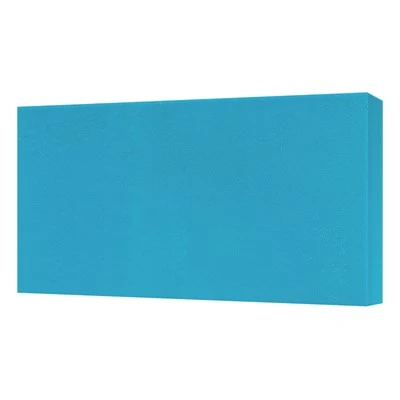
Let’s start with the basic science, because it’s easier to grasp when you see how waste works. Every building, every factory, every pipeline that transports hot or cold materials loses energy all the time. In residential homes, for example, heat escapes through walls, roofs, floors, gaps around windows and doors, even ductwork. The same is true for large-scale industrial facilities: a steel mill’s steam lines or a chemical plant’s process pipes lose heat to the surrounding air, and a refrigeration warehouse loses cool air at a rate that can add up to thousands of tons of carbon emissions every year. That energy loss doesn’t just mean higher utility bills—it means burning more fossil fuels to make up for what’s lost. When you add high-quality thermal insulation, you slow that transfer of heat, keep the desired temperature consistent, and cut the amount of energy you need to heat or cool a space or process.
Numbers don’t lie here. The International Energy Agency (IEA) reported in 2023 that buildings account for 30% of global final energy use and 27% of energy-related carbon dioxide emissions. Of that, nearly 40% of building energy use goes to heating and cooling—energy that’s almost entirely wasted without proper insulation. For context, if every existing building in the world added or upgraded insulation to meet modern energy codes, we could cut global building-related carbon emissions by 10% by 2030. That’s equivalent to taking 500 million gas-powered cars off the road for a year. For industrial sectors, the numbers are even starker: the IEA estimates that industrial heat loss through uninsulated equipment and piping accounts for 15% of total industrial energy use, which translates to billions of tons of carbon emissions annually.
What I’ve noticed in my years in this business is that a lot of people misunderstand insulation as just a “home improvement luxury” for people who care about their utility bills. In reality, it’s a critical component of low-carbon infrastructure at every scale. Let’s break down the sectors I work in most, to show you how it plays out in the real world.
First, residential buildings. A few years back, I worked on a project with a small housing developer in the Pacific Northwest that was building 200 new energy-efficient homes. The original plan only called for standard fiberglass wall insulation, but after we walked through their energy modeling, we suggested adding spray foam insulation to the roofs and rim joists, plus insulating ductwork. The developer was worried about extra cost, but we showed them that the upfront cost added only 3% to the total build, and over the lifespan of each home, the homeowners would save an average of $1,200 a year on heating and cooling bills. Beyond that, the energy savings meant each home cut carbon emissions by 2.5 tons every year—enough that the entire development qualified for a local green building tax credit. That’s not just a win for the environment; it’s a win for homeowners and developers too.
Then there’s commercial and industrial, which is where insulation’s carbon impact gets even bigger. Last year, we supplied insulation to a food processing plant in the Midwest that was struggling with high energy costs and frequent shutdowns because their process pipes for hot syrup were losing so much heat. The old insulation they had was 20 years old, compressed and full of gaps, so it was doing almost nothing to hold heat. We installed modern mineral wool insulation with a reflective aluminum jacket, which is designed to withstand high temperatures and prevent air leakage. Within six months, the plant reported a 18% drop in their natural gas usage for those pipes, cutting their annual carbon emissions by over 400 tons. They also reduced downtime because the pipes stayed at the correct temperature, so they didn’t have to restart the process as often to make up for heat loss. For industrial facilities, that kind of energy savings isn’t just good for the planet—it directly boosts their bottom line.
Another area that’s growing fast is cold chain logistics, which is critical for keeping food and pharmaceuticals safe as global trade expands. Refrigerated trucks, shipping containers, and warehouse refrigeration units all use massive amounts of energy, and poor insulation means they have to work harder to maintain their temperature. A friend of mine who works in cold chain management told me that switching from old, rigid foam insulation to a closed-cell polyisocyanurate (polyiso) insulation on their truck trailers cut their refrigeration energy use by 22%. For a fleet of 500 trucks, that’s over 1,500 tons of carbon emissions eliminated every year. It’s also helped reduce food waste, because consistent temperatures mean less spoilage—so insulation is cutting carbon twice here: once by reducing energy use, and once by cutting the methane emissions that come from rotting food in landfills.
Now, I want to talk about something that comes up a lot when I talk to new clients: “All insulation is the same, right?” The short answer is no, and that’s why choosing the right material isn’t just about slapping something on a wall—it’s about maximizing carbon reduction. For example, fiberglass is affordable and works well for low-temperature residential applications, but it breaks down over time and loses its insulating value when it gets wet. Mineral wool, on the other hand, is fire-resistant, holds its R-value (a measure of insulation’s effectiveness) for decades, and works for both high-temperature industrial use and commercial buildings. For cold storage, polyiso insulation has a higher R-value per inch, so you can use less material to get the same level of insulation, which also reduces the embodied carbon of the product itself—another often-overlooked part of the carbon story.
Embodied carbon is a term that’s been gaining traction lately, and it’s important to address because it’s not just about the energy you save after installing insulation. It’s about the carbon that goes into making, transporting, and installing the material in the first place. When we choose insulation materials, we have to balance the operational carbon (the energy saved over the product’s life) with embodied carbon. For example, cellulose insulation made from recycled newspaper has a low embodied carbon, and if it’s installed correctly, it provides great R-value for decades. But it’s not suitable for high-temperature industrial use, so you can’t use it for every application. That’s why our team doesn’t just sell a one-size-fits-all product—we work with clients to pick the right insulation for their specific project, whether that’s a residential attic, a chemical plant’s piping, or a cold storage warehouse, to get the maximum total carbon reduction over the product’s lifecycle.
I also want to bust a common myth here: some people think that thermal insulation is less important now that renewable energy like solar and wind is growing. That’s the opposite of true. Renewable energy is great, but it’s intermittent—solar doesn’t generate power at night, wind doesn’t always blow, and we still need reliable power grids to meet demand. Insulation reduces the total amount of energy we need in the first place, so we need less renewable energy to power our homes, factories, and buildings. It’s a complement to renewables, not a competitor. Think of it this way: if you fill a leaky bucket, you don’t have to add as much water to keep it full. Insulation is like patching the leaks in our global energy bucket, and that’s how we get the fastest, cheapest carbon reduction right now.
Over the past few years, I’ve seen more and more businesses and governments start to take this seriously. The European Union’s Energy Performance of Buildings Directive now requires all new buildings to be nearly zero-energy by 2030, which means insulation is a non-negotiable part of their design. In the U.S., the Inflation Reduction Act offers tax credits for homeowners who upgrade their insulation, and for commercial buildings that use high-efficiency insulation. Even some countries that are major industrial producers, like India and Brazil, are updating their building codes to require better insulation, as they work to meet their Paris Agreement targets. That’s exciting, but there’s still a long way to go. The IEA estimates that we need to double the rate of insulation installations in buildings and industry by 2030 to stay on track for net-zero by 2050.
What I’ve learned most in this role is that thermal insulation isn’t a “sexy” climate solution. It doesn’t make headlines like a new electric car or a giant wind farm, and you can’t see it once it’s installed. But it’s one of the most effective, affordable, and scalable tools we have right now. For a home, it’s a few hundred dollars in upfront cost that saves thousands over time. For a factory, it’s a relatively small investment that cuts energy bills by millions annually. And for the planet, it’s a way to cut billions of tons of carbon emissions without waiting for new technology or global policy to catch up.
If you’re a homeowner looking to upgrade your attic insulation, a developer working on a new building, an industrial manager trying to cut energy costs, or part of a team planning a cold chain project, I know we can help. We’ve worked on projects of all sizes, from single-family homes to multi-million square foot industrial facilities, and we tailor our insulation solutions to fit your specific needs, budget, and carbon reduction goals. We don’t just sell materials—we partner with you to model how much carbon you can save, find the right product for your application, and support you through installation. Whether you’re looking to meet new energy codes, qualify for tax incentives, or simply cut your energy bills while doing something good for the planet, we’re here to help.
If you’d like to talk through your project, get a custom quote, or learn more about how thermal insulation can reduce your carbon footprint, we’re ready to connect with you. Let’s work together to patch those leaks, save energy, and cut emissions—one insulation project at a time.
Insulation Board References
International Energy Agency. (2023). Global Status for Buildings and Construction. IEA Publications.
United Nations Environment Programme. (2022). The Cold Chain Footprint: Reducing Emissions from Refrigerated Supply Chains. UNEP.
American Society of Heating, Refrigerating and Air-Conditioning Engineers. (2021). Thermal Insulation Materials and Systems: Properties, Selection, and Application. ASHARE.
Global Building Performance Institute. (2023). Embodied Carbon in Building Materials: A Practical Guide for Specifiers. GBPI.
Wenzhou Lejia Energy-saving Material Co., Ltd.
As one of the leading manufacturers and suppliers of thermal insulation materials in China, we’re featured by quality products and good service. Please rest assured to buy advanced thermal insulation materials for sale here from our factory. We also accept customized orders.
Address: Block A, No. 128 Changxiu Road, Lingkun Subdistrict, Wenzhou Marine Economy Development Demonstration Zone, Zhejiang Province, China.
E-mail: luckyfoam@vip.163.com
WebSite: https://www.lfxps.com/
