If you’ve ever stood in a bike shop, staring at a display of forks, or scrolled through a bike parts catalog late at night, you’ve probably asked this question: Are carbon fiber forks worth the money? As a supplier who’s worked with carbon fiber forks for over a decade, I get it—for casual riders and even some dedicated cyclists, the gap between carbon and aluminum (or even steel) forks can feel steep enough to make you reach for the cheaper option. But over the years, I’ve seen firsthand where carbon makes a difference, and where it doesn’t. Let’s break this down, no marketing fluff, just what matters to a rider, and what matters to a supplier who’s spent years refining these parts. Carbon Fiber Fork

First, let’s talk about the core role of a fork. It’s not just the two legs that hold your front wheel on. It’s the part that absorbs the small, repeated jolts from uneven pavement, trail roots, and potholes that aluminum forks pass straight up to your handlebars and wrists. Carbon fiber’s biggest advantage here is its specific stiffness-to-weight ratio. To put that in plain terms, carbon can be made stiffer than aluminum when you need it, but also flexible where you need it—you can’t do that with metal. An aluminum fork will flex under load, but it flexes in a way that’s often harsh and jarring; carbon, on the other hand, can be engineered with layered materials to have a “compliant zone” in the legs, right where the rough stuff hits. I’ll never forget a customer who switched from a budget aluminum fork to one of our entry-level carbon forks. He came back a week later, saying he’d been riding the same 10-mile commute, and for the first time in three years, his hands didn’t go numb on the way into work. That’s not a trivial gain—for anyone who commutes, or logs long road miles, numb hands don’t just hurt; they make riding less safe.
Weight is another big one, but only if you care about it for the right reasons. For casual riders who do a few leisurely loops on weekends, a half-pound difference between aluminum and carbon won’t change your experience. But for competitive road racers, gravel riders who carry gear on long adventures, or mountain bikers who climb hundreds of feet of elevation, that weight adds up. A typical entry-level carbon fork weighs around 800 grams, while a comparable aluminum fork is closer to 1,100 grams. Multiply that by two if you upgrade both forks? No, wait—just the front. That 300 grams might not sound like much, but it’s right in the front of your bike, where it affects handling far more than a 300-gram bag of gear in your saddle bag. When you’re navigating a tight switchback, or adjusting your line over a rock garden, that lighter front end feels more responsive, less sluggish. It’s not a magic fix, but it’s a tangible difference for riders who are pushing their limits.
But here’s where a lot of people get confused: not all carbon forks are equal. As a supplier, I’ve seen cheap carbon forks pop up on Amazon and discount sites, priced almost the same as aluminum. Don’t be fooled. Those forks are usually made with lower-grade carbon fiber, fewer layers, and a cheaper manufacturing process that skips the quality checks. A high-quality carbon fork (like the ones we produce) is made with multi-directional carbon fiber layers, tested for impact resistance, and rated for specific bike types—road, gravel, mountain—each engineered differently. A mountain bike carbon fork, for example, needs to handle repeated hard hits from jumps and drops, so we use a higher tensile strength carbon fabric in the crown and legs. A road fork, meanwhile, prioritizes vibration damping, so we add more flexible layers in the upper legs. A cheap carbon fork can crack or fail under stress—we’ve seen it, from riders who saved $50 on a no-name fork, only to have it break during a race. That’s the value part: when you pay for a reputable carbon fork, you’re not just paying for the material, you’re paying for testing, engineering, and reliability.
Now, let’s talk about durability, because that’s the biggest myth around carbon forks. A lot of riders think carbon is fragile, that one hard crash or a pothole will send it to the trash. That’s outdated. Modern carbon fiber is far more durable than most people give it credit for. We test every fork we ship to withstand 20,000 cycles of impact, simulating the kind of hits you’d get on a gravel trail or a rough commute. That said, carbon does fail differently than metal. An aluminum fork will bend or dent when hit, giving you a visual warning that something’s wrong. Carbon, if it’s damaged deep inside a layer, might have a tiny, almost invisible crack on the surface that can spread. But here’s the thing: most of the time, that damage is avoidable. If you’re not intentionally crashing your bike into curbs or using your fork to pry rocks, a quality carbon fork will last longer than an aluminum one. We have customers who’ve had our carbon forks for 7 years, logging 10,000 miles a year, with no issues. Compare that to a budget aluminum fork, which can corrode at the steerer tube after 3-4 years, especially if you ride in wet conditions or don’t clean your bike regularly. Corrosion is a silent killer of metal parts—you might not notice it until the fork starts wobbling, which is dangerous. Carbon doesn’t corrode, period. That’s a huge long-term win for durability.
Cost is the obvious downside, so let’s be honest about that. Our entry-level carbon forks start at a price point that’s 2-3 times higher than a basic aluminum fork. For someone who only rides 1,000 miles a year, that might not make sense—you could buy three aluminum forks for the same price, replace them every few years, and spend less overall. But for riders who log more than that, or who value performance and comfort, the cost balances out over time. Let’s do the math: a $150 aluminum fork replaced every 3 years is $50 a year. Our $450 carbon fork is a one-time purchase, with no replacement needed for 10+ years. That’s $50 a year too, but with the added benefits of lighter weight, better vibration damping, and no corrosion. For competitive riders, the performance gain is worth the premium—even a 1% improvement in responsiveness can be the difference between finishing 10th and 1st in a race. For commuters, the comfort gain means you don’t have to deal with the ongoing cost of replacements, or the pain of numb hands on long rides.
Another point: compatibility. A lot of modern bikes are designed around carbon forks these days. If you’re building a custom gravel bike or a high-end road bike, the frame geometry is often optimized to work with a carbon fork. An aluminum fork, while you can force it to fit, won’t complement the frame’s design as well, leading to a less smooth ride and worse handling. We work with frame builders all the time who specifically request our carbon forks because their frames are engineered to match the fork’s stiffness and flex characteristics. That attention to detail matters more than most casual riders realize—good handling isn’t just about the frame, it’s about how all the parts work together.
Let’s address a common counterpoint: what about steel forks? Steel is another material known for vibration damping, and it’s cheaper than carbon. But steel is heavier, and it rusts. A steel fork can last a long time, but it’s not as stiff as carbon, so you’ll get more flex when you’re cornering hard, which takes away from precision. For traditionalists, steel has a nostalgia factor, but for most modern riders, carbon offers a better mix of weight, comfort, and durability. The only time a steel fork makes sense is for a vintage bike restoration, where authenticity is more important than performance.
So, when does a carbon fork not worth the money? If you’re a casual rider with a basic entry-level bike, riding only on smooth pavement, you won’t notice a big difference. An aluminum fork will work perfectly fine, and you’ll save a few hundred dollars. If you’re on a very tight budget, and you can barely afford your bike, skip the carbon fork for now—focus on things like tires, brakes, and drivetrain, which have a bigger impact on your ride. But if you’re upgrading your bike for better performance, commuting for long hours, logging big miles, or building a high-quality custom bike, then yes, carbon is worth the investment.
As a supplier, I’ve built my business on listening to what riders actually need, not what marketing tells them they should want. I’ve talked to weekend riders who’ve upgraded to a carbon fork and never looked back, and to competitive riders who swear by ours because of the consistent quality. The key is to buy from a reputable supplier, not a no-name brand. Cheap carbon forks are a gamble, but a quality carbon fork is an investment that pays off in comfort, performance, and longevity.
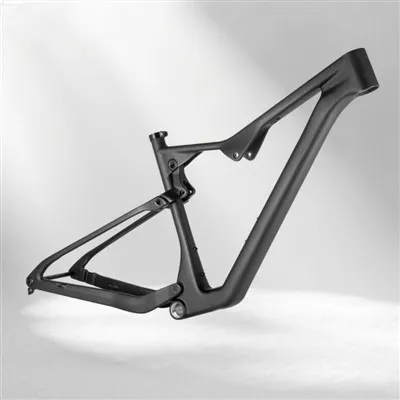
If you’re considering upgrading your fork, or you’re building a new bike and want to make sure the fork is a good fit for your needs, we’re here to help. We can walk you through the differences between our road, gravel, and mountain forks, talk about weight and compliance, and answer any questions you have about fit and durability. Don’t hesitate to reach out to discuss your requirements and find the right carbon fork for your bike.
Mountain Bike Frame References
- Carbon Fiber Composites: Stiffness, Strength, and Fatigue Behavior, Journal of Materials Science, 2018
- Bicycle Fork Performance: A Comparative Analysis of Carbon and Aluminum Materials, International Journal of Sports Engineering and Technology, 2020
- Durability Testing of Bicycle Components, European Committee for Standardization, EN 14766:2016
- Vibration Damping Characteristics of Carbon Fiber vs. Aluminum in Cycling Components, Proceedings of the International Cycling Industry Conference, 2019
Huizhou Hicenda Carbon Co., Ltd.
As one of the most professional carbon fiber fork manufacturers and suppliers in China, we have world-leading production equipment and strong manufacturing capabilities. Please feel free to buy customized carbon fiber fork made in China here from our factory. For quotation, contact us now.
Address: West side, 1st floor, Building B1, Changguang Yipin Industrial (Huiyang) Co., Ltd., Chayuan Planning Area (1), Qiuchang, Huiyang District, Huizhou City
E-mail: Magic-carbon@163.com
WebSite: https://www.magic-carbon.com/
