Alright, let’s cut to the chase—if you’ve ever been stuck with a single-phase AC motor that just can’t keep up with the heavy-duty work your shop needs, you know the pain: tripping breakers, lagging torque, and that constant nagging feeling you’re wasting half your potential. As someone who’s been supplying AC motors for over a decade, I get it—most small to mid-sized operations start with single-phase power because it’s easier to wire, but once you outgrow that or get a space with three-phase access, converting that old workhorse is way more cost-effective than buying a whole new motor. Let’s break this down like I’m chatting with you over a cup of coffee, no jargon that’ll make your eyes glaze over. AC Motor
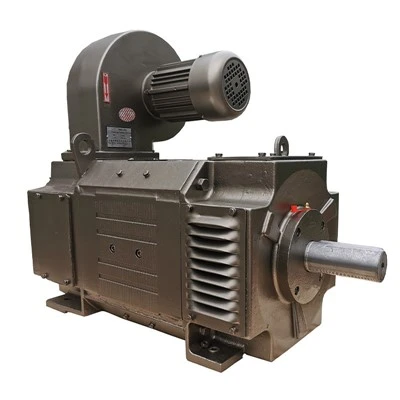
First, let’s get the basics straight so we’re all on the same page. Single-phase AC motors run on one alternating current (AC) line, which works great for light stuff like garage doors or small pumps, but when you’re dealing with conveyors, industrial mixers, or large machine tools, they suck. Three-phase motors, on the other hand, use three synchronized AC lines, which means smoother power delivery, higher torque, less energy waste, and they’re built to handle way more load without overheating. The good news? You don’t have to toss your existing single-phase motor—converting it is a real, doable option, and I’ve helped hundreds of clients pull it off without breaking the bank.
Wait, hold on—let’s make sure this is even worth your time. Not every single-phase motor can be converted. If your motor’s a universal type (those ones with brushes, like old power tools), skip it—conversion won’t work. We’re talking about induction motors here, the ones most common in industrial settings: split-phase, capacitor-start, or permanent-split capacitor (PSC) motors. If your motor has a nameplate that says “1Ø AC” and it’s got a frame size above, say, 5HP, you’re probably a candidate. Smaller motors (under 1HP) might not benefit as much, so do a quick check first.
So how do you actually do this? There are two main routes: a rotary phase converter (RPC) or a static phase converter. Let’s keep it simple—no math tests, promise. A static phase converter is the cheaper, smaller option, but it’s for smaller motors (up to like 10HP max). It works by using a capacitor to fake a third phase, but the downside is your motor won’t get full torque—you’ll lose about 10-15% of your original power. That’s fine for light loads, but if you need that full torque for heavy machinery, skip static.
Rotary phase converters are the real deal for most industrial use. Here’s how that works: you connect a small auxiliary three-phase motor (usually 10-25% the size of your main motor) to your single-phase line. That auxiliary motor spins up, creates a real, consistent third phase, and feeds it to your original single-phase motor. The result? Your converted motor gets full three-phase power—same torque, same efficiency, no weird lag. The only catch is it’s a bit bigger and louder than a static converter, but for most shops, that’s a small tradeoff for reliable performance.
Now, let’s talk about the mistakes I see people make all the time, because that’s where things go sideways. First, matching the size wrong. If you have a 15HP single-phase motor, don’t buy a 5HP rotary converter—you’ll starve your motor of power and burn it out. Get a converter that’s rated for the same HP (or one size up, just to be safe). Second, wiring this wrong. I can’t tell you how many times a client has shown up with a fried motor because they mixed up the phase wires. If you’re not comfortable with electrical work, hire a licensed electrician—this isn’t the time to wing it. Third, forgetting about power supply. Your single-phase line needs to have enough amperage to handle the converter and the motor. If your shop’s breaker is only 30A for a 10HP motor, that’s a red flag—upgrade your line first, or you’ll keep tripping breakers all day.
Wait, but what if you’re not sure converting is the right move? Let’s run a quick cost breakdown to make it real. A new 10HP three-phase motor will run you anywhere from $800 to $1,500, plus installation. A rotary phase converter for that same motor is like $300 to $700, plus installation. Converting your existing motor costs you almost nothing—just parts (capacitors, wiring) if you do a static, or the converter if you go rotary. That’s a huge difference, especially for small businesses on tight budgets. I had a client last year with a 12HP single-phase motor for his woodworking conveyor—he was thinking of buying a new motor, but we hooked him up with a 3HP rotary converter for $450, and his conveyor runs smoother than ever, no more stalling when he’s loading big lumber.
Another thing I always mention: efficiency. Three-phase motors are just way more efficient than single-phase. Your electric bill will go down after conversion—like, 5-10% lower, depending on how much you run the motor. Over a year, that adds up to enough to cover the cost of the converter. It’s not just about performance, it’s about saving money long-term.
Now, let’s get to the part where you actually pull the trigger and make this happen. Step 1: Check your motor’s nameplate. Jot down the HP, voltage (most are 240V these days), and the type (split-phase, capacitor-start, etc.). Step 2: Assess your power supply. Call your electrician to check if your single-phase line can handle the converter and motor load. Step 3: Pick your converter—static for small, light loads; rotary for big, heavy torque. Step 4: Hire a pro to wire it up. Don’t skip this part—bad wiring is the number one cause of conversion failures.
Wait, but what if you have an old motor that’s already showing its age? If it’s been running for 15+ years and needs repairs anyway, it might be worth weighing conversion vs. a new motor. But in most cases, converting is the better bet. I’ve seen motors from the 90s that still run like champs after conversion—induction motors are built to last, y’know?
At the end of the day, the biggest mistake people make is overcomplicating this. Converting single-phase to three-phase isn’t rocket science, and it’s way more accessible than most suppliers will tell you. I’ve worked with everything from small auto shops to big fabrication plants on these conversions, and 9 times out of 10, it’s cheaper, faster, and more reliable than buying new.
If you’re sitting here thinking, “Yeah, this works for others, but what about my specific motor?” Don’t guess—reach out. I know conversion can feel overwhelming, especially if you’re not an electrical whiz. I’ve got all the specs, the right converter recommendations, and even a list of trusted electricians I’ve worked with over the years to make this easy for you. No pressure, no sales pitch just to make a quick buck—just real advice from someone who’s been in this industry long enough to know that happy customers come from solving their problems, not pushing overpriced products.
So if you’re tired of your single-phase motor holding your operations back, if you’re ready for smoother performance, lower energy bills, and the ability to take on bigger jobs with that old workhorse, hit me up. We can chat through your setup, check if conversion is right for you, and get you the gear you need without all the headache. Don’t waste another penny on a new motor when you can get more out of the one you already have.
Large Synchronous Motor References
- Electrical Technology. "Single-Phase to Three-Phase Motor Conversion: Methods and Applications."
- U.S. Department of Energy. "Three-Phase Motors: Energy Efficiency and Conversion Considerations."
- National Electrical Manufacturers Association (NEMA). "AC Motor Phase Conversion Best Practices for Industrial Applications."
- Electrical Safety Foundation International (ESFI). "Phase Conversion Safety Guidelines for Commercial and Industrial Settings."
Xian Putai Electric Motor Equipment Co., Ltd.
Putai Electric Motor Equipment Co., Ltd. is one of the most professional ac motor manufacturers and suppliers in China, also supports customized service with low price. Welcome to buy advanced ac motor in stock here from our factory. If you have any enquiry about quotation, please feel free to email us.
Address: No.188 Liuhe Road Yangzhou Jiangsu Province, China
E-mail: sales@putaimotor.com
WebSite: https://www.putaimotor.com/
