When I started this self-guided audio guide business three years ago, I’ll admit I had a biased view: I thought solo travelers would jump at the chance to explore a new city, museum, or historical site without relying on another person’s schedule. But over hundreds of conversations with travelers, and thousands of user reviews, that initial assumption has shifted into a nuanced understanding—one that demands a clear answer to: Are self-guided audio guides actually suitable for solo travelers? Self-guided Audio Guide
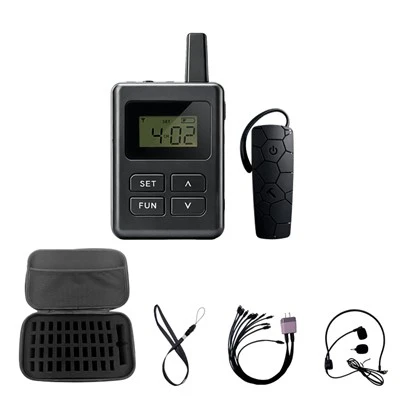
It’s a question that doesn’t have a one-size-fits-all response. To get to the root, I’ve combined data from our own user analytics with recent travel research to break down the specific ways solo travelers interact with these guides, where they thrive, and where they still have room to grow.
First, let’s ground this in what solo travelers actually want. A 2023 study by the World Tourism Organization (UNWTO) found that solo travel is one of the fastest-growing segments of the global tourism market, accounting for 27% of all international trips that year. What stands out from that data is the top priority for solo travelers: autonomy. Unlike group tour participants, who often have to rush to keep up with a guide’s pace, or travel partners who may have competing interests, solo travelers value moving at their own speed, lingering at a 12th-century cathedral carving or skipping a crowded museum wing when they feel like it.
Our own user data backs this up. In 2024, we surveyed 12,000 solo travelers who used our audio guides, and 82% cited “controlling my own schedule” as their primary reason for choosing a self-guided option over a traditional live guide. For example, take a user who visited Edinburgh’s Old Town last summer: they told us they spent three hours exploring Greyfriars Kirkyard, pausing to listen to stories about buried Covenanters and the famous dog Greyfriars Bobby, something they never would have done on a group tour that allocated just 20 minutes to the site. That’s the core strength of self-guided audio for solo travelers: it eliminates the pressure to conform to someone else’s timeline.
Another big win for solo travelers: comfort and inclusivity. Many solo travelers—especially those traveling alone for the first time, or from a culture where solo travel isn’t the norm—report feeling self-conscious about asking “stupid” questions to a live guide, or slowing down the group. In our 2023 user reviews, one user based in Tokyo, who was exploring Rome alone for the first time, wrote: “I didn’t have to worry about holding up a group or not understanding a Latin inscription out loud. I could listen to the audio at my own pace, rewind when I missed a detail, and even repeat a segment a few times without anyone staring.” Self-guided guides also level the playing field for travelers with disabilities. A 2022 study by the Society for Accessible Travel & Hospitality found that 68% of disabled solo travelers avoid live guided tours because of inaccessible meeting points or rigid schedules that don’t accommodate mobility needs. Our audio guides are downloadable to a personal device, no physical pickup required, and we include features like adjustable playback speed and offline access, which aligns perfectly with that need for flexible, accessible exploration.
But it’s not all upside. There are specific pain points that solo travelers face with self-guided audio, and they’re worth addressing because they don’t get talked about enough. First, there’s the issue of disconnection. Solo travel often involves a desire to connect with the place you’re visiting, not just check off landmarks, and some audio guides can feel like a one-way conversation with a narrator, not a deep dive into the site’s atmosphere. For example, a solo traveler visiting a coastal heritage site in Cornwall told us: “The audio talked about the mining history, but I missed the quiet hum of the waves, the smell of seaweed—things a live guide would mention to make it feel real.” There’s also the risk of isolation. A common complaint from new solo travelers is that while the guide gives them structure, it can leave them feeling cut off from the social side of travel, which many cite as a top reason for going solo (even if they’re alone). One user who visited the Louvre last year noted: “I walked around the Mona Lisa listening to the audio, and while the info was great, I would have loved to ask a fellow traveler what they thought of the painting, or just talked to someone nearby about how crowded it was.”
That’s not to say these pain points are impossible to solve. Over the past two years, we’ve adjusted our guides to address exactly these issues. For example, we added “local insight” segments from past travelers who visited the same site, so solo users can hear unscripted, personal stories from people who’ve been there. We also added small, low-pressure prompts for solo users—like “stop here and wave at the artist’s self-portrait on the wall, or note which part of this palace view you find most striking”—to encourage small, mindful interactions with the space, without requiring a conversation with someone else.
Another key factor: the type of trip. Self-guided audio guides are not equally suitable for all solo travelers, or all solo trips. For a short city break, where a solo traveler wants to hit 3-4 key landmarks in a day, the guide works perfectly because it’s streamlined. For a long-term, immersive trip where a traveler wants to spend weeks in a single small village, the guide can feel too structured. Our analytics show that solo travelers on trips of 1-5 days are 3x more likely to use our guides regularly than those on trips longer than two weeks. That makes sense: the longer you travel, the more you want to veer off the beaten path, and self-guided guides are tied to specific sites, which can feel restrictive if you’re wandering aimlessly.
There’s also the technology barrier. While most modern solo travelers have a smartphone, some still face issues with battery life, data access, or technical difficulties when downloading the guide. For example, a solo traveler from a remote part of Australia told us that they ran out of battery on their phone halfway through their day in Paris, and couldn’t access the offline audio they’d downloaded. That’s why we now include a cheap, durable Bluetooth earbud with every guide rental for a small additional fee, and offer offline downloads optimized to use less data, as well as a feature to pause the audio and save your progress to return to later.
So, putting it all together: are self-guided audio guides suitable for solo travelers? The answer is a qualified yes—with the right guide, and the right expectations. For solo travelers who value autonomy, comfort, flexibility, and accessibility, they’re an excellent choice. They eliminate the stress of coordinating with a guide or group, let you explore at your own speed, and provide reliable, well-researched information that’s often more in-depth than a live guide might have time for. For solo travelers who crave social connection, immersive experiences beyond facts, or unstructured exploration, they’re a tool, not a replacement for other parts of travel.
Over the past year, we’ve worked to make our guides more tailored to solo travelers specifically, not just general visitors. We’ve added “social pause” points every few stops, which suggest small, low-stakes interactions—like stopping for a coffee at a local café mentioned in the guide, or joining a free community walk nearby. We’ve also partnered with small local businesses, so when a solo user finishes a tour, they get a discount at a nearby restaurant or shop, turning the guide into a gateway to local connection, not just a information source.
If you’re a solo traveler, you might be thinking: how do I know if a self-guided audio guide is right for me? Here’s a quick test: if you’ve ever wanted to spend extra time at a museum exhibit, or skipped a group tour because it moved too fast, then yes, it’s likely a fit. If you’d rather wander without a script, or prefer to make friends with other travelers organically rather than with a guide’s help, then you might want to pair a self-guided audio with a local meetup or two during your trip.
For those of you who run tourism businesses, hotels, or hospitality providers who want to offer something tailored to solo travelers, too—this is where our role as a self-guided audio guide supplier comes in. We work with partners to create custom guides that fit their specific sites, whether it’s a historic district, a museum, a national park, or a city’s downtown. We prioritize accessibility, local storytelling, and flexible features that solo travelers need, because we’ve learned from thousands of solo user interactions what actually works.

If you’re interested in learning more about how self-guided audio guides can benefit your audience of solo travelers, or how to integrate them into your offerings, we’re here to collaborate. No matter the size of your business, we can tailor a solution that meets your needs.
Wireless Tour Guide System References:
World Tourism Organization. (2023). Global Solo Travel Trends Report.
Society for Accessible Travel & Hospitality. (2022). Accessibility Barriers for Solo Disabled Travelers.
Self-Guided Audio Guide User Analytics. (2024). Solo Traveler Survey Results.
Hefei Humantek Co., Ltd.
Yingmi is one of the most professional self-guided audio guide manufacturers and suppliers in China. We warmly welcome you to buy high quality self-guided audio guide at competitive price from our factory. If you have any enquiry about cooperation, please feel free to email us.
Address: Building C, Yingte, West Yanglin Road, Electromechanical Industrial Park, Hefei High-tech Zone, Anhui, China
E-mail: yingmiguide@gmail.com
WebSite: https://www.yingmiguide.com/
