When I first started fielding questions from small manufacturing shop owners and workshop managers, one of the most common ones I got was, “Can I just wire a residential fan regulator to my 2HP industrial exhaust fan to save on energy bills? That’s what my cousin did for his bedroom ceiling fan, right?” As a supplier who’s spent over a decade engineering, testing, and troubleshooting fan regulators—both residential and industrial—I get the appeal. Residential regulators are cheap, easy to find at any hardware store, and they work for the quiet, low-power fans in your home. But the second you cross over to industrial fans, that “easy” fix isn’t just a bad idea—it can be a safety hazard, and it will almost certainly shorten the life of your equipment. Let’s break this down, because it’s a question I need every single one of my customers to understand clearly. Industrial Fan Regulator
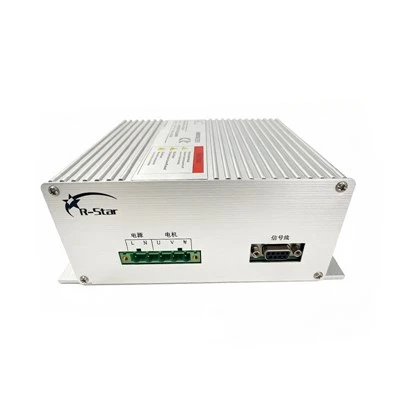
First, let’s get the basics straight: what makes a fan regulator “residential” vs. “industrial”? Most residential regulators work on the principle of tapping into different windings in the fan motor, or using a simple autotransformer to reduce the voltage sent to the motor. Residential ceiling fans, for example, are usually 1/3HP or smaller, designed for 120V single-phase power, and they operate at fixed speeds with minimal torque demand. They don’t run 24/7, they don’t have to move heavy air over long ductwork, and their motors are built for continuous low-load operation. That’s perfect for a bedroom or living room. Now, industrial fans? Let’s take the 2HP warehouse exhaust fan I mentioned earlier. It’s built to move thousands of cubic feet of air per minute, often runs 12, 16, even 20 hours a day, and operates in variable power conditions—sometimes with voltage drops in older shop wiring, sometimes with uneven loads if the fan is pushing air through a dusty filter or bent duct. Its motor is larger, has higher torque requirements, and is designed for long-term high-load operation.
Residential regulators aren’t built for that kind of stress. Let’s talk about the most common type of residential regulator: the stepped transformer regulator, which uses 3 or 4 tap points to adjust speed. When you turn it down, it cuts voltage by a set amount—say, 120V to 90V, or 90V to 60V. For a small residential motor, that works fine. But an industrial motor, even a single-phase one, has much lower resistance to voltage underload. If you plug a 2HP industrial fan into a residential regulator set to low speed, you’re sending it way less power than it was designed to handle, and the motor will work overtime just to turn the shaft. That extra strain creates excess heat, which melts the insulation on the motor’s copper windings over time. I’ve seen shops do this: they install a $15 residential regulator, and 6 months later their $800 industrial fan motor burns out. That’s a false economy if I’ve ever seen one.
Another type of residential regulator is the variable resistor (or rheostat) style, which is the one you often see in old ceiling fans or small attic fans. These work by dissipating excess power as heat—so when you turn the knob down, the resistor gets hot to reduce the voltage going to the motor. For a tiny residential fan, that heat is manageable, but for a 1HP or larger industrial fan, the rheostat would need to be so large and heavy that it’s impractical to install in a wall. It would get so hot, in fact, that it could melt the surrounding plastic, start a fire in a dusty workshop, or even blow the circuit breaker consistently. I had a customer a couple of years ago who tried this for his metal stamping shop’s ventilation fan. Within a week, his rheostat warped, shorted out, and tripped the power every time he turned the fan down. He ended up buying a proper industrial regulator from us, and saved himself from a potential shop shutdown.
Now, let’s get into the electrical specs, because this is where a lot of people get confused. Industrial fans are usually rated for higher current draw than residential ones. A 1HP residential fan draws about 8 amps at 120V, while a 1HP industrial fan can draw 12 to 15 amps, depending on the design. A typical residential regulator is rated for 10 amps max—so if you have a 1.5HP industrial fan, that’s already over the limit. Overloading a regulator means it will overheat, the components will wear out faster, and you risk a short circuit. I’ve had customers tell me, “Well, it worked for my 1HP fan, so why not for my 2HP?” The math doesn’t lie: 2HP at 120V is around 16 amps. That’s 60% more than the average residential regulator’s max rating. It’s not a matter of “it works sometimes” — it’s a matter of when it will fail, and how much damage it will cause when it does.
There’s also the issue of speed consistency, which is make-or-break for industrial applications. A shop needs their exhaust fan moving a steady volume of air to clear fumes, dust, or heat. Residential regulators are designed to adjust speed for comfort, not for consistent airflow. They don’t account for changes in fan load—like if a filter gets clogged, or if the ambient temperature drops, which can change the motor’s resistance. When you use a residential regulator, the fan speed can fluctuate by 10% or more, which means your ventilation system isn’t working as efficiently as it should. Over time, that can lead to heat buildup in your warehouse, increased fire risk from dust accumulation, or even OSHA violations if you’re required to maintain a certain level of air quality. Proper industrial regulators, on the other hand, are designed with speed control algorithms that keep the fan at a consistent RPM regardless of load or voltage fluctuations. That’s not a “nice to have” — it’s a necessity for most industrial settings.
I know what some of you are thinking: “But what if I’m just using the fan for occasional ventilation, not running it 24/7? Can’t I get away with it?” Let’s test that logic. Even if you only run the fan 8 hours a day, 5 days a week, that’s still 2,080 hours a year, compared to a residential fan that runs maybe 500 hours a year at most. The components in a residential regulator are built for that light duty, not for 4 times the amount of usage. I’ve seen a residential regulator fail after only 3 months of daily use on an industrial fan. That means you’re spending $15 every 3 months, instead of $100 or $150 on a proper industrial regulator that will last 5 to 10 years. Again, it’s a false economy that ends up costing you more in the long run.
Another common misconception is that “all regulators are the same, just different brands.” That’s simply not true. Industrial regulators are built with heavier-duty components: thicker wiring, higher-quality resistors, thermal overload protection, and enclosures that are rated for dusty, humid, or explosive environments. If you’re using a fan in a food processing plant, or a chemical manufacturing shop, or a grain elevator, the last thing you want is a regulator that can’t handle dust or moisture. Residential regulators are usually in thin plastic enclosures that don’t have any ingress protection—so a little sawdust or water vapor can get inside, cause a short, and start a fire. Industrial regulators are built with NEMA-rated enclosures, designed to keep out dust, moisture, and other contaminants, so they can operate safely in harsh conditions.
Wait, but what if you have a small workshop, with a 1/2HP bench fan or a small exhaust fan? Can you use a residential regulator there? Even then, I’d advise against it, but the risk is lower. But let’s be honest—if you’re working in a small shop with that kind of fan, you’re probably not asking this question. This question comes from people with larger industrial fans, people who need reliable operation, people who can’t afford unexpected downtime. Let me give you an example: last year, a customer from a small auto body shop called me panicking. He had used a residential regulator on his 1HP spray booth exhaust fan, and the motor burned out overnight, leaving him unable to work on cars or paint for 3 days. The replacement motor and labor cost him over $1,200—way more than the cost of a proper industrial regulator. If he’d known then what I’m telling you now, he would have spent $120 on a regulator from the start, instead of $15 on a residential one plus $1,200 in repairs and lost revenue.
So, what’s the alternative? Proper industrial fan regulators are sized specifically for the HP and current draw of your industrial fan, designed for continuous high-load operation, built for harsh environments, and engineered to maintain consistent speed and airflow. They come in different types too: some use pulse-width modulation (PWM) for smooth speed control, others use autotransformers for high-torque applications, and many have built-in safety features like overcurrent protection, thermal cutoff, and reverse polarity protection. The right industrial regulator not only works safely with your fan—it actually improves efficiency, reduces energy costs, and extends the life of your motor.
I know switching to an industrial regulator might seem like an extra step, especially if you’re used to grabbing something from the hardware store. But when it comes to industrial equipment, cutting corners on parts that affect safety and reliability is never worth it. The question isn’t “can I use a residential fan regulator for industrial fans?”—it’s “should I risk my equipment, my employees’ safety, and my business’s productivity for a cheap, wrong part?” The answer is always no.

If you’re not sure what kind of regulator your industrial fan needs, or if you want to learn more about how switching to a proper industrial regulator can save you money and hassle, I’m here to help. We work with small shop owners, large manufacturing facilities, and everyone in between to find the right regulator for their specific needs, no matter the size of their fan or the environment they work in. Reach out to our team to discuss your requirements, get a customized recommendation, and make sure your industrial fan runs safely and efficiently for years to come.
HVLS Fan Motor References
- Electrical Safety Foundation International. "Industrial vs. Residential Electrical Components: Key Differences for Workplace Safety." 2022.
- National Electrical Manufacturers Association (NEMA). "Standards for Industrial Fan Control Devices." 2021.
- Occupational Safety and Health Administration (OSHA). "Ventilation for Industrial Workplaces." 2020.
- Fan and Motor Control Association. "Speed Regulation for AC Motors: Residential vs. Industrial Applications." 2023.
- Underwriters Laboratories (UL). "Safety Standards for Fan Regulators, Type 1 (Residential) and Type 12 (Industrial)." 2022.
Wuxi Rstar Electric Co., Ltd.
With abundant experience, we are one of the most professional industrial fan regulator manufacturers and suppliers in China. Welcome to wholesale bulk customized industrial fan regulator at competitive price from our factory. If you have any enquiry about quotation, please feel free to email us.
Address: 9th Floor, Building 9, Shengfeng Lianzhi Valley, No.67 Zhujiang Road, Xinwu District, Wuxi City
E-mail: rstarbz@163.com
WebSite: https://www.rstar-wx.com/
