Hey there, Honed Tube
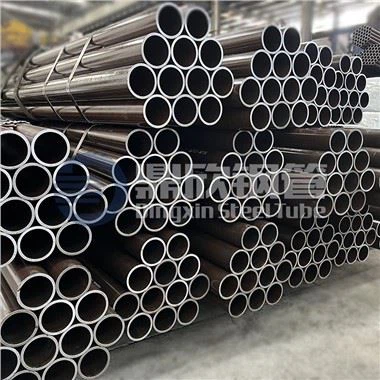
Let’s cut to the chase – if you’re scrolling around for the right tubing to keep your oil operations running smooth, you’ve probably seen “honed tube” pop up a million times. And as a honed tube supplier who’s been in this game for years, I get it: you’re tired of guessing if it’ll hold up, or if you’re wasting cash on something that’s just not built for the oil and gas world. Today I’m breaking down exactly why honed tube is perfect for oil applications (and no, this isn’t just a sales pitch – I’m telling you the real stuff I’ve seen with my own team).
First, let’s keep it simple: what even is honed tube? For anyone who’s not deep in metalworking jargon, it’s seamless or welded tube that’s been precision-finished with a honing process – think of it as super smooth, ultra-straight inner walls. We take a rough-drawn tube, spin a special abrasive stone along the inside, and grind down every tiny imperfection (even those micro-scratches you can’t see with the naked eye) until the surface is like a polished mirror. The result? A surface finish that’s consistently tight, no weird dips or lumps, and the inner diameter is spot-on every single time.
Now, why does that matter for oil? Let’s start with the biggest pain point most oil operators deal with: friction and wear. When you’re moving crude oil, diesel, hydraulic fluid for drilling equipment, or even the hydraulic lines on fracking rigs, the stuff you’re pumping isn’t exactly gentle. Crude has tiny abrasives – sand, sediment, even leftover metal shavings from well drilling. If your tube’s inner wall is rough, those abrasives catch on every little scratch, grind away at the metal wall, and eventually eat through the tube. That leads to leaks, downtime, and way more money spent replacing parts way sooner than you should.
Honed tube’s smooth inner walls eliminate that. We’re talking a surface finish usually around Ra 0.2 to 0.8 micrometers – for context, a standard drawn tube is like 1.6 or higher. That mirror-smooth surface means those tiny abrasives glide right through, not catch. I’ve had a customer in the onshore drilling space switch from regular steel tube to our honed stuff for their hydraulic cylinder liners, and they cut their replacement frequency by 60% in the first year. No exaggeration – they called me up saying their rigs were down half as much because their cylinders weren’t seizing from worn-out walls. That’s the kind of real-world win you can’t get with just any tube.
Next up: pressure handling. Oil applications, especially deep-water drilling or fracking, operate at insane pressures. Like, 10,000 PSI and higher sometimes. Honed tube isn’t just about smooth walls – the honing process also removes any residual stress from the tube manufacturing. When you make a regular welded tube, the welding zone has weird stress points, and drawn seamless tube can have micro-strains from the drawing process. Honing cuts that out, makes the entire tube (especially the inner wall) uniform in strength. That means it can handle high pressure without failing, no weak spots that cause bursts or leaks mid-job. We supply a lot of honed tube for subsea hydraulic lines, and those lines have to hold up to both extreme pressure from the oil down below and corrosion from saltwater. The uniform strength from honing is non-negotiable there.
Wait, let’s talk corrosion – another huge one for oil. Crude oil has all kinds of nasty chemicals: sulfur compounds, water, acids from the well. Even if you’re transporting refined oil, there’s moisture and additives that can eat away at metal. Honed tube’s smooth surface isn’t just for friction – it’s way harder for corrosion to take hold. Rough surfaces have tiny pits where moisture and chemicals get trapped, starting rust or sulfide stress cracking. The honed finish seals those micro-pits, so corrosive agents can’t get a foothold. I’ve had a customer in the Gulf Coast use our honed carbon steel tube with a minor corrosion-resistant coating for their saltwater disposal lines, and they reported zero corrosion-related leaks in 3 years. Compare that to their old tube, which needed patching every 6 months – that’s a massive cost saver.
But hey, it’s not just the oil itself. Let’s not forget about the parts that use honed tube: hydraulic cylinders, pump liners, valve components. For example, when you’re running a piston in a cylinder liner for a fracking pump, the piston moves back and forth thousands of times a minute. If the liner is rough, the piston’s seal wears out fast. Honed tube’s consistent inner diameter (we hold tolerances within 0.001 inches, by the way) means the seal sits evenly, no gaps, no uneven pressure. So the seals last way longer, which means you don’t have to tear down your pump or cylinder as often. That’s another big win for uptime – and in oil, time is money. Every hour a rig is down, you’re losing tens of thousands of dollars, easy.
Now, I know what some of you are thinking: “Is honed tube too expensive?” Yeah, it’s a little pricier than regular welded or drawn tube upfront. But let’s do the math. If a regular tube costs $500 and needs replacing every 6 months, that’s $1,000 a year. Our honed tube costs $750, but it lasts 2-3 years. That’s $250 to $375 a year, way cheaper. Plus the cost of downtime, labor to replace parts, lost production – that’s way more than the difference in tube price. I’m not here to upsell you on a fancy product; I’m telling you what my customers tell me every single time. They switch to honed tube, and their overall costs go down, not up.
Wait, but hold on – is honed tube right for every oil application? No, let’s be real. If you’re moving bulk, low-pressure, non-abrasive oil for short distances in a basic pipeline, maybe a regular seamless tube works. But for the critical components – the parts that can shut your rig down if they fail, the hydraulic lines, pump liners, cylinder liners, valve stems – honed tube is non-negotiable. I’ve seen way too many guys try to cut corners with cheap tube for these parts, and end up paying for it big time when a line bursts or a cylinder seizes mid-operation.
Let me throw in a quick real example that sticks with me. A few years back, a small fracking company out of Texas reached out to me. They’d been using cheap drawn tube for their pump liners, and every 2 months, a liner would wear out, causing the pump to lose pressure. They were going through 20 liners a month, at $100 each, plus $500 an hour in downtime for their crew. We hooked them up with our carbon steel honed pump liners, and guess what? 3 years later, they’re still on the same set of liners. They told me they saved over $200k in the first year alone between parts and downtime. That’s the kind of ROI that makes honed tube worth it, no question.
Another thing we do as a honed tube supplier: we customize the hell out of our product for oil applications. Need a specific alloy? We’ve got carbon steel, alloy steel, even some stainless steel grades that handle crude’s corrosive stuff. Need a certain inner diameter tolerance for a tight-fitting piston? We hold every spec within 0.0005 inches, no sloppy measurements. Need a coated honed tube for extra corrosion resistance? We can add a thin layer of chrome or polymer to the inner wall for even more protection. A lot of suppliers just sell standard sizes, but for oil, you need a tube that fits your exact setup, not a one-size-fits-all.
Now, let’s address some common myths I hear about honed tube for oil. Myth 1: “Honed tube is only for hydraulic stuff.” No, it’s used for pump liners, valve components, even parts of crude oil processing equipment like centrifuges. Myth 2: “It’s too fragile for rough oil conditions.” Nah, the honing process strengthens the inner wall, not weakens it. We do pressure tests on every batch to make sure it holds up to the rigors of oil and gas. Myth 3: “You have to special-order it and wait forever.” We keep most common honed tube sizes in stock, so we can ship same or next day for urgent orders – something a lot of suppliers can’t do.
Look, I’ve been in this industry for 12 years, and I’ve seen so many operators make the same mistake: prioritizing upfront cost over long-term reliability. Honed tube isn’t the cheapest option, but it’s one of the best investments you can make for your critical oil components. It reduces wear, cuts downtime, saves you money on parts and labor, and keeps your operations running smoothly when every minute counts.
If you’re working on a project right now, or you’re tired of dealing with constant tube failures, I’d encourage you to reach out. We can help you figure out exactly what honed tube you need for your specific application – whether it’s hydraulic cylinders, pump liners, subsea lines, whatever. No pressure, no sales pitch that’s full of jargon – just real advice based on what works for hundreds of oil operators I’ve worked with over the years.

At the end of the day, oil operations are tough. The last thing you need is a failed tube bringing your whole setup to a halt. Honed tube is built to handle that toughness. It’s not just a metal tube – it’s a solution that keeps your rigs running, your crews busy, and your production on track. Don’t cut corners on something this important. Hit us up to talk through your needs, and we’ll get you the right honed tube for your oil application.
Hydraulic Cylinder Tube References:
- ASME B107.10-2019, Surface Texture, Surface Roughness, Waviness, and Lay
- API Specification 5CT, Specification for Casing and Tubing
- NACE Standard MR0175/ISO 15156, Materials for Oil and Gas Production Equipment Exposed to Sour Reservoirs
- Machining Data Handbook, 4th Edition, Honing Process for Seamless Tubes
Zhejiang Dingxin Steel Tube Manufacturing Co., Ltd.
Zhejiang Dingxin Steel Tube Manufacturing Co., Ltd. is one of the most professional honed tube manufacturers and suppliers in China. We have world-leading production equipment and strong manufacturing capabilities. Please feel free to wholesale high quality honed tube at competitive price from our factory.
Address: Liuli Industrial Zone, Haiyan, Zhejiang Province, China
E-mail: sales@dingxintube.cn
WebSite: https://www.dingxinsteeltube.com/
