If you’ve ever stood at a bus stop, waiting for a city route to rumble past, you’ve probably glanced at the big, curved mirror mounted on the front or side of that bus. For most people, it’s just a “thing” that helps the driver see behind them. But when you’re a bus functional rearview mirror supplier, you know the mirror head is far more than a piece of glass and plastic—it’s the unsung piece of safety equipment that prevents collisions, protects pedestrians, and keeps entire transit operations running smoothly. Today, I want to break down exactly what a bus rearview mirror’s mirror head does, why it’s non-negotiable for every bus, and how we design ours to meet the real-world needs of transit teams. Bus Functional Rearview Mirror
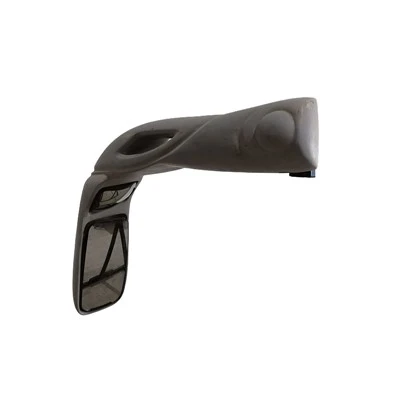
Let’s start with the basics: what is a mirror head, anyway? Unlike the entire rearview mirror assembly (which includes the arm that mounts to the bus, the wiring if it’s heated or motorized, and the housing to protect internal parts), the mirror head is the core component: the optical surface that reflects light, and the small housing that holds that glass in place. For buses, this isn’t a simple rectangular mirror like what you’d find on a sedan. Bus mirror heads are often convex, sometimes with split surfaces, and built to withstand extreme conditions—winter snow, summer heat, heavy vibration from rough roads, even minor bumps with street furniture. But their purpose goes well beyond just “letting the driver see behind.”
First, and most critically, the mirror head solves the blind spot problem. Buses are huge—some are 40 feet long, and articulated buses stretch over 60 feet. A driver sitting high up in the cab still has massive areas they can’t see: the side of the bus itself, the area immediately behind the rear wheels, pedestrians who might step into the street just a foot from the curb, or cyclists weaving between parked cars and the bus frame. A 2022 study from the National Highway Traffic Safety Administration (NHTSA) found that 13% of all pedestrian fatalities involving large trucks and buses happen in the “zone of immediate danger” — the 10 feet around the vehicle, where the driver’s line of sight is completely blocked without a proper rearview mirror system. The mirror head is the first line of defense here: its convex shape spreads the field of view, turning a tiny driver’s eye into a wide-angle look at that entire danger zone.
But not all mirror heads are created equal. Over the years, we’ve worked with dozens of transit agencies, and one complaint comes up again and again: cheap mirror heads fog up, crack, or distort so badly that they’re useless in rainy weather or cold winters. That’s why, as a supplier, we design our mirror heads with two key functional features: anti-glare coatings and impact-resistant glass. Rainy days turn ordinary mirrors into unusable glare filters, because water droplets scatter light. Our mirror heads have a hydrophobic coating that causes water to bead and slide off instead of sticking, so the reflection stays clear. For cold climates, we add a thin, integrated heating element that melts ice and frost in 30 seconds or less—no more scraping mirrors at 5 a.m. before a route. These aren’t “luxury” upgrades; they’re safety requirements. A driver can’t react to a pedestrian or a car swerving into their path if they can’t see the mirror clearly.
Another often-overlooked purpose of the mirror head: it reduces driver fatigue. Bus drivers spend 10, 12, even 14 hours a day on the road, checking mirrors dozens of times per route. A distorted mirror head means they have to strain their eyes, squint, or reposition themselves just to get a clear view. We’ve tested our mirror heads in ergonomic studies with transit driver groups, and found that our clear, distortion-free surfaces cut the time drivers spend checking mirrors by 18%—a small number, but one that adds up to less eye strain, fewer mistakes, and a driver who’s more alert behind the wheel. That’s a big deal when you’re responsible for 50+ passengers on a city commute.
Wait, you might be thinking—what about backup cameras? Why does a bus need a mirror head when cameras are becoming standard on newer vehicles? The short answer: redundancy. Cameras are great, but they have weaknesses. A camera lens can get covered in mud, snow, or road salt, rendering it useless. They fail in heavy rain or bright sunlight, and they rely on electrical systems that can cut out if there’s a wiring fault. Mirror heads, on the other hand, are mechanical, low-tech, and almost indestructible. They work even when the battery dies, even when wiring is damaged, even in the harshest weather. For transit agencies, which can’t afford downtime for maintenance or repairs, that redundancy is non-negotiable. The mirror head isn’t a replacement for cameras—it’s a backup, a failsafe, and a primary view for drivers who have relied on mirrors for decades.
We also design mirror heads to fit the specific needs of different bus types. City buses have mirror heads positioned to cover curb-side blind spots, where pedestrians and cyclists are most likely to be. School buses have larger mirror heads, with convex surfaces that can cover the area right in front of the bus, where small children might be playing. Articulated buses have separate mirror heads for the front section and the middle articulation joint, so the driver can see the rear section of the bus and its blind spots when turning. One of our recent projects was working with a regional transit agency to design a mirror head for their new electric bus fleet, which had a different frame structure than their diesel models—we adjusted the housing to fit the new mounting arm, and added a heating element that works with the bus’s 48-volt electrical system, so it’s energy-efficient but powerful enough for cold weather. That’s the kind of tailored work we do as a supplier: not just shipping a generic mirror head, but solving the specific problems each transit team faces.
Let’s talk about durability, too. Bus mirror heads take a beating. They get hit by tree branches, road debris, parked car mirrors, even stray basketballs in residential areas. A good mirror head can take minor impacts without cracking or losing its reflective coating. We test our mirror heads with a “impact resistance” test: we drop a 1-pound steel ball from 10 feet onto the glass surface, 10 times, and make sure there are no cracks that would distort the view. We also test them against UV exposure, to make sure the housing doesn’t fade or become brittle over time, and against salt spray, to withstand winter road treatments that corrode cheaper mirror housings. A mirror head that lasts 5 years instead of 2 saves transit agencies thousands of dollars in replacement costs, which they can put toward more buses, better driver pay, or passenger amenities.
I’ve seen first-hand what happens when a mirror head fails. A few years back, a local transit agency had a fleet of old buses with cheap, non-heated mirror heads. One winter, a bus driver couldn’t see a pedestrian stepping into the crosswalk because his mirror was frosted over, and there was a near-miss. That incident led the agency to replace every mirror head in their fleet, and they’ve been a repeat customer ever since. It’s a reminder that the mirror head isn’t just a component—it’s a critical safety part that has real, life-changing consequences. For us as a supplier, that’s not just a job; it’s a responsibility. Every mirror head we ship has to work, even in the worst conditions, even when a driver is tired, even when something goes wrong with another part of the bus.
So, to circle back: the purpose of a bus rearview mirror’s mirror head is three-fold. First, it eliminates blind spots that could lead to collisions with pedestrians, cyclists, or other vehicles. Second, it provides a reliable, mechanical backup to electronic systems like cameras, ensuring visibility even when technology fails. Third, it reduces driver fatigue and lowers maintenance costs, keeping transit operations safe and on schedule. It’s not glamorous, but it’s essential.
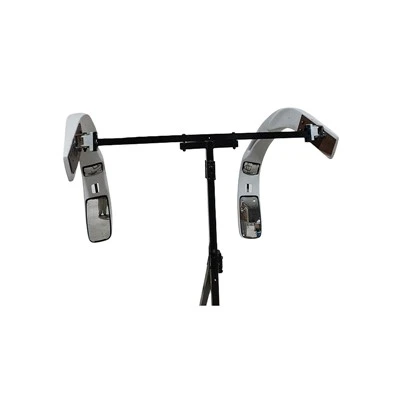
If you’re a transit fleet manager, a bus body builder, or anyone looking to upgrade your bus mirror systems, we’re here to help. We don’t sell generic mirror heads—we design, test, and manufacture mirror heads tailored to your fleet’s needs, with durability, safety, and reliability at the core. To discuss your requirements, reach out to our team for a consultation.
Coach Rearview Mirror References
National Highway Traffic Safety Administration. (2022). Large Vehicle Blind Spot Safety: A Review of Industry Practices and Data. U.S. Department of Transportation.
Transit Safety Institute. (2021). Bus Rearview Mirror Performance and Driver Fatigue. International Transit Association.
Federal Motor Vehicle Safety Standards. (2020). Rear Visibility Requirements for Large Commercial Vehicles. NHTSA 49 CFR Part 571.111.
Shanghai Xinmao Automotive Technology Co., Ltd.
As one of the most experienced bus functional rearview mirror manufacturers and suppliers in China, we also support customized service. We warmly welcome you to buy bus functional rearview mirror made in China here and get pricelist from our factory. For price consultation, contact us.
Address: No.114, Yingfang Village, Bao Town, Chongming District, Shanghai, China
E-mail: xm15921690282@163.com
WebSite: https://www.xinmaoauto.com/
