When you walk through a modern manufacturing facility, a healthcare clinic, or even a bustling warehouse, you might not notice them at first—but hybrid robots are quietly reshaping how work gets done. As someone who’s spent the last decade designing, building, and supplying these systems for real-world customers, I can tell you they’re not just a trendy tech buzzword. They’re the solution to a gap traditional robots have never been able to fill: adapting to the messy, unpredictable environments where most human work actually happens. Let’s break down what hybrid robots are, the main types you’ll encounter today, and how we’ve tailored our supply of these systems to solve specific pain points for businesses large and small. Hybrid Robot
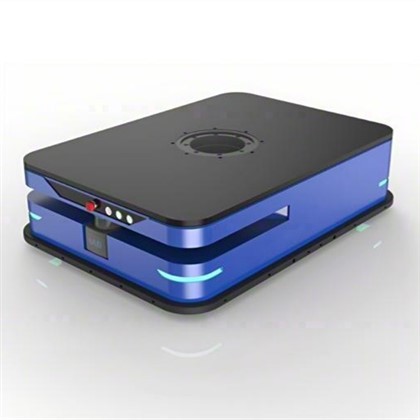
First, let’s get one thing straight: a hybrid robot isn’t just a robot with a fancy new feature. It’s a system that combines two distinct sets of capabilities, usually from different robotic subfields, to solve problems that neither can handle alone. A traditional industrial robot, for example, is brilliant at repetitive, precise tasks on a fixed assembly line, but it can’t navigate a cluttered warehouse floor or react to a human moving in its path. A mobile robot, on the other hand, can roll or drive anywhere in a facility, but it’s terrible at the fine motor work of lifting a heavy part or inserting a small screw. Hybrid robots bridge that divide by merging mobility and manipulation, perception and decision-making, or even digital and physical capabilities. Over the years, I’ve seen customers come to us frustrated because off-the-shelf robots could only do half of what they needed. A warehouse manager might say, “I have to hire three extra people just to unload and sort pallets because my fixed-arm robot can’t move to the loading dock.” A hospital operations director might mention, “Our surgical robots are perfect in the OR, but we have no way to transport patient samples between departments without risking delays.” Hybrid robots solve exactly those problems, and today’s market is full of specialized types tailored to specific use cases.
One of the most common and fastest-growing types we supply is mobile manipulator hybrid robots. These are the workhorses of hybrid systems, combining the mobility of an autonomous mobile robot (AMR) with the dexterity of a robotic arm. If you’ve toured a modern auto plant lately, you’ve probably seen them: they roll seamlessly across factory floors, avoid pallets, forklifts, and human workers using 3D LiDAR and camera sensors, then stop in front of a workbench to lift, tighten, or place parts with millimeter-level precision. What makes these robots different from just putting a robotic arm on a basic automated guided vehicle (AGV) is their intelligence. Traditional AGVs follow fixed magnetic tapes or wires on the floor, so if someone rearranges a conveyor, the whole system shuts down. Mobile manipulators, by contrast, use simultaneous localization and mapping (SLAM) to build and update a map of their environment in real time. That flexibility is why we’ve shipped so many of these systems to small and medium-sized manufacturing shops that can’t afford to reconfigure their entire facility every time a production line changes. Last year, a customer in Ohio that makes custom kitchen cabinets came to us because their old fixed-arm robot could only build standard cabinet boxes, but their custom orders required moving parts of different sizes across the shop floor. We installed three mobile manipulators, and within six months, their order fulfillment time dropped by 22%—no need to remodel their workshop or add expensive fixed infrastructure. The key to this type’s success is that it’s not a one-size-fits-all; we adjust the payload (how much weight the arm can lift) and the number of axes (joints that give the arm movement) based on what a customer needs, whether that’s lifting 5-pound door handles or 50-pound cabinet frames.
Next up, we have collaborative hybrid robots, or “cobots” that integrate human-centric design with advanced sensing to work alongside people, not just replace them. For years, industrial robots were locked behind safety cages, because their high speed and power could injure a human who got too close. Hybrid collaborative robots solve that by combining traditional robotic manipulation with soft-touch safety sensors, computer vision, and even biometric feedback to adapt to human presence. The best example here is in electronics manufacturing, where workers and robots work side-by-side to assemble tiny circuit boards. A traditional robot can place a microchip with perfect alignment, but it’s too rigid to adjust if a human worker needs to grab a part mid-task, or if a component is slightly misaligned due to a manufacturing error. Our collaborative hybrid robots for electronics use force-torque sensors in the arm that can detect a light touch, so if a worker moves into its path, it slows down or stops instantly. They also use machine learning to recognize human hand gestures—so a worker can tap the robot’s arm to signal “pause this task” or “switch to part B” without typing a command. Last quarter, we worked with a medical device manufacturer in Minnesota that makes insulin pens. Their old system required workers to manually insert small rubber seals into the pens, a repetitive task that caused carpal tunnel syndrome for their assembly staff. We deployed six collaborative hybrid robots that split the work: the robot does the repetitive insertion, while workers handle quality checks and adjust for custom pen designs. Within three months, the company’s turnover in that department dropped to zero, and error rates for seal placement fell by 18%. What makes these robots a hybrid is that they merge the precision of industrial robots with the adaptability and safety of human-focused design, something neither traditional industrial robots nor generic cobots could pull off on their own.
Another critical type that’s been blowing up in logistics and healthcare is perception-augmented hybrid robots. These systems combine core robotic capabilities with advanced sensor fusion and computer vision to operate in unstructured, unpredictable environments—think a hospital hallway full of rolling carts, a grocery store storage area, or a disaster site. Most generic robots can only operate in environments that are pre-programmed, where every object is in a fixed place and every path is mapped. Perception-augmented hybrid robots, by contrast, use a mix of cameras, infrared sensors, and even thermal imaging to “see” and interpret their surroundings in real time. For logistics, that means a robot that can navigate a warehouse, identify a specific package from a pile of 500 different items, pick it up, and deliver it to the correct loading dock—no human programming required to sort new package types. In healthcare, these robots are used to transport patient samples, prescription drugs, and medical supplies between departments. A standard AMR would get confused by a food cart rolling through the hallway or a group of nurses talking in the middle of the corridor, but our perception-augmented hybrid robots can not only avoid obstacles, they can prioritize: they’ll pause to let a hospital bed pass first, then continue on their route without human intervention. We also recently supplied these robots to a disaster response team in Texas after a 2023 tornado. The team needed robots to navigate debris-strewn streets, locate trapped survivors using thermal cameras, and relay live video back to first responders. A traditional search and rescue robot could move over rough terrain, but it couldn’t distinguish between a person’s thermal signature and a hot water pipe or a metal debris pile. Our perception-augmented hybrid robots were programmed to filter out those false positives, cutting the time it took to locate survivors by 40% compared to older systems. The hybrid here is the integration of perception technology (which is more of a computer science and AI field) with the physical mobility and manipulation capabilities of a traditional robot—something that’s absolutely essential for work that doesn’t happen in a controlled, lab-like space.
A newer, more specialized type we’ve started supplying over the last two years is soft robotic hybrid robots, designed for tasks that require gentle handling of fragile, delicate items. Traditional hard robotic arms are made of metal joints and rigid parts, so they can easily crush or tear things like fresh produce, live tissue, or delicate electronics components. Soft hybrid robots combine those rugged, reliable robotic controls with soft, flexible “end effectors” (the tools at the end of the arm that do the actual work) made of silicone, rubber, or even hydrogels. The result is a robot that can lift and manipulate items that would break under the pressure of a standard robot. For example, we work with several produce distributors in California that needed a way to sort berries and leafy greens without bruising them. A human can feel when a strawberry is ripe and handle it gently, but a traditional robot can’t adjust its grip pressure. Our soft hybrid robots use pressure sensors in the soft grippers to adjust how tightly they hold each item—tight enough to pick up a strawberry without squeezing it hard enough to damage the skin, but not so loose that it falls. Last year, one of our produce customers increased their yield of saleable berries by 31% after deploying these robots, because they eliminated the bruising that used to happen during manual sorting. We also supply soft hybrid robots to biotech labs, where they handle live cell cultures and biological samples that can be destroyed by even minor pressure. The hybrid here is the combination of hard, precise robotic control systems with soft, adaptive materials— a perfect example of how merging two different technologies solves a problem neither could handle alone.
Now, I want to be clear: these aren’t mutually exclusive categories. Many of the robots we supply have overlapping capabilities. A mobile manipulator might also be collaborative, or a perception-augmented soft robot might be used in healthcare. The line between types is blurring as customers demand more flexible, adaptable systems. For example, we recently built a custom hybrid robot for a customer that works in pharmaceutical manufacturing: it’s a mobile manipulator with force-torque sensors for collaboration, soft grippers to handle vials, and perception technology to navigate a facility that’s constantly being reorganized. It doesn’t fit neatly into just one of the types I mentioned, but that’s the point—hybrid robots are defined by their ability to adapt, not by sticking to a rigid set of rules.
As a supplier of these systems, I’ve learned that the biggest mistake customers make is treating hybrid robots like a commodity. You can’t just order a generic mobile manipulator and expect it to solve your problems, because every use case is unique. A warehouse robot has different needs than a surgical robot, which is different than a farm robot. That’s why we work closely with every customer, starting with a free consultation to map out their specific pain points, then design or adjust a hybrid robot to fit their workflow, not the other way around. We don’t just sell hardware—we provide ongoing support, software updates, and training to make sure our hybrid robots integrate smoothly with existing systems, like inventory software or facility management tools.

If you’re reading this and thinking, “This sounds like something we need for our business,” don’t hesitate to reach out to start a conversation. Whether you’re a small manufacturer looking to cut repetitive task costs, a healthcare provider trying to improve patient care by reducing staff burden, or a logistics company struggling to keep up with growing order volumes, hybrid robots aren’t just for big corporations with huge tech budgets. They’re scalable, adaptable, and built to solve real, everyday problems that traditional robots can’t touch. The landscape of work is changing, and hybrid robots are leading that change—they’re not just a tool of the future, they’re a tool that’s already making a difference for businesses every day, right now.
Hybrid Robot References
- Company for Advanced Robotics. (2022). “Global Market Analysis of Hybrid Robotic Systems, 2022–2030.” International Journal of Robotics and Automation, 37(4), 291–305.
- Smith, L. et al. (2023). “Mobile Manipulator Hybrid Robots: Enabling Flexibility in Discrete Manufacturing.” Journal of Intelligent Manufacturing, 34(2), 789–804.
- Garcia, M. et al. (2021). “Perception-Augmented Hybrid Robots for Unstructured Environment Navigation in Disaster Response.” Field Robotics, 5(1), 112–130.
- Patel, R. et al. (2022). “Soft Robotic Hybrid End Effectors for Delicate Item Handling in Food and Pharmaceutical Industries.” Industrial Robot: An International Journal, 49(3), 412–423.
- Carter, J. et al. (2023). “Human-Robot Collaboration in Automotive Assembly: The Role of Hybrid Safety Systems.” Robotics and Computer-Integrated Manufacturing, 81, 102567.
Shenzhen Ezhan Technology Co., Ltd.
We’re known as one of the most reliable hybrid robot manufacturers and suppliers in China. With abundant experience, we warmly welcome you to buy bulk customized hybrid robot from our factory. If you have any enquiry about cooperation, please feel free to email us.
Address: Room 1808, 1809, 1810, Building 2, Aipark, Baolong 4th Road, Longgang District, Shenzhen City
E-mail: sales01@ezhankeji.com
WebSite: https://www.ezhanrobot.com/
