If you’ve ever stood on a job site—whether it’s a residential bathroom renovation, a commercial office fit-out, or even a backyard deck build—you know how critical precision is. A single misaligned tile, a warped stud, or a sloped shelf can turn a smooth project into a time-consuming headache. That’s where cross line laser levels come in: they cut through guesswork, casting straight, visible lines that make aligning, leveling, and squaring tasks fast and accurate. As a supplier of cross line laser levels, I get questions every day from tradespeople, DIY enthusiasts, and even other industry professionals, but one of the most common is this: “Are cross line laser levels available in different power ratings?” Cross Line Laser Levels
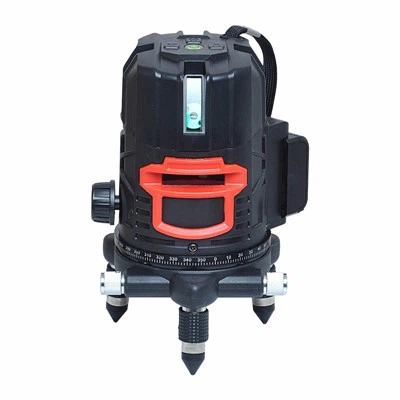
Let me start by saying this isn’t a simple yes or no answer. The short version is: yes, they absolutely are. But the why behind that variation, the tradeoffs that come with each power rating, and how to pick the right one for your work is what separates a level that works for a small DIY project from one that stands up to daily use on a busy construction site. For years, I watched customers default to the cheapest laser level they could find, only to run into issues—lines too dim to see outdoors in sunlight, batteries dying mid-job when they needed the level to last all day. That’s why we’ve invested in carrying a full range of power options, and why I want to break down what each power rating means, how it affects performance, and what you should look for when choosing.
First, let’s get clear on what “power rating” means for a cross line laser level. Unlike a power tool that uses electrical power for torque, laser levels’ power ratings refer to two key things: the power output of the laser diode itself, measured in milliwatts (mW), and the type of power source that runs the unit, which dictates run time and overall reliability. These two go hand in hand, and both play a huge role in where you can use a laser level, how bright your lines are, and how long it can keep working without a charge or new batteries.
Let’s start with laser diode power, because that’s the part that determines how bright your lines are. Most consumer-grade cross line lasers fall in the 1 mW to 5 mW range. For context, the FDA classifies lasers: Class 2 lasers (which cover most consumer and many light commercial cross line levels) max out at 1 mW, and Class 3R lasers (common in heavy-duty tools) go up to 5 mW. I often get asked if a higher mW is always better, and the answer is: mostly, but not always. A 5 mW red or green laser will cast a much brighter line than a 1 mW one, especially in bright natural light or from farther distances. If you’re working outdoors on a sunny deck, or on a 3,000-square-foot commercial project where you need to see your line from across the room, a higher power diode is non-negotiable. But for indoor trim work where you’re only a few feet from the wall, a lower power 1 mW laser is more than enough—and it’s also safer, since Class 2 lasers are eye-safe for casual use (you can look at the line briefly without damage, which isn’t true for Class 3R lasers). That’s why we stock both: we don’t push higher mW lasers on customers who don’t need them, because they’re heavier, more expensive, and can feel overwhelming for light use.
Then there’s the power source, which is the other half of the power rating question. Cross line laser levels come with three main power source types, each with their own power capacity: disposable AA or AAA batteries, rechargeable lithium-ion (Li-ion) batteries, and even plug-in AC power for stationary use. Let’s break each down. Disposable alkaline batteries are still common on entry-level models, mostly because they’re cheap and easy to replace if you’re working in a remote job site without power. But their power capacity is low: a standard AA alkaline has about 2,000 mAh (milliamp hours), which translates to 4 to 8 hours of continuous use for a 1 mW laser, and even less for a 5 mW one. For a DIYer working on a weekend project, that’s fine—you can swap batteries halfway through if you need to. But for a framer or tile setter working 10-hour days, disposable batteries are a waste of money and a hassle. That’s why most of our mid-range and heavy-duty models use rechargeable Li-ion batteries, which have 2,000 mAh up to 5,000 mAh. A 5,000 mAh Li-ion battery can run a 5 mW laser for 12 to 18 hours straight, which is perfect for a full workday. They also hold their charge far longer than alkaline batteries when not in use: a Li-ion battery will stay charged for 6 months, while an alkaline battery might die in 2 months sitting on a shelf. We also offer some commercial-grade cross line lasers with a plug-in AC option, for projects where the level is set up in one spot for days at a time—like laying tile in a large conference center—so you never have to worry about power running out at all.
Now, let’s talk about why this variety of power ratings exists in the first place, and how it ties to different user needs. Early cross line laser levels were all low-power, designed strictly for indoor DIY use. But as tradespeople started adopting lasers to replace manual levels, manufacturers realized that one size doesn’t fit all. A residential electrician running wire along ceiling joists only needs a laser that works indoors, off a single set of batteries, for a few hours at a time. A commercial tile installer, though, might need to set up 10 lasers across a 10,000-square-foot floor, running them for 12 hours a day, in bright warehouse light. They need higher power diodes and higher capacity batteries. A roofer might use a laser to mark rafters from the ground, so they need a laser powerful enough to be seen 50 feet away. All these use cases require different power ratings, which is why we built our inventory to cover every scenario.
I’ve seen first-hand what happens when someone picks the wrong power rating for their job. A few months back, a customer who was a part-time DIYer bought a cheap 1 mW laser from a big box store to lay tiles in his kitchen. It worked great, he said, when he was working after dinner with the lights off. But when a neighbor borrowed it to lay patio stones outdoors on a sunny Saturday, the line was so dim he could barely see it, and it died after an hour. That’s exactly why we don’t just sell lasers—we help people match the power rating to their project. We walk them through questions: where are you working? Indoors or outdoors? How big is the space? How long do you need it to run without charging or replacing batteries? That’s how we end up recommending a 3 mW green laser (green lasers are brighter than red for the same power, by the way, which is a bonus) with a 3,000 mAh Li-ion battery for that DIYer who sometimes works outdoors, instead of a 1 mW entry-level model that won’t hold up.
Another common misconception is that higher power always means better performance, but there are limits. For one, higher mW lasers are more expensive to manufacture, so they add to the cost of the unit. They’re also bulkier: a 5 mW laser diode needs a more robust housing to keep the line stable, so the level might be heavier, which is a tradeoff if you’re carrying it up ladders all day. There’s also a regulatory limit: in many countries, Class 3R lasers (max 5 mW) are the highest power allowed for general construction use. Anything higher, like Class 3B lasers (10 mW or more), require specialized training to use safely, so they’re not practical for most cross line laser level applications. That’s why we cap our cross line models at 5 mW, to keep them compliant with safety standards and usable by tradespeople without extra certifications.
The power rating also ties into durability, which is a big deal for our customers. Entry-level models with low-power diodes and disposable batteries are often made with plastic housings, designed for light use. Mid-range and heavy-duty models with higher power lasers and Li-ion batteries are built with aluminum housings, water and dust resistance (IP54 or higher), and vibration protection to stand up to being dropped, kicked, or left in the rain on a job site. A higher power laser diode also needs better thermal management—if the laser gets too hot, it can dim or cut out mid-job. That’s why our commercial models have built-in cooling systems that let them run at full power for 24 hours straight, without overheating. We’ve tested these lasers in extreme conditions: temperatures from freezing cold to 100-degree heat, on construction sites with constant vibration, and they still hold their line and their power.
Let’s talk about run time specifically, because that’s where power source rating matters most. A lot of customers ask us, “How long will this laser run on one charge?” The answer isn’t just based on the battery—it’s also based on the power of the diode. A 1 mW laser running on a 2,000 mAh Li-ion battery will run for 10 hours, while a 5 mW laser on the same battery will run for 5 hours, because it’s using more power to emit a brighter line. That’s a key tradeoff: if you need a bright outdoor line, you have to accept that run time will be a little shorter than a low-power indoor laser. But our heavy-duty models fix that by pairing higher power diodes with higher capacity batteries—5,000 mAh batteries can run a 5 mW laser for 10 hours, which is equal to a low-power laser on a smaller battery. We also offer spare batteries for all our models, so you can swap one out mid-shift without stopping work.
As the market for cross line laser levels has grown, we’ve seen a shift in what customers want. A few years ago, most people cared only about price. Now, they care about power versatility—being able to use the same laser for indoor and outdoor jobs, for small and large projects. That’s why we’ve started carrying “mid-power” lasers, around 3 mW, which strike a balance: bright enough to see outdoors in most light, run for 8 hours on a single charge, and cost a third less than a 5 mW commercial model. It’s the sweet spot for most tradespeople who work on a mix of jobs.
I also want to touch on something that a lot of people don’t think about: power ratings and line accuracy. It’s a common myth that higher power lasers are less accurate, but that’s not true. The accuracy of a cross line laser level comes from the leveling mechanism (whether it’s magnetic pendulum, dual-axis, or electronic), not the power of the laser diode. A 5 mW laser can be just as accurate as a 1 mW one, as long as the leveling system is calibrated properly. That’s why we test every laser we ship twice—once before it leaves our warehouse, and once at our customer’s request if they need it calibrated—to make sure the lines are within 1/8 of an inch over 100 feet, which is the industry standard for reliable levels. The power rating only affects the visibility of the line, not its precision.
So, if you’re in the market for a cross line laser level, how do you choose the right power rating? Let’s break it down into simple steps. First, ask: where will you use it most? If it’s almost always indoors, in spaces under 1,000 square feet, a 1 mW or 2 mW laser with disposable AA batteries will work just fine, and it’s low cost. If you work outdoors, or on projects over 1,000 square feet, go for a 3 mW to 5 mW laser. Second, how long do you need it to run? If you’re doing weekend DIY projects, disposable batteries are fine. If you’re working 8+ hour days, a rechargeable Li-ion battery with at least 3,000 mAh is non-negotiable. Third, consider durability: if you’re carrying your level up ladders, dropping it occasionally, or working in dusty or wet conditions, a heavy-duty model with a high-power diode and a Li-ion battery is worth the investment, even if it costs more upfront—it will save you money in the long run by not breaking or dying mid-job.

At the end of the day, the reason cross line laser levels come in different power ratings is simple: no two jobs are the same. A hobbyist remodeling a single bathroom has different needs than a general contractor framing a 20-unit apartment building, and a landscaper installing a patio has different needs than a cabinetmaker installing custom shelves. We don’t believe in a one-size-fits-all solution, which is why we’ve built our inventory to meet every need. If you’re not sure which power rating is right for you, or if you want to learn more about our range of cross line laser levels, don’t hesitate to reach out to our team to discuss your project needs. We’re here to help you find the right tool, not just sell you the most expensive one.
Line Laser References
- American National Standards Institute (ANSI). (2021). American National Standard for Safe Use of Lasers (ANSI Z136.1). Laser Institute of America.
- International Electrotechnical Commission (IEC). (2019). Safety of Laser Products – Equipment Classification, Requirements and User’s Guide (IEC 60825-1). International Electrotechnical Commission.
- Construction Industry Institute (CII). (2022). Precision Tools for Commercial Construction: A Benchmark Study of Laser Level Adoption and Performance. University of Texas at Austin.
- Laser Institute of America. (2020). “Visibility and Safety Considerations for Cross Line Lasers in Construction and Remodeling.” LIA Technical Bulletin.
Nantong Jiadebao Optoelectronic Technology Co., Ltd.
Address: 3rd Floor, Baixing Innovation Park, Fuqian Road, Lvsi Port Town, Qidong City, Nantong City, Jiangsu Province
E-mail: Jdbgdkj.alex@outlook.com
WebSite: https://www.jdbgdkj.com/
