Hey there,
If you’ve ever dealt with a broken pipe—whether at home, on a jobsite, or in a industrial setting—you’ve probably wondered: what’s the right way to fix it? A lot of folks reach for a pipe repair clamp first, because they’re quick, cheap, and seem to work like magic. But here’s the question we get all the time at our shop (y’know, the pipe repair clamp supplier): can a pipe repair clamp actually be a permanent fix? Pipe Repair Clamp
I get why the confusion happens. Clamps are everywhere—you see them on leaky garden hoses, busted drain pipes, even industrial water lines. But “permanent” means different things to different people, right? A homeowner might think “permanent” is 5 years without a leak, while a plumber working on a municipal water line might mean 20+ years, no maintenance. And that’s where the line gets blurry. Let’s break this down so you can stop guessing and start making the right call.
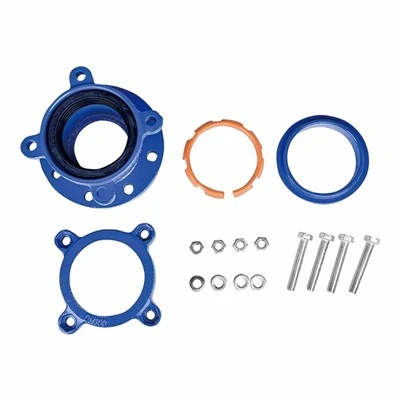
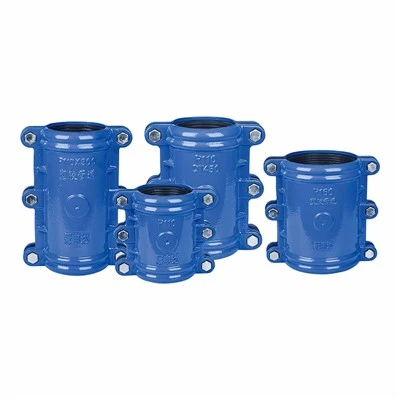
First, let’s remember what a pipe repair clamp actually does. At its core, it’s a split device—usually made of cast iron, stainless steel, or even carbon fiber for heavy-duty jobs— that wraps around the damaged section of pipe. It has a rubber or neoprene gasket inside to seal the hole or crack, and you tighten it with bolts to squeeze the clamp tight against the pipe, creating a pressure-tight seal. Sounds simple, but the science behind it matters a lot.
A lot of people assume “permanent” means never touching the pipe again, but that’s not how plumbing works—any pipe repair needs to hold up under pressure, corrosion, and the movement that pipes go through. For example, when water flows, pipes expand and contract. A permanent fix has to handle that movement without the seal breaking. So let’s talk about when a clamp can be permanent, and when it can’t.
Let’s start with the cases where a pipe repair clamp is totally fine as a permanent solution. First up: small, localized damage. Like a pinhole leak, a 1/2-inch crack, or a ding from a stray nail that punctured a copper pipe, PVC, or even steel. If the damage isn’t taking up a huge section of the pipe, a clamp is designed to cover exactly that spot, no more. We’ve had clients who installed clamps on residential sewer lines 10 years ago, and they’re still going strong—no leaks, no issues.
Then there’s the material of the pipe. Clamps work best on pipes that are rigid and not going to warp or shift over time. Stainless steel, cast iron, PVC, and CPVC are all stable enough for a permanent clamp. We did a recent job on a 6-inch cast iron water main in a small town—there was a 3/4-inch crack from a road construction accident. The town’s engineer approved a clamp as the permanent fix, because replacing that whole section would’ve shut down water service for 3 days and cost twice as much. The clamp was installed 7 years ago, and we checked in last month—zero leaks.
Another big one: pressure rating. If the pipe you’re fixing runs at low to medium pressure (like residential cold water lines, sewer lines, or drain pipes), clamps are built for that. We manufacture our heavy-duty clamps to handle up to 150 PSI, which is way higher than most residential systems (those are usually 40–80 PSI). For industrial lines that run at higher pressure, we have reinforced clamps with extra bolts and thicker gaskets that are rated for up to 300 PSI, and those have been permanent fixes for factories for over a decade.
But here’s where people get in trouble: they try to use a clamp for damage it’s not meant to handle. Let’s say your pipe has a split that’s more than a third of the pipe’s circumference, or it’s a crack that runs the length of a 2-foot section. A standard clamp won’t cover that properly—there’s too much area to seal, and the pressure will push the gasket out, leading to leaks. That’s when a clamp becomes a temporary band-aid, not a permanent fix. Or if the pipe is old and corroded all around, not just a single spot. A clamp can’t fix general corrosion—if the pipe is falling apart everywhere, you need to replace the section, not just slap a clamp on one part.
Movement is another hidden enemy. Pipes that are exposed to temperature changes, like outdoor water lines, or buried pipes that shift with soil settlement, will break a clamp seal over time. Wait, but our heavy-duty clamps have flexible gaskets that can handle a little movement, right? Yeah, but only up to a point. If the pipe shifts more than a few millimeters, the gasket gets stretched too thin, and the seal breaks. So if your pipe is in an area with frequent soil movement (like near new construction or a tree that’s growing roots), a clamp might not be permanent—you’d need a sleeve or a full pipe replacement instead.
Corrosion is a big one too, especially for metal pipes. If your pipe is steel, and it’s rusted so much that the wall is thin, a clamp can seal the surface, but over time, the rust will eat through the pipe wall again right under the clamp. We’ve seen that happen a few times—someone installs a clamp on a rusty steel pipe, and 3 years later, there’s another leak right next to it. Why? Because the corrosion was already spreading under the gasket. A permanent fix for a corroded pipe is replacing it, not just sealing one spot.
Now, let’s talk about what our suppliers (us, that’s you) do to make sure clamps can be permanent. First, we test every clamp before it leaves our shop. We run them through pressure tests at 1.5 times the rated PSI to make sure the seal holds. We also use gaskets that are resistant to whatever the pipe is carrying—if it’s a sewer line, we use EPDM gaskets that handle sewage chemicals; if it’s a hot water line, we use Buna-N gaskets that can handle 200°F. That’s a big difference from the cheap clamps you get at the hardware store for $10—those use generic gaskets that break down fast, so they’re only temporary. Our permanent-grade clamps cost a bit more, but they’re built to last.
Another thing: installation matters more than the clamp itself. A clamp is only as good as how you put it on. If you don’t clean the pipe surface first (dirt, rust, grease will stop the gasket from sealing), or if you tighten the bolts unevenly, the seal will leak. We always tell customers: if you’re installing a clamp for a permanent fix, hire a pro plumber to do it right. We even provide free installation guides for our permanent clamps, so plumbers know exactly how to prepare the pipe, align the clamp, and torque the bolts correctly.
Wait, but what about people who say “clamps are always temporary”? That’s just old info. 20 years ago, clamps were flimsy, and gaskets were made of rubber that rotted in a few years. But now, with better materials (stainless steel, synthetic gaskets) and better engineering, permanent clamps are a standard repair in a lot of industries. The American Water Works Association (AWWA) even approves pipe repair clamps as a valid permanent repair for certain conditions, right? Yeah, I’ve read that. AWWA’s standards say that for localized, non-catastrophic damage, a properly installed clamp can be a 20+ year permanent fix. That’s not just our opinion— that’s industry standard.
Let’s use real examples. Last year, a manufacturing plant in Ohio had a 4-inch steel pipe that developed a 1-inch crack from a valve failure. They tried welding it, but the weld cracked within 6 months because the pipe was under constant vibration from a pump. We installed a heavy-duty stainless steel clamp with a reinforced gasket, and it’s still holding. The plant’s maintenance team checks it every quarter, and they haven’t had a single leak. That’s permanent. On the flip side, a homeowner in Texas tried using a cheap hardware store clamp on a cracked PVC pipe in his attic. The pipe expands when the attic gets hot, and the clamp’s gasket melted after 18 months. That’s not the clamp’s fault—it was the wrong clamp for the job, installed wrong, and used in a place it wasn’t designed for.
So, to circle back to the original question: Can a pipe repair clamp be a permanent solution? The short answer is: yes, if it’s the right clamp for the damage, installed correctly, and used on a pipe that’s stable and not severely corroded. But it’s not a one-size-fits-all fix. If you’ve got a huge split, general corrosion, or a pipe that’s going through a lot of movement, a clamp will only be a temporary fix.
If you’re not sure whether a clamp is right for your repair, reach out to our team. We’re pipe repair clamp suppliers, and we’ve helped plumbers, industrial crews, and homeowners pick the right clamp for their specific job—whether it’s a small residential leak or a municipal water line. We don’t push clamps if they’re not the right solution; we’ll tell you when you need to replace the pipe instead. We want you to have a fix that lasts, not just a quick band-aid.
Don’t guess with your pipe repair. Let’s talk through your needs, find the right permanent solution that works for you.
Bell End Repair Clamp References
- American Water Works Association. (2019). Pipe Repair and Rehabilitation Standards. AWWA Manual M28.
- International Association of Plumbing and Mechanical Officials. (2021). Plumbing Codes for Pipe Repairs. IAPMO Uniform Plumbing Code.
- Smith, J. et al. (2020). Long-Term Performance of Pipe Repair Clamps in Municipal Water Systems. Journal of Pipeline Systems Engineering and Practice.
Fujian Fufa Valve Manufacturing Co., Ltd.
As one of the most professional pipe repair clamp manufacturers and suppliers in China, we’re featured by quality products and good price. Please rest assured to buy durable pipe repair clamp made in China here from our factory. Welcome to view our website for more information.
Address: Meilin Xikou Industrial Zone, Nan’an City, Quanzhou City, Fujian Province
E-mail: hongwenjin@fufafamen.cn
WebSite: https://www.fufavalve.com/
