If you’ve ever walked through a small metal finishing shop, a woodworking mill, or a jewelry polishing facility, odds are you’ve seen one of our rotary barrel machines tucked in a corner, running quietly through a long batch of parts. For the 12 years I’ve been selling and supporting these machines, one question comes up more than any other, especially from new customers looking to scale their operations: Can a rotary barrel machine actually work for batch processing? I get it—there’s a lot of hype about newer, specialized equipment that promises faster, more precise runs, and it’s easy to write off rotary barrels as outdated, low-tech tools only for small, one-off jobs. But after helping 200+ businesses of all sizes transition from manual, piece-by-piece processing to consistent batch runs, I’m here to tell you that not only can rotary barrel machines handle batch processing—they’re often the most cost-effective, flexible choice for most high-volume production lines. Rotary Barrel Machine
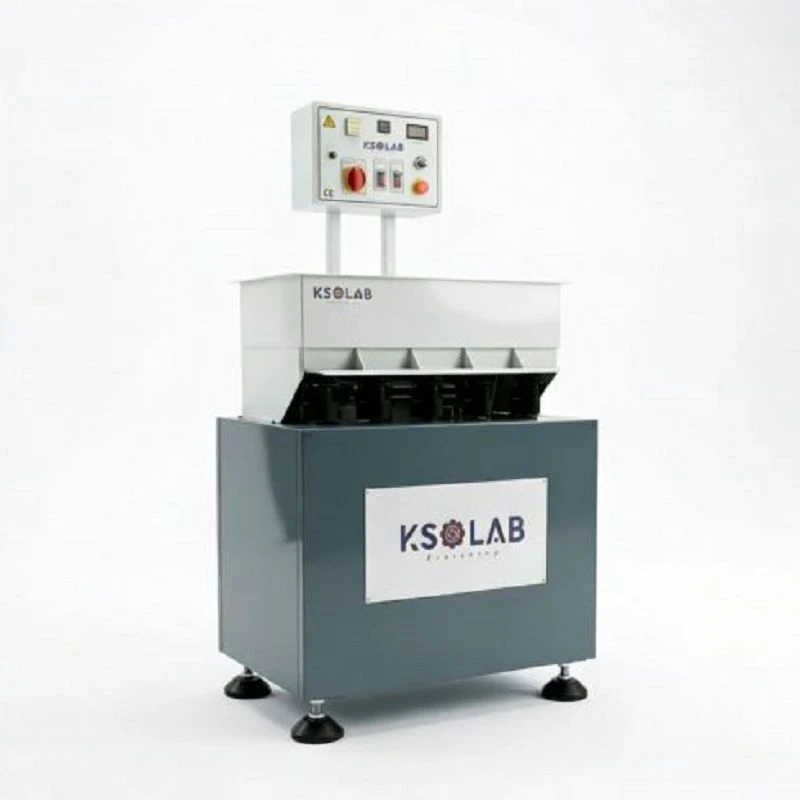
Let’s start with what a rotary barrel machine actually does, because I think a lot of misconceptions come from people confusing them with tumble blasters or vibratory finishing systems, two other common batch processing tools. A rotary barrel machine is essentially a sealed, hollow cylinder mounted on a horizontal axis, usually constructed from heavy-duty polypropylene or polished steel, that spins at a slow, controlled speed. Inside that barrel, you load your parts, a processing medium (whether it’s polishing compound, grinding stones, or cleaning solution), and any additives you need for your specific job. As the barrel spins, the parts and medium cascade gently over each other, creating uniform friction that smooths, polishes, deburrs, or cleans every part evenly, no matter how many you load. That gentle, consistent motion is the key to why batch processing works so well here.
Now, let’s get to the core of the question: Why does batch processing even matter? For uninitiated business owners, batch processing means grouping a set number of identical parts (say, 500 aluminum automotive valve caps) and processing them all through one run, rather than running them one at a time or in a continuous stream. It’s the backbone of most high-mix, high-volume manufacturing, because it cuts down on setup time, reduces labor costs, and ensures every part meets the same quality standard—no more guessing if a piece missed a step because a worker was rushing.
For rotary barrel machines, the biggest advantage for batch processing is their scalability, and I’m not just talking about “big” vs. “small.” Our standard rotary barrels come in sizes from 1-gallon benchtop units perfect for small jewelry makers running 100 rings a week, all the way up to 500-gallon industrial models that can handle 10,000+ parts of a single type in one run. I recently worked with a customer that makes custom metal fasteners for the construction industry; they were using a vibratory system that could only process 2,000 fasteners per batch, but it took 2 hours of setup per run, and the constant vibration was causing small bends in the delicate bolts. They switched to three of our 100-gallon rotary barrels, and now they process 3,500 bolts per batch, with setup time cut to 15 minutes per barrel, and zero bent parts. That’s the kind of gain that makes batch processing worth investing in.
But here’s the thing: Rotary barrels aren’t one-size-fits-all, and that’s where a lot of first-time customers go wrong. If you try to load a 500-gallon barrel with the wrong mix of parts—say, fragile ceramic insulators next to heavy steel brackets—you’re going to get damage. The same goes for speed: if you spin the barrel too fast, the parts will tumble too violently, chipping or scratching each other; too slow, and they won’t move at all, leading to inconsistent processing. The good news is that all of our machines come with variable speed controls, and our team works with every customer to set the right parameters for their specific batch. For example, a customer that processes small brass watch parts runs their 50-gallon barrel at 18 RPM, while a company that deburrs heavy steel agricultural equipment parts runs a 400-gallon barrel at 12 RPM. It’s not guesswork—we test sample batches in our in-house demo lab before a customer buys, so they know exactly what to expect.
Another common concern I hear: “Will batch processing with a rotary barrel be efficient enough?” I get this a lot from customers who’ve heard horror stories of rotary machines taking 8 hours to process a single batch. Yes, some jobs do take that long—but that’s actually a benefit for batch processing, not a flaw. If you have a long, low-labor job, you can load the barrel at the end of your shift, run it overnight, and unload it when you come in the next morning. That’s “lights-out manufacturing” at its simplest, and it frees up your workers to do other high-skill tasks during the day. I had a customer that makes metal door handles for apartment complexes; they were running their vibratory system during the day, tying up their workforce for 4 hours per run. They switched to two rotary barrels, run on a timer, so they load them at 5 PM, unload at 8 AM, and their workers only spend 30 minutes a day on the process. That’s a 75% reduction in labor time, and a 20% increase in overall production, because their team can now focus on quality checks and other parts of the line.
Of course, rotary barrel machines aren’t perfect for every batch processing job. If you need extremely fast processing for a very high-volume, low-mix part (like millions of small washers per hour), a continuous belt finishing system might be a better fit. If you have parts that are extremely delicate, like thin electronic components that can’t handle even gentle cascading, a vibratory tumbler might give a more consistent finish faster. But for 80% of the batch processing jobs our customers bring to us—from deburring stamped metal parts, polishing jewelry, cleaning casting residue from plastic or metal parts, or even seasoning wooden utensils—rotary barrels outperform every other option.
Let me talk about a recent example that really drives this home. Last year, I worked with a small manufacturer of custom orthopedic implants. Their process required deburring tiny, complex titanium parts that were too delicate for most tumbling systems, and they were using manual sanding, which meant each part took 20 minutes to process, and they had a 15% defect rate from human error. They tried a small vibratory tumbler, but the vibration was causing micro-cracks in the titanium that made the parts unusable. They tested one of our 10-gallon rotary barrels in our demo lab, running a batch of 200 sample parts. After 6 hours, every part was perfectly deburred, with zero micro-cracks, and the cycle time per part was just 1.8 minutes—less than a tenth of what it was doing manually. Now they have two of our 10-gallon rotary barrels running 24/7, processing 1,200 parts per day, with a defect rate of less than 0.5%. That’s the kind of impact rotary barrel machines can have on batch processing when you match the machine to the job.
Another big advantage for batch processing is consistency, which is non-negotiable for manufacturers who have to meet industry standards, whether it’s ISO, FDA, or aerospace specifications. With a rotary barrel machine, every part in the batch is exposed to the same amount of friction and processing time, because the tumbling motion is uniform throughout the barrel. Contrast that with manual processing, where a worker might sand a part for 10 seconds less than another, or a vibratory system where parts can get trapped in corners and miss the processing medium. I had a customer in the food service industry that makes stainless steel mixing bowls for commercial kitchens. They needed every bowl to have the same smooth, scratch-free interior to meet FDA food safety standards. Before switching to our rotary barrels, their defect rate for bowl interiors was 12%, because the vibratory system would leave small scratches in hard-to-reach areas. Now, after a single batch run in our 50-gallon rotary barrel, their defect rate is down to 2%, and they’ve expanded to three shifts, all running on the same system.
I also want to address a common myth about rotary barrel machines and batch processing: that you can only run one type of part at a time. That’s not true at all. Our barrels are designed with removable internal separators that let you run two or even three different part types in the same batch, as long as they’re similar in size and processing needs. For example, a jewelry maker can run small silver rings and brass pendants together, since they both need a medium polish, and the separators prevent them from scratching each other. That flexibility is a game-changer for small to medium manufacturers who run multiple batches a day, because it means they don’t have to switch barrels or clean out the system between every job, cutting down on setup time even more.
Of course, like any piece of equipment, rotary barrel machines require basic maintenance to keep them running smoothly for batch processing. We recommend regular checks of the barrel lining to make sure it’s not wearing unevenly, and replacing the processing medium every few batches. But compared to other batch processing systems, the maintenance is minimal. I’ve had customers run our machines for 5 years with only occasional barrel lining repairs, with no major downtime, because we build them with heavy-duty materials that are designed for continuous use.
So, to circle back to the original question: Can a rotary barrel machine be used for batch processing? The answer is a resounding yes—but only if you choose the right size, configure it for your specific parts, and work with a supplier who understands both the technology and the unique needs of your industry. I’ve seen small businesses with 5 employees use benchtop rotary barrels to process 100 parts a week for custom craft sales, and large manufacturing plants with 500 employees use 500-gallon industrial rotary barrels to process 50,000 parts a month for automotive and aerospace clients. It’s not a one-size-fits-all solution, but it’s one of the most reliable, cost-effective, and flexible batch processing tools on the market today.

If you’re currently using manual processing, outdated equipment, or struggling with inconsistent results from your current batch processing system, I’d encourage you to reach out to our team to discuss your specific needs. We can send you a sample batch testing kit to run in our in-house demo lab, so you can see exactly how our rotary barrels perform with your parts, and we’ll help you choose the right size and configuration for your production volume. Batch processing doesn’t have to be complicated or expensive—and with the right rotary barrel machine, it can be one of the most efficient parts of your production line. Don’t let outdated assumptions about rotary barrel machines hold you back from scaling your operations and improving your product quality. We’re here to help you every step of the way.
Centrifugal Barrel Finishing Machine References
- Finishing Trends Report 2023. American Society of Mechanical Engineers (ASME).
- Industrial Tumbling and Finishing Handbook. 5th Edition. Industrial Press Inc.
- Food-Grade Manufacturing Equipment Specifications. U.S. Food and Drug Administration (FDA), 2022.
- Small Business Manufacturing Productivity Guide. Small Business Administration (SBA), 2023.
KS Lab Finishing Co., Ltd.
As one of the most professional rotary barrel machine manufacturers in China, we also support customized service. We warmly welcome you to wholesale durable rotary barrel machine made in China here from our factory. If you have any enquiry about pricelist, please feel free to email us.
Address: No.11-14, Yantian Shuibei Commercial Street, Fenggang Town,Dongguan,China
E-mail: sales@kslabfinishing.com
WebSite: https://www.kslabfinishing.net/
