If you’ve ever zoomed through a 4K movie in 2 seconds or joined a work call from a remote cabin without a single lag, there’s a very good chance fiber optic hardware is doing most of the heavy lifting. As someone who’s spent the last decade selling and troubleshooting fiber gear, I see so many folks act like FTTx (that’s Fiber to the X—we’re talking FTTH, FTTB, FTTC, all of it) is just “fiber cables run to a building” and call it a day. But here’s the secret: without the right fiber optic hardware, those tiny strands of glass are just glorified wires that can’t send signals far or work for the long haul. Let me break down what these parts actually do, because I’ve seen bad hardware sink FTTx builds faster than a bad weather delay. Fiber Optic Cable Hardware

First, let’s level set on what FTTx even is for anyone new to this. FTTx is how ISPs (internet service providers) bring high-speed internet to homes, apartments, and neighborhoods, replacing old copper lines that choked on bandwidth over long distances. FTTx swaps that copper for optical fiber, which uses light instead of electricity to carry data—light doesn’t have the same interference issues, can hold way more information, and works way longer than copper. But the fiber itself is useless without all the little, easy-to-overlook parts that connect it, protect it, and make sure the light signal doesn’t die mid-journey. That’s exactly the fiber optic hardware we supply, and trust me, picking the wrong stuff here is a costly mistake.
Let’s start with the backbone of any FTTx network: the splitters. If you’ve ever wondered how one central fiber line can feed 500 homes in a neighborhood, that’s a fiber optic splitter. Wait, not just any splitter—PLC splitters (Planar Lightwave Circuit) are the workhorses here. Think of a splitter like a tiny traffic cop: it takes a single incoming light signal from the ISP’s central office and splits it into multiple equal, weak signals that each go to a different home. But here’s the thing that most people get wrong: splitters aren’t one-size-fits-all. For example, a 1×16 splitter splits one line into 16, a 1×32 into 32. If you put a 1×64 splitter in a neighborhood where you only have 20 homes, you’re wasting signal strength—those extra splits mean each home gets a weaker signal, which can lead to slow internet or outages during peak use. I’ve had more than one ISP client call me panicking because a bad splitter they bought from a cheap no-name supplier caused 40% of their customers to complain about buffering during evening streaming. We test every splitter we send for exact signal loss (we aim for less than 0.3dB per split) and make sure they’re rated for the specific FTTx environment—like outdoor-rated splitters that can handle rain, snow, and extreme temperatures, or indoor ones for apartment basements. That’s not overkill; that’s how you build a network that works.
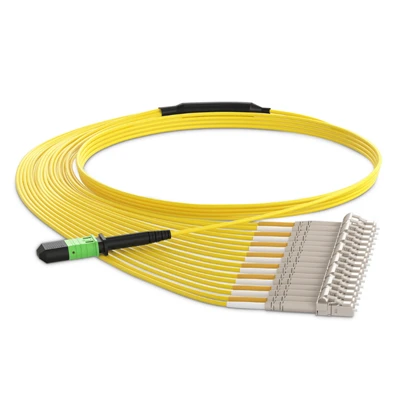
Next up: the connectors and adapters. These are the parts that sound super boring until you need them. A fiber connector is what plugs two fiber ends together, and an adapter is the little sleeve that holds them tight. The most common ones for FTTx are SC (Square Connector), LC (Small Form-factor Connector), and now even MPO for high-density builds. Why does this matter? If a connector is poorly polished or made with cheap metal that rusts, you get signal loss—big time. I’ve seen a build where someone used loose SC connectors in an outdoor enclosure, and wind vibration made them slip, leading to daily outages for a whole block. Adapters are just as important: metal adapters last way longer than plastic ones, especially outside, because plastic can crack in the sun or break when someone’s working on the line. Another thing people miss: APC (Angled Physical Contact) vs UPC (Ultra Physical Contact) connectors. APC connectors have an angled end that reflects less signal back, which is critical for FTTx because the signals are split multiple times. UPC is fine for short runs, but APC is non-negotiable for the final home drop—we always push APC for FTTx customer premises because it cuts down on that annoying “no internet” error that makes people call tech support at 8pm.
Now, let’s talk about terminations and enclosures, because this is where a lot of installs go wrong. A fiber termination is when you prepare the fiber strand and attach the connector to it—this needs to be done clean, no scratches on the glass end, no loose strands. But you can’t just leave that bare fiber hanging. Enclosures are the waterproof, dustproof boxes that hold all these terminations and splices, especially for outdoor use. For FTTx, we use two main types: pedestals for neighborhood underground or aerial runs, and wall mounts for apartment entry points. I can’t tell you how many times I’ve replaced a $10 plastic enclosure that cracked after a year of sun, turning a simple fix into a $200 truck roll to reterminate 20 lines. Our enclosures are rated IP65 or higher—meaning they’re dust-tight and can handle high-pressure water, perfect for heavy rain or snow. Also, we supply all the accessories that go with enclosures, like cable ties, grounding kits, and heat shrink sleeves, because skimping on those little bits means the whole enclosure fails.
Splice trays are another unsung hero here. When you have to join two fiber strands—like connecting a long underground fiber to a neighborhood drop—you use a fusion splice (melting two strands together for a near-perfect connection) and put it in a splice tray. Splice trays organize all those tiny splices so they don’t move, get damaged, or tangle. For FTTx, most of our splice trays are modular, so technicians can add or remove splices as needed without taking apart the whole enclosure. We also label every splice tray clearly, which sounds trivial until you’re troubleshooting a outage and can’t tell which splice goes to which home—saves hours of head-scratching and driving around neighborhoods.
Wait, what about the home end? FTTx isn’t complete until the fiber gets to the customer’s door, right? That’s the home drop cable, and the hardware for that is just as important. We supply drop cables that are lightweight, flexible, and have a rip cord built in so technicians can pull them through walls or over fences without breaking. The connectors for the home end are small, easy to plug into the customer’s ONT (Optical Network Terminal)—that little box on the wall that converts fiber light signal to Wi-Fi or Ethernet for TVs and laptops. If the drop cable is too stiff or the connector is hard to plug in, technicians can damage the fiber, leading to a service call the next day. We’ve designed our drop hardware to be field-terminable, meaning technicians don’t need a fancy lab to attach connectors—they can do it on a ladder in 2 minutes, which cuts down on installation time and errors.
Let me also talk about something a lot of people overlook when talking about FTTx: signal management. A lot of this is done with patch panels and distribution frames, which are part of the fiber optic hardware. In the ISP’s central office, patch panels organize all the incoming and outgoing fiber lines so technicians can jump connections easily. For FTTx, since networks expand all the time (you’re adding more homes to a neighborhood, right?), modular patch panels let you add more ports without redoing the whole setup. I had a client last year who tried to use a old copper patch panel for their fiber build, and within 6 months they were out of space and had to rip out half their rack. Modular, high-density fiber patch panels from us let them add 24 ports at a time, no mess, no downtime.
Now, why does this all matter? I’ve been in this game long enough to see a lot of “budget” hardware that works for a few months, then falls apart. The problem with skimping on fiber optic hardware for FTTx is that it doesn’t just cause one outage—it causes ongoing headaches. A bad splice can mean slow speeds for every home on that line, a bad enclosure can mean water damage that takes weeks to find, bad connectors can lead to random outages that customers blame on the ISP instead of the install. As a hardware supplier, we’re not just selling parts—we’re selling stuff that makes ISPs’ jobs easier, that keeps customers happy, and that makes FTTx actually deliver on that “gigabit speed” promise everyone talks about.
Wait, let’s test this with a real example. Last year, a small ISP in the Midwest reached out to me. They were rolling out FTTH to three neighborhoods, and their previous hardware supplier had given them cheap 1×32 splitters. Within a month, they had 120 customers complaining about buffering during peak hours (7pm-10pm). We went out there to audit their network, and sure enough, those cheap splitters had a signal loss of 1.8dB per split—way higher than the 0.5dB max we recommend. Swapping out the splitters for ours cut the signal loss by more than half, and suddenly those customers were getting full gig speeds. It cost them a little extra upfront, but they didn’t have to deal with tens of hours of support tickets or truck rolls, and their customer satisfaction score went up 28 points that quarter. That’s the value of good fiber hardware—it’s not just a part, it’s an investment.
Another thing that comes up a lot: scalability. FTTx networks aren’t built once and left alone. You’ll add new homes, upgrade to higher speeds (like 10Gbps, which is the next big thing now), or expand into new areas. The fiber optic hardware you pick needs to grow with you. For example, if you start with LC connectors, which are small and high-density, you can upgrade to 10Gbps without redoing all the connectors. If you go with big SC connectors, you might have to replace them all when you upgrade. We design all our FTTx hardware to be future-proof, so our clients don’t have to rip out their whole network in 5 years just to keep up with speed demands.
So, to wrap this up: fiber optic hardware is the glue that holds FTTx networks together. Splitters, connectors, adapters, enclosures, splice trays, patch panels—every single part does a specific job, and skimping on any one of them leads to headaches, extra costs, and unhappy customers. It’s not just about running fiber; it’s about building a network that works reliably, is easy to maintain, and can grow as more people need high-speed internet.
If you’re an ISP, contractor, or anyone planning an FTTx build, I know picking the right hardware can feel overwhelming. Don’t guess, don’t go for the cheapest option, don’t settle for stuff that’ll cause problems down the line. We’ve worked with hundreds of FTTx projects, big and small, and we know exactly what works for different environments—whether you’re building a neighborhood in the desert, an apartment complex in the city, or a rural area with long runs. We can help you pick the right splitters, connectors, enclosures, and everything else you need to build a network that lasts, no surprises. Reach out to us to talk through your project, get a custom quote, or ask any questions you have about fiber hardware for FTTx. We’re here to make your FTTx build go as smoothly as possible.
MPO/MTP Multimode Fiber Cable References
- FCC. (2022). Fiber-to-the-Premises (FTTP) Deployment and Adoption: 2021 Update. Federal Communications Commission.
- International Telecommunication Union (ITU-T). (2019). G.657: Characteristics of a bend-insensitive optical fibre and cable. International Telecommunication Union.
- Fiber Broadband Association. (2020). FTTx Network Hardware Best Practices. Fiber Broadband Association.
- Telecommunications Industry Association (TIA). (2018). TIA-568-C.3: Optical Fiber Cabling Standard. Telecommunications Industry Association.
- Allied for Telecommunications Solutions. (2021). Fiber Optic Splitter Performance for FTTx Networks. Allied for Telecommunications Solutions.
Shenzhen Dimi Telecommunications Co., Ltd.
As one of the most professional fiber optic cable hardware manufacturers and suppliers in China, our products have good reputation in the market. Please rest assured to wholesale advanced fiber optic cable hardware made in China here from our factory. Also, custom service is available.
Address: China
E-mail: sales@dimifiber.com
WebSite: https://www.dimi-fiber.com/
