Alright, let’s break this down so you actually get what the cam ring in a hydraulic motor does—especially since you’re probably here because you’ve stared at a dozen motor parts and wondered why that round, wavy ring is so important. Let’s keep this real, no stuffy engineering jargon that makes your eyes glaze over. I’m a hydraulic motor parts supplier, so I’ve seen way too many folks skip over the cam ring and end up with motors that sputter, leak, or die way before their time. Hydraulic Motor Parts
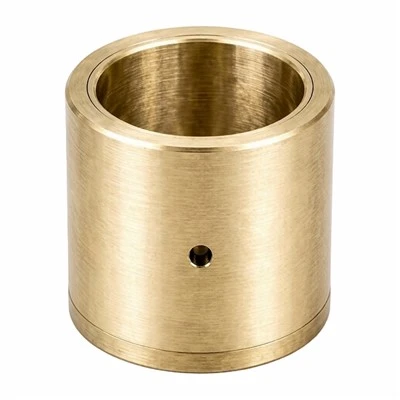
First, let’s set the scene: if you’ve ever worked with a hydraulic motor, you know the main parts are the rotor (the spinning core), pistons (the little plungers that push out power), and the housing that holds it all together. But the cam ring? That’s the unsung hero hiding right around the rotor—most people just see it as a “ring” and move on. Spoiler: it’s the reason your motor turns with consistent force, not just a random wiggle.
Let’s start with how a hydraulic motor actually works, super simplified. When pressurized hydraulic fluid hits the pistons, they slide out from the rotor, right? But if there was nothing keeping them in check, they’d just flop around. That’s where the cam ring comes in. The cam ring isn’t a perfect circle—It’s got lobes, like a squashed ellipse or a heart shape if you squint, depending on if it’s a two-lobe or seven-lobe design (more on that later). Each lobe is a curved surface that acts like a track for the piston shoes (the little caps on the end of the pistons) to ride against.
Here’s the key move: as the rotor spins, the pistons move in and out of their bores. When the piston slides along the cam ring’s inner surface, it follows that lobe’s curve—so when the curve gets closer to the rotor center, the piston retracts, and when it gets farther, it extends. That extension is what creates the force, or torque, that makes the whole motor spin. Wait, let me make that make sense with an example: if you push a plunger in a syringe, you create pressure—reverse that, and pressure pushes the plunger out. The cam ring is turning that linear push from the pistons into rotary motion, which is exactly what you need to power a conveyor belt, a excavator’s arm, or a forklift’s wheels.
Now, why does the cam ring design matter so much? Not all cam rings are the same. If you’ve got a fixed-displacement hydraulic motor (which is what most small-to-medium industrial motors use), the cam ring’s lobe count is fixed. A two-lobe cam ring makes a motor that’s great for high speed, low torque—think a lift that needs to move fast when it’s not carrying a heavy load. A seven-lobe? That’s low speed, high torque—perfect for an excavator’s bucket that’s digging into dirt, where you need tons of force but don’t need to spin fast. I’ve had customers come to me because they swapped a two-lobe cam ring for a seven-lobe by accident and their motor was so slow they could outwalk it on flat ground—oops. That’s the kind of mistake you make when you don’t understand the cam ring’s job.
Another thing: the cam ring’s surface finish is non-negotiable. I can’t tell you how many times a customer has sent me a worn-out motor, and when we take it apart, the cam ring has tiny scratches or pitting on its inner face. Those imperfections mess up the piston shoes’ ride—they catch, leak pressure, and the torque drops. We see this all the time with off-road equipment that runs through mud or dust; debris gets into the hydraulic fluid, acts like sandpaper on the cam ring, and before you know it, you’re replacing a $1200 motor when all you needed was a $150 cam ring. That’s the part where I say, don’t skimp on the cam ring. It’s not a disposable part, but it’s the first thing that wears out if your fluid is dirty.
Wait, let’s address a common question I get: do all hydraulic motors use a cam ring? No—gerotor motors use a different design, but if you’re dealing with piston type motors (swash plate or bent axis? No, wait, bent axis is different, but radial piston motors absolutely do), that’s where the cam ring is king. Most of the hydraulic motors we supply parts for are radial piston, so the cam ring is 100% central to their function. If you’re working with a gear motor, that’s different, but this post is for anyone who’s got a piston motor and is confused why their “ring part” is so expensive.
Let’s talk about wear and tear, since that’s why you’re probably here as someone who sources parts. The cam ring has to handle constant, uneven pressure from the pistons. Every time a piston extends, it’s pressing against the cam ring, so over thousands of hours of use, the lobe surfaces wear down—specifically at the point where the piston switches from extending to retracting, that’s the highest stress spot. If your motor is starting to sound like it’s knocking, or the pressure gauge is jumping randomly, that’s almost always the cam ring wearing out. We’ve tested this: when a cam ring’s lobe thickness is off by more than 0.005 mm, the torque drops by 15%—that’s enough to make your machine underperform.
Also, compatibility is huge. I’ve had a customer bring in a cam ring that “looked the same” as their old one, but it was from a third-party supplier, and the lobe profile was slightly different. Their motor started leaking fluid because the piston shoes weren’t sealing right against the non-original cam ring. Turned out, the third party had cut corners on the CNC machining, so the curve of the lobes was off. That’s why when you order cam rings from a hydraulic motor parts supplier, you need to get ones that match the exact OEM specs for your motor model. We keep tons of in-stock cam rings for all the common models—no waiting 2 weeks for a custom one.
Wait, let’s clear up a myth: some people think the cam ring is just a guide, but it’s actually a power transfer component. The pistons don’t just spin with the rotor—their force is transferred directly through the cam ring to the motor’s housing, creating the torque. Without that connection, you’d have a rotor spinning with no usable power. That’s the biggest mistake people make: they think the rotor is the main power source, but the cam ring is the one that turns the piston’s pressure into actual work.
Let’s give a real example from our shop. Last month, a construction company brought in a Bobcat 331 mini-excavator that wouldn’t lift its bucket. We took it apart, and the cam ring’s top lobe was worn flat—so the piston couldn’t extend enough to get the force needed to lift the bucket. We swapped in a new OEM-spec cam ring from our stock, and the excavator was back to work in 2 hours. If they’d tried to replace the whole motor, it would’ve cost them 4x more, and they would’ve been down for a week. That’s why carrying a spare cam ring is a smart move for anyone who relies on hydraulic equipment—way cheaper than a motor replacement, and easy to swap out.
Now, what about maintaining your cam ring? The best tip I can give you is keep your hydraulic fluid clean. Change your filters every 500 hours (or whatever your motor’s manual says, don’t guess), and check the fluid for debris regularly. A $20 filter will save you from a $150 cam ring, or worse, a $1200 motor. Also, don’t run your motor at maximum pressure all the time— that puts extra stress on the cam ring’s lobes, leading to faster wear. I’ve seen customers push their motors to the limit every day, and their cam rings lasted half the expected lifespan.
If you’re a part buyer, whether you’re a mechanic, a fleet manager, or a do-it-yourselfer, the cam ring is not a part to overlook. It’s the core component that makes your hydraulic motor do what it’s supposed to do: turn pressure into useful work. Too many folks get stuck on the big parts (rotor, pistons) and forget about the ring that makes it all work. That’s why we prioritize stocking high-quality, precision-machined cam rings for all the major brands—we don’t cut corners, because we know if your part fails, your whole machine is down.
Now, if you’re dealing with a worn cam ring, or you need to order replacement parts for your hydraulic motor, don’t hesitate to reach out to us. We can help you match the exact cam ring to your motor model, answer any questions about maintenance, and get you the parts you need fast—no hoops to jump through, no confusing order forms. Just tell us your motor make and model, and we’ll hook you up.
One last thing: I see a lot of forums where people argue about whether cam rings from generic suppliers are as good as OEM. Our experience is that generic ones often have inconsistent machining, so the lobe profile is off, leading to poor performance and faster wear. We source all our cam rings from certified manufacturers that adhere to OEM specs, so you get the same quality as the part that came with your machine when it was new.

At the end of the day, the cam ring is the workhorse of your hydraulic motor—small, unassuming, but absolutely essential. Skip over it, and you’ll end up with a motor that doesn’t work. Take care of it, and it’ll last for thousands of hours. If you need parts, we’re here to help. Just reach out whenever you’re ready to discuss your needs.
Hydraulic Pump Parts References:
- Hydraulic Control Systems by H. E. Meritt
- Fluid Power Handbook, 5th Edition, National Fluid Power Association
- “Radial Piston Hydraulic Motors: Design, Operation, and Maintenance,” Society of Manufacturing Engineers, 2019
- ISO 10771: Hydraulic fluid power – Radial piston motors with cam ring type – Nominal pressures 10 MPa (100 bar) up to 31.5 MPa (315 bar)
Qingzhou Baiyun Anti-friction Products Co., Ltd.
With abundant experience, we are one of the most professional hydraulic motor parts manufacturers and suppliers in China. Please rest assured to wholesale customized hydraulic motor parts at competitive price from our factory. Welcome to contact us for quotation.
Address: Linglongshan North Road (south of the railway bridge), Economic Development Zone, Qingzhou City, Weifang City, Shandong Province
E-mail: byantifriction@gmail.com
WebSite: https://www.baiyunbimetal.com/
